A 250-hectare apple orchard is being developed in Mid-Canterbury by the New Zealand Super Fund, with an investment of US$72 million. The site near Pendarves, managed by FarmRight, was previously a dairy operation with 1,200 cows and is being divided into an orchard and 165 hectares for a 600-cow dairy unit.
Planting began a year ago, with 125 hectares allocated to Rockit apples and a similar area to the Joli variety under licence at Tōrea Orchard. More than 95 per cent of production is planned for export markets.
Around 900,000 trees are being established using V-shaped steel trellis systems supported by 12,000km of wire. Approximately 27,000 frames have been installed across the first 150 hectares, allowing a planting density of 3,700 trees per hectare compared with 700 trees per hectare in conventional systems. Trees are oriented north to south to optimise light exposure.
The first crop is expected in 2028, with full production projected at 116 million apples annually. A workforce of 85 permanent staff is expected to increase to 700 to 800 workers during the eight-week harvest period.
Conversion costs are estimated at US$210,000 to US$240,000 per hectare. FarmRight rural portfolio general manager Ed Tapp said, "Our return we are expecting off this is between 12% to 14% [over the next 10 years], and it will take some work to get there. With this infrastructure and high-value varieties, we are probably targeting the top 5% of apple growers."
He said site selection was based on growing degree days, lower frost risk due to proximity to the coast, water reliability, and soil conditions. Technology adoption is also a factor, with trellised systems designed to support mechanisation and robotics. "The key one for us is that the structure is simple and there will always be a requirement for people, so being able to easily train them very early on is an important part of it."
Hail nets using a catch-and-release system are in place to reduce damage and retain moisture. The next 100 hectares will require 80 truck and trailer units to deliver trees.
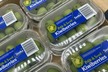
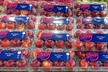
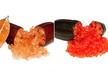
Smaller Rockit apples are marketed in tubes and containers, mainly to China, while Joli apples are positioned for Asian markets. Licensing agreements are used to align supply with demand. "This will be controlled, and that is what we like, as we have exposure to grapes in Marlborough, and this year we dumped a fair chunk of our fruit because the market was over-supplied."
The orchard will add to a portfolio of 530 hectares of apples across Hawke's Bay, Nelson, and Canterbury. Fruit is planned to be graded and exported from Nelson. Accommodation for 300 workers is being developed, with recruitment identified as a key operational factor.
Source: Rural Life