In the fruit and vegetable sector, where water availability is a decisive production factor, the search for water underground remains one of the most critical challenges. Errors in assessment can result in unnecessary drilling and economic losses of up to tens of thousands of euros. A concrete case in Puglia shows how a technological approach can radically change the outcome.
 © Hydro Hunter Italia
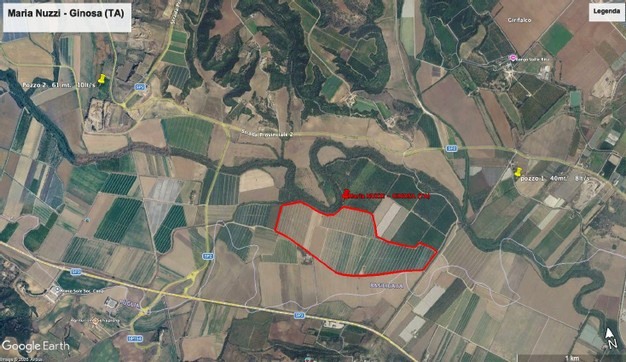
In Ginosa (TA), in the Fossa Bradanica area, a farm of about 54 hectares was faced with the problem of water research in an area characterised by high geological complexity. In these areas, water is not distributed evenly, but flows deep along fractures, making traditional methods based on experience or random attempts ineffective. The risk is unsuccessful drilling, with high costs and no return in terms of water availability.
The company's owner, Maria Nuzzi, was faced with a crucial choice: to either proceed with "blind" drilling, with the real risk of drilling a dry well, or to adopt a more advanced and targeted method. The decision fell on the second option, relying on Hydro Hunter Italia.
 © Hydro Hunter Italia
"Most of the mistakes arise precisely from this misunderstanding," explains Vincenzo Orso, contact person at Hydro Hunter Italia. "People think that it is enough to drill to find water, but, in reality, water is only present in very specific places. Our system was created precisely to avoid drilling empty wells by checking whether there is a real possibility of finding it first. Drilling without knowing what is underneath is like looking for a needle in a haystack, and often means throwing away tens of thousands of euros."
The intervention began with an in-depth remote analysis based on official geological maps, high-resolution satellite images, and radar data capable of detecting micro-movements in the ground. "The latter, which are often invisible to the naked eye, are a valuable indicator of the presence of active fractures, i.e., the preferential pathways along which water can flow underground. We always start in the sky to get underground. We cross geological, satellite, and radar data to minimise uncertainty and identify the really promising areas," emphasises Orso. Through a proprietary algorithm, a defined portion of terrain is analysed, returning a colour map where green indicates the presence of interesting signs, yellow represents an intermediate zone, and red indicates the absence of useful elements.
 © Hydro Hunter Italia
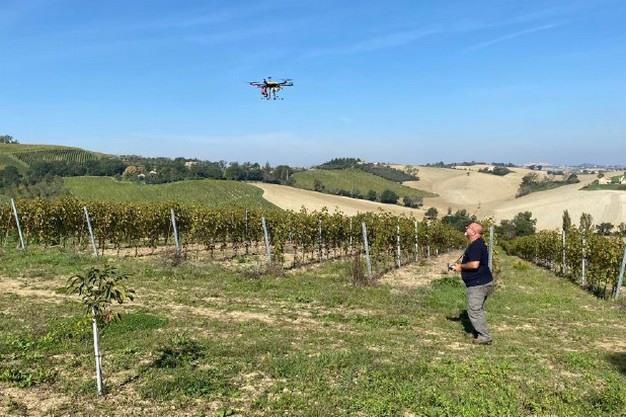
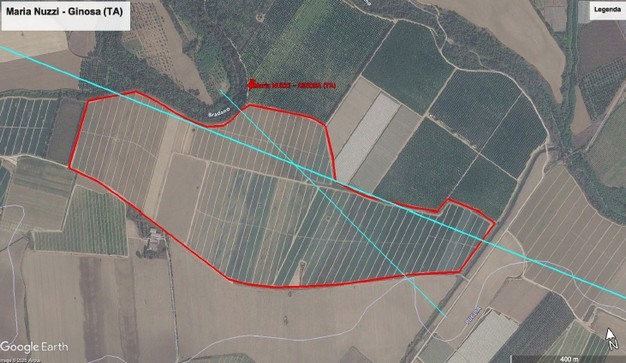
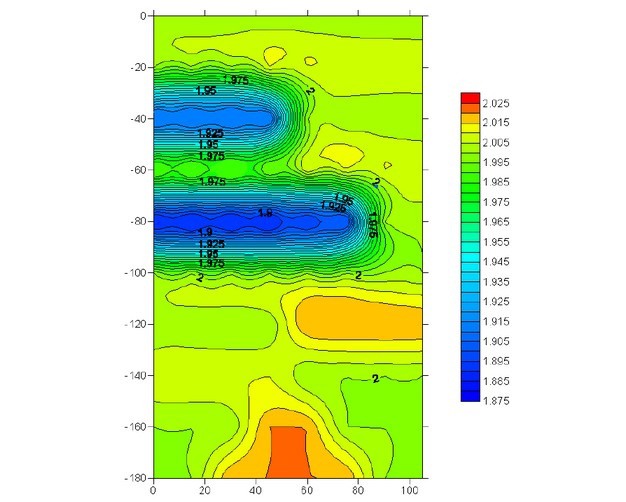
In this specific case, the analysis highlighted the presence of two fracture lines with different orientations, identifying the intersection point between these structures - a sort of natural "junction" of water circulation - as the most interesting area. Once the area had been defined, field surveys were carried out with advanced instrumentation, including sensors installed on drones to detect electromagnetic anomalies and systems capable of identifying the presence of permeable materials in the subsoil, such as gravel and sand, that favour the passage of water.
The surveys returned a very clear picture, with positive signals at about 40 metres deep and a second level between 75 and 85 metres, while no evidence of water circulation emerged just a short distance away. This confirms how localised the resource is, and how even a minimal shift can compromise the outcome of the operation. "If we had drilled even fifty metres further, we would have found nothing. This is where it really makes a difference. We go from a large area to a precise point just a few metres away. We basically show exactly where to dig, avoiding wasting time and, especially, money," points out Orso.
 © Hydro Hunter Italia
The subsequent drilling confirmed the predictions, with a flow rate of around 8 litres per second at 40 metres and an even more significant result of 22 litres per second at a depth of around 80 metres.
For the fruit and vegetable sector, which is increasingly exposed to water stress and climatic variability, experiences like this are a clear signal. The adoption of advanced technologies for water research is no longer an option reserved for large groups, but a concrete lever for increasing efficiency, reducing risks, and ensuring production continuity. "The difference today is precision. It's not just about finding water, but about knowing beforehand whether it is worth looking for it. And, for a farm, that completely changes the outlook," concludes Orso.
For more information: Hydro Hunter Italy
Grosseto - Italy
+39 3510012837
[email protected]
hydrohunter.com