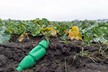
Papyrus Australia has developed a technology to convert banana plantation waste into pulp for use in food containers, trays, and packaging. The process uses stalks, leaves, and stems generated by the banana industry, which would otherwise decompose and release methane. Annual emissions from this waste are estimated to equal 900,000 tons of carbon dioxide.
The technology converts plantation waste into refined pulp for paper, board, and moulded packaging applications. The company is working with growers, manufacturers, and converters to expand the use of banana fibre-based materials.
CEO Daniel Schmidt said the material can be used across multiple applications. "If the business has access to banana plantation waste, we can support the development of a sustainable and profitable manufacturing venture," he said. "For the banana industry across the globe, this technology also represents a viable opportunity to help it utilize plantation waste."
In 2025, Papyrus Australia received a US$165,000 matched funding grant under the Australian Government Industry Growth Program. The funding supported early-stage commercialisation of its processing technology and the establishment of a rapid prototyping and R&D facility at Adelaide University. The facility has developed a prototype pulp line and installed equipment to support the transition from research to commercial production.
"Papyrus is in the process of establishing its Adelaide production facility, which will house the key transformation technology and processes to convert the plantation waste into a valuable pulp for use in moulded products, paper, and board applications," Schmidt said. "This facility will be the cornerstone for scaling our technology."
Research into banana fibre applications has been ongoing. In 2020, the University of New South Wales developed recyclable and biodegradable packaging from banana plantation waste, addressing the issue that only 12 per cent of the plant is typically used.
Further developments include the use of banana farm waste in corrugated packaging. Zafree Papers and 100+ Accelerator were recognised at the Sustainability Awards 2025 for cartons made from banana pseudostems sourced from farmers in Ethiopia.
Source: Packaging Europe