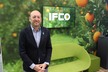
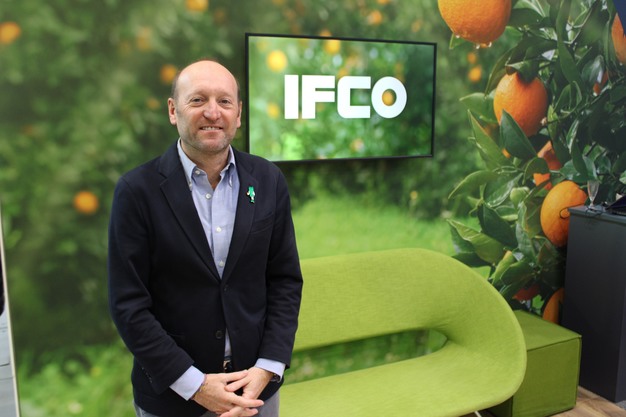
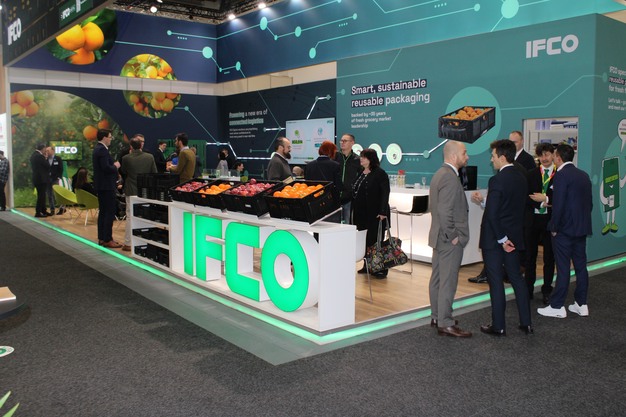
At Fruit Logistica 2026 in Berlin, IFCO Systems highlighted how reusable packaging is transforming the fresh food supply chain. Iñigo Canalejo Lasarte explains: "It's an opportunity to meet customers… and share our growth, technology investments, and sustainability efforts." IFCO Systems operates in over 50 countries, supporting growers and retailers in replacing single-use packaging with reusable packaging. "Our purpose is to make the fresh grocery supply chain sustainable," he says.
 © IFCO
The folding crate: a logistics breakthrough
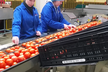
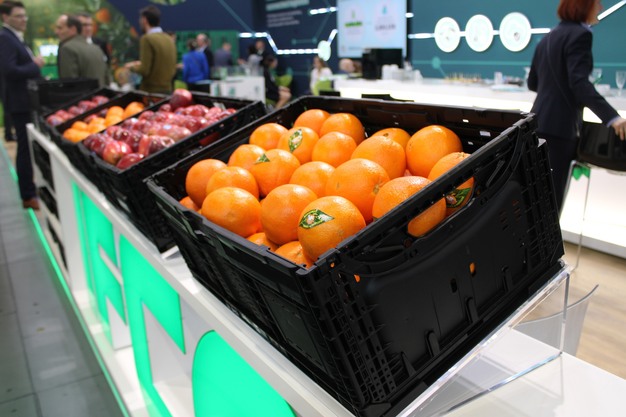
Founded in Germany in 1992, IFCO introduced the folding crate, enabling efficient reverse logistics. "Why not develop a crate that folds?" Iñigo explains. Adoption varies globally: Europe leads, while North America is still catching up. However, rising awareness of waste and regulatory pressure are accelerating growth. "We see a great opportunity… as retailers become more conscious around waste."
 © IFCO
Driving reusable packaging
Helping customers transition to reusable packaging is central to IFCO's strategy. This shift is driven by sustainability goals, regulation, and efficiency gains. Following its 2025 targets, IFCO has set new 2030 goals based on a double materiality assessment. "We prioritized the key topics… and those have ended up being our 2030 goals," he says.
Thriving with Purpose
IFCO's ESG strategy is built on three pillars: Thriving Business, Thriving Planet, and Thriving Society. "As we grow, more reusable packaging enters the supply chain, and environmental impacts are reduced." The company aims to deliver one megaton of CO₂ reductions by 2030 through increased RPC use, supported by externally verified life cycle analysis. Environmental targets include reducing emissions, water use, waste, and virgin plastics. Social initiatives focus on diversity, safety, and food redistribution. "We aim to help distribute half a million tons of surplus produce by 2030."
 © IFCO
Digitalization at the core
Alongside sustainability, IFCO is investing heavily in digitalization. Crates are being equipped with tracking technologies to improve logistics efficiency. "With digitalization, we can optimize logistics… and reduce the need for new RPCs," Iñigo says. With 400 million crates used 2.5 billion times annually, efficient tracking is essential.
Enhanced traceability and global relevance
Digital tools also improve transparency for customers, enabling real-time tracking, cold chain monitoring, and reduced food loss. "This helps improve food traceability… which is a key priority." The technology is adaptable across regions and products, with pilot programs underway globally. IFCO is also exploring AI to manage data and expand applications beyond fresh produce. "The beauty of reusable packaging," Iñigo concludes, "is that it aligns business benefits with environmental impact." (JG)
For more information: 
IFCO SYSTEMS UK Ltd.
HP11 1AG
Tel: +44 (0) 1494 538300
[email protected]
www.ifco.com