Packaging continues to play a central role across the value chain for fresh produce. It protects the product, reduces shrink, and improves food safety. In addition, suitable packaging enables longer and more complex supply chains. At the retail level, packaging supports efficiency and branding. While bulk remains relevant, the share of packaged formats in the North American market is increasing, particularly in high-value categories such as berries, salads, and convenience items.
Convenience factor
For consumers, convenience is a key factor in opting for packaged products. In Canada, the sustainability factor sometimes plays a bigger role compared to the U.S. market, but that seems more government driven versus consumer driven. "The Canadian government implements more sustainable regulations, aligned with developments in Europe and this is not necessarily something consumers are asking for," says Patrick Boot with NNZ North America. "If anything, consumers are sometimes discouraged by the additional costs they have to incur for sustainable packaging options." With inflation being significant, consumers aren't necessarily looking for sustainable packaging options, but more so for options that fit their budget.
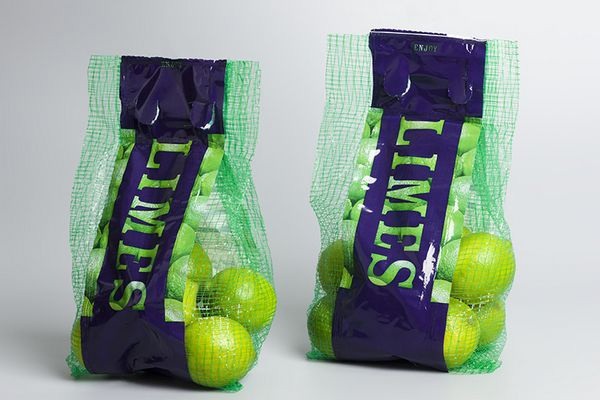
NNZ offers a broad spectrum of packaging options for commodities as well as high-value items. With consumers increasingly asking for affordable packaging options, the packaging with a heavy sustainability element has been put on the back burner," says Steve Greenfield with NNZ. "Simply put, people need to put gas in their cars, which has priority over packaging."
 © NNZ North America
Away from plastic
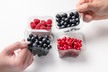
In some countries, with Canada being an example, there is a push away from plastic packaging. However, plastic is necessary for freshness and shelf life. Canada's goal is for 95 percent of produce to be sold in bulk or plastic-free. Not only is this being debated due to cost concerns, but it could also result in increased food waste. "Certain produce items just can't be sold without packaging," said Boot. Envision raspberries and blackberries being sold in bulk without any protection from packaging. "For fragile and sensitive categories packaging is essential in preventing food waste."
While the move away from plastic may take time, the trend is for packaging to balance minimal material with functional protection. Thinner plastic that's lighter in weight is a benefit in view of EPR laws that will become effective in seven U.S. states this year and force producers to pay fees based on the weight and material of the packaging.
Q-Bic packaging
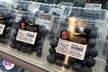
One of the types of packaging that aligns with EPR priorities, but also meets the consumer's demand for freshness and convenience as well as the retailer's criteria of efficiency and branding is Q-Bic™. "It checks all the boxes," said Boot. The shape of Q-Bic allows growers and packers to save on trucks and on transportation costs as a result. Q-Bic is a truncated pyramid with angle sides of 45°, making it most suitable for items with small voids. "The packaging isn't compatible with larger items like strawberries as they would be too big to fit." Until now, the technology is mainly used for blueberries, salads, and grape tomatoes.
The technology was first introduced in Europe where it's mainly available in stores in Norway. In the U.S., the first Q-Bic packages are expected to be on the shelves in a few months, filled with pomegranate arils. "We feel it's important consumers see them in stores, so they can get used to the shape," Greenfield commented. "This packaging really is a paradigm shift. It's something different and probably one of the most unique types of packaging," he added.
 © NNZ North America
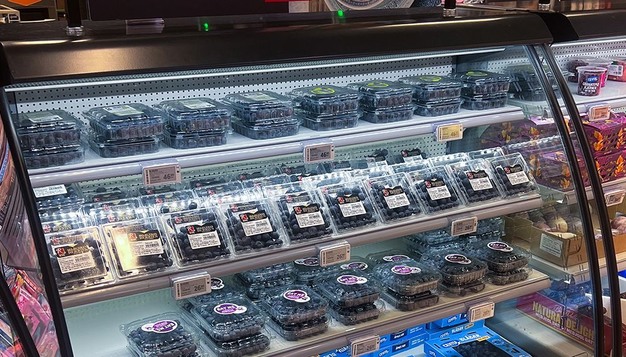
Branding stands out with Q-Bic clamshells in the middle
Brand stands out
Although the Q-Bic packaging looks different and fancy, Greenfield explains it's just a differently shaped clamshell. It can be displayed on its 45° angled edge, saving space, cutting costs, and boosting the brand. "Regular clamshells are stacked on top of each other, but with Q-Bic, the brand really stands out as it is staring customers in the face on the shelf, similar to the salad walls." Recently, a corner opening was created, especially designed for snack packages. The corner lifts up, making it easy to pour out the product, whether it's grape tomatoes or blueberries.
Club store 6-pack
Another benefit of Q-Bic is that it keeps its shape when six packs are banded together in one shipping carton with a paper board tray on the bottom. "The new six pack is stackable, grab and go, and has nice visuals," commented Greenfield. This recent development is based on a request from a blueberry grower/packer. The club store packaging will be featured in NNZ's booth at CPMA and will also be on display in the New Produce Showcase just outside the show floor.
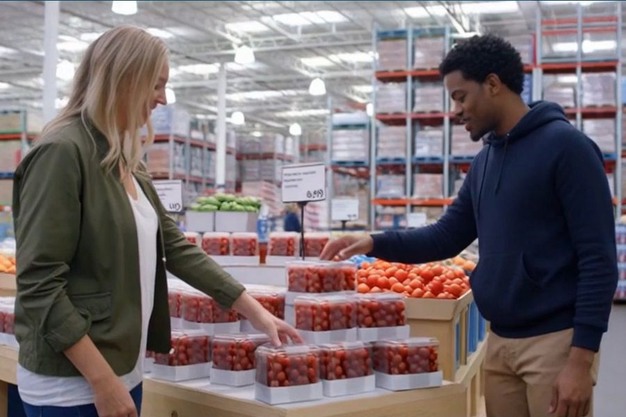 © NNZ North America
Q-Bic 6-pack at club store.
Automation compatibility
Adoption of new packaging like Q-Bic is closely tied to automation compatibility. "That's in development right now and we've done some preliminary tests on blueberry packing machines that look very positive," said Greenfield. "However, it will now come down to production and whether we can get this running on a production line." One of NNZ's customers in Peru is very interested and production molds are being made and will be sent down to Peru to fill 1,000 units with blueberries for a production test.
CPMA
NNZ North America designs packaging options for customers in both Canada and the U.S. with each market representing 50 percent of total sales on the North American continent. If you are interested in being one of the first adopters of Q-Bic or would like to meet with the NNZ team in person, stop by booth #626 at CPMA.
 For more information:
Patrick Boot / Steve Greenfield
NNZ North America
Tel: (+1) 770-873-7079
[email protected]
[email protected]
www.nnzusa.com