Upgrading rejected avocados by processing them into high-quality oil. That was the idea with which Jan Kraaijeveld founded the company ReFruit three years ago. "Right from the start, it became clear that there was strong interest from the trade in finding a solution for their rejected avocados.
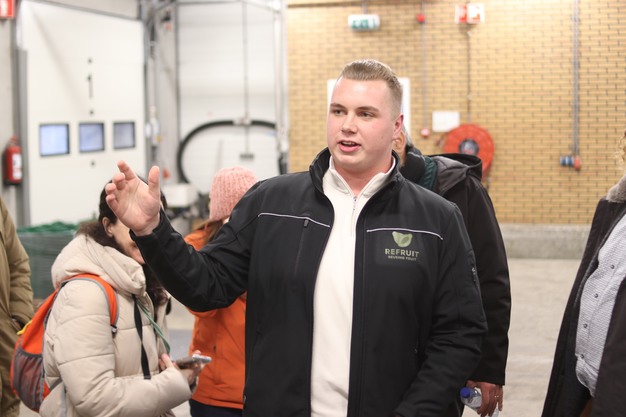
Many imported avocados never make it to the shelf, but destroying them is undesirable and also very expensive. Whereas in the beginning we were nervous about whether enough fruit would be available, the commissioning of the third production line from December shows our added value," says Ralph Bosschaart of ReFruit, speaking to the international team of Fresh Publishers during a visit to the company in Ridderkerk.
 © Martijn van Nijnatten | FreshPlaza.com
Ralph Bosschaart
ReFruit was founded three years ago. "The original idea to start a factory here in the Netherlands came from growers in Kenya. When containers of avocados arrived in Rotterdam and were rejected, Kenyan exporters had to pay for their destruction. They wanted a more sustainable and cheaper alternative, and the idea of processing them into oil soon emerged. We pursued that idea," he explains.
"In this building in Ridderkerk, there had previously been a company that installed one production line. They produced for five months but then ran out of money to buy new avocados. Their operations stopped, and that is when things started for us. We bought the factory, but we had no experience with avocado oil production at the time, so it was truly a learning process."
 © Martijn van Nijnatten | FreshPlaza.com
Doubling every year
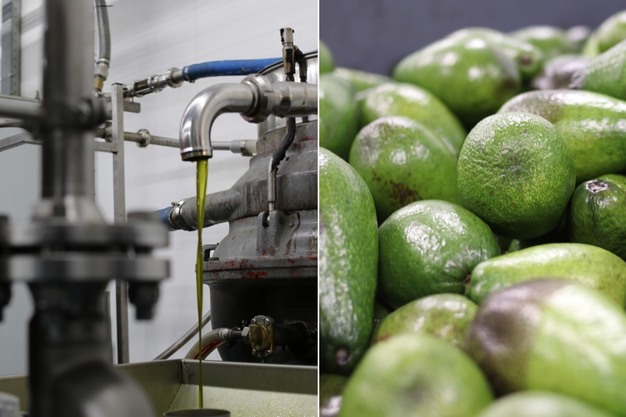
"We started with one production line. But after a year, we realised that far more kilos were available than we had expected. So we decided to buy a second line to increase our processing capacity and produce more oil. Last year, we again received so much fruit that we opted to install a third line. It will be commissioned from December, so we will soon be running with three lines."
The value of this service becomes clear from the quantities processed each week. "The Netherlands is an important avocado hub for distribution to the rest of Europe, among others. As a result, there is a lot of waste or rejected fruit available here. It also means that our volume doubles every year. We work six days a week, 24 hours a day. The line operates largely automatically. Two people work on the line, four handle feeding and sorting, and one or two shift workers are on duty at night. One litre of oil requires about 10 kilos of avocados, roughly 60 avocados. So it is a very expensive product."
 © Martijn van Nijnatten | FreshPlaza.com
Every avocado usable
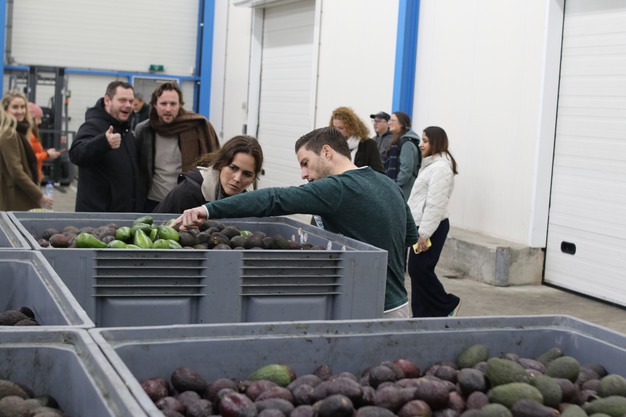
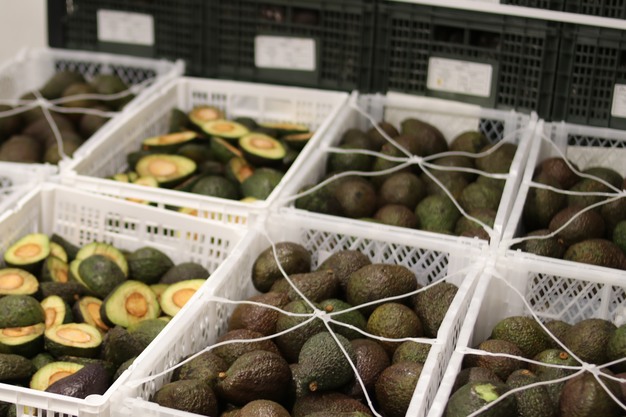
This system uses every possible variety. "We buy avocados at fixed contract prices or on the spot market, depending on the season. The oil yield varies by period and by country of origin. The longer the avocados hang on the tree, the higher the oil content. We blend avocados from different countries, and all varieties can be used. Hass avocados may give the highest yields, but greenskins are also fine. It is an advantage that we can use any quality and any variety. We also collect avocados anywhere in Europe, because quality and temperature during transport are less critical for us."
"For production, the quality or size of the avocado makes little difference: overripe, too soft, damaged, or with mould on the outside. We can process anything. The heating in the process kills any mould. Since we do not make finished products for consumers but only crude oil, this does not negatively affect quality," Ralph says. "At the beginning of the year, we have less supply because fruit quality on the market is still good and wastage is low. Later in the season, there is a surplus, and then avocados come to us en masse for oil production. In the end, everything that is no longer marketable goes into oil. That oil is then further refined and bottled by customers in southern Europe, after which it is used for food or cosmetics."
 © Martijn van Nijnatten | FreshPlaza.com
Research with mangoes
The by-products are used by animal feed producers. "Only about 10% of an avocado consists of oil; the remaining 90% is pulp, stone, and peel. We collect this residual stream several times a day, after which it goes to animal feed producers." A welcome solution, as it turns out, but could other fruits offer similar opportunities in the future? "That is challenging. We are already doing research with mangoes, for example, but in mangoes, the oil is in the stone, and that is difficult to extract. We are still looking for a suitable solution, because besides avocados, many of our customers also handle large volumes of mangoes."
 © Martijn van Nijnatten | FreshPlaza.com
For more information:
Jan Kraaijeveld
Refruit
Handelsweg 190
2988 DC Ridderkerk
Mob: +31 (0) 6 22 56 80 08
[email protected]
www.refruit.nl