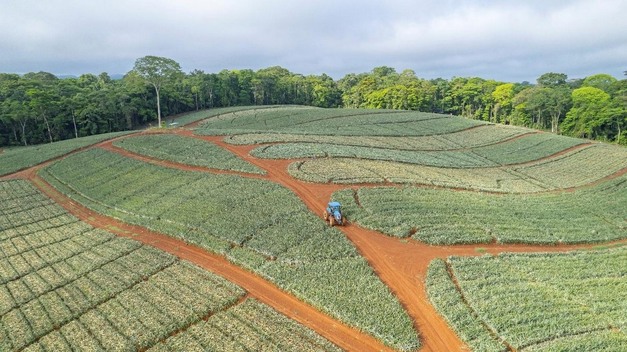
The 2025 Costa Rican pineapple season has faced challenging climatic conditions, with ongoing rainfall disrupting planting activities and reducing export volumes. Jordy Cruz of Agricrumo noted that national productivity remains low, and the forecast for 2026 suggests a similar trend. "If it rains for weeks, the land cannot be prepared or sown, which affects future production," he explained.
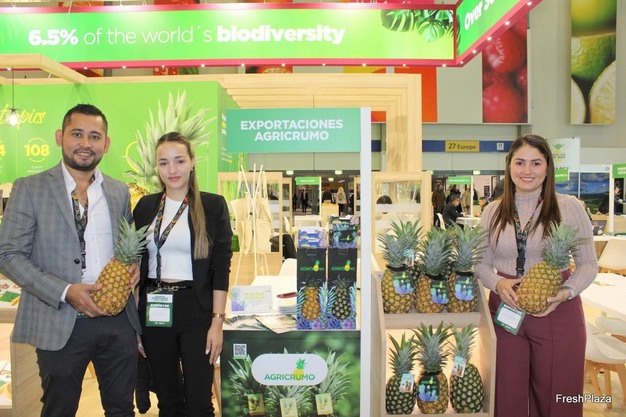 © Diana Sajami | FreshPlaza.com
While the decline hasn't been as sharp as in past years - "we close 2025 with around 5% less than last year" - the overall effect of the rains is evident in the market. Compared to previous seasons, Costa Rica's total production has decreased by approximately 15%.
This reduced availability has driven prices to unprecedented levels. "We are witnessing historic prices, with boxes in some destinations, such as Russia, reaching 19 to 25 dollars. We've never seen prices like this in the history of pineapple," Cruz affirmed. However, the grower warns that these values may not be sustainable over time: "If prices remain so high, consumers could opt for other products, and the market could fall."
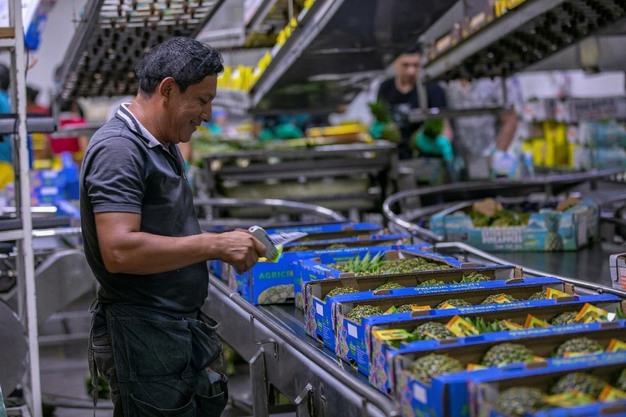 © Agricrumo
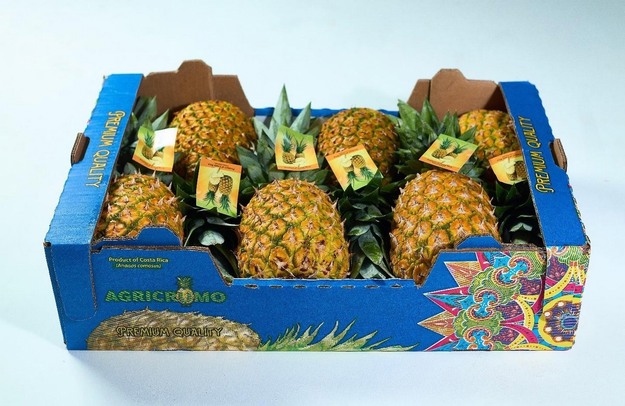
Agricrumo has stabilized the supply of large fruit, sizes 5 to 8, prioritizing exports over processing. "The juice market is still strong, but the price of fresh fruit has adjusted and is competitive again. We no longer grow for juice, but for export," he emphasized.
Europe remains the primary destination for Costa Rican pineapple, accounting for approximately 70% of exports, while the United States makes up about 20%. "Competing in the U.S. market is very tough, as it is dominated by large transnational companies with their own logistics systems. That's why we are concentrating more on Europe," Cruz explained.
 © Agricrumo
Despite the challenges, Costa Rican products remain of higher quality than those of other regional producers. "The pineapples from Panama, Mexico, or Colombia cannot match our pineapple's quality. We can't meet all the demand, but buyers still prefer the Costa Rican fruit," he stated.
Cruz also emphasized that the rains not only restrict planting but also worsen phytosanitary issues. "With so much humidity, pests and plant rot become more prevalent, making production even more difficult."
 © Agricrumo
The outlook for 2026 remains uncertain. Growers are hopeful that weather conditions will improve, enabling better planning. However, costs and supply will still be affected by weather volatility. "Hopefully, prices will stay at sustainable levels for both growers and consumers. Maintaining very high prices isn't viable long-term," Cruz concluded.
 For more information:
Jordy Cruz
Agricrumo
Costa Rica
Tel: +506 8497 8417
Email: [email protected]
www.agricrumo.com