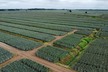
Started in 2021, Abacate International entered the Indian market at a time when avocado consumption was still limited and largely unstructured. With a clear focus on a single product category, the importer has gradually built systems around sourcing, cold chain, ripening, and distribution, adapting to the market as it evolved. "Over time, as imports increased and new players emerged, we remained one of the few consistent operators in the space. This year we have expanded further and now we are present at ten locations across India," says Abdul Kadir Memon, Head of Business Development and Procurement at Abacate International.
Memon states that the avocado was a very small product when they first started importing, but the market changed very quickly: "Avocados were once seen as a niche product in India, mostly limited to select urban pockets and high-end consumers. That changed significantly around 2021. Since then, avocado imports into India have doubled year-on-year. From 2021 to 2022, and again in 2023, we saw a consistent 100% growth. However, the real shift came in 2024 and 2025, where we saw a nearly 2.5x growth. In just the first six months of 2025, India has imported over 9,900 tons of avocados, up from 3,961 tons in the same period last year. It's a leap that shows the growing appetite for the fruit. However, it's important to note that this growth has also brought complexities. This season has seen a sharp rise in new and first-time importers entering the market, many without a full understanding of the fruit's delicate post-harvest life cycle. That's led to oversupply, mishandling, and price crashes, particularly in the months of March and April."
 © Abacate International
Since Tanzania is exempt from paying any duties when exporting avocados to India, this origin is preferred simply due to the price advantage, Memon explains. "Tanzania is currently the most significant origin, and that's primarily because of a key advantage: duty-free access to India. Kenya, for comparison, faces a 33% total duty, which makes a huge difference in a price-sensitive market like ours. Tanzania's season runs from January to September, giving it a long window of supply. And since Kenya and South Africa have overlapping seasons with Tanzania, they don't offer significant seasonal advantages either. While we've built partnerships in Kenya and started limited volumes from there, it's still difficult to scale due to the pricing gap created by duties."
For some of the origins, it's simply too difficult to get the avocados on the plate of consumers within a reasonable time, Memon says. "Countries like Australia offer premium fruit, but the longer transit time of 25 to 30 days creates its own set of challenges. Once containers land in Mumbai, avocados still require a week for distribution to reach other cities, followed by another 4-5 days at the retailer or consumer end. In total, the journey from farm to fork can take up to 40-45 days. That's a lot to ask from a product as sensitive as avocado."
 © Abacate International
The fact that Tanzania is able to deliver the avocados much faster than Australia is crucial, says Shahid Patka, Director and Head of Sales & Operations for Abacate International: "This is where logistics and infrastructure become critical. Shorter transit times from Tanzania and Kenya, which are about 9-10 days, allow for better quality control. We've also invested in ripening chambers in Mumbai, Delhi, Bangalore, and Hyderabad to meet the growing demand for ripe, ready-to-eat fruit. This level of distribution, combined with cold chain integrity and product handling, is what makes or breaks avocado supply in India."
Although there is some production for avocados in India these days, the volumes that come from this cultivation are absorbed very easily and don't affect imports as of now, Memon explains: "Realistically speaking, domestic cultivation hasn't yet reached the level where it impacts commercial imports, especially for the Hass variety. The kind of volume growth we are seeing, 2.5x year-on-year, means any upcoming local production in the next two to three years will be absorbed quite comfortably by the market. We're keeping an open mind, but at present, we're not entering into domestic farming. Our investments are focused on strengthening import infrastructure, deepening our distribution network, and improving our year-round availability."
Due to the Red Sea stopping Tanzania from exporting to Europe, there has been an oversupply of avocados on the Indian market, Patka states. "Availability this year has been unusually high, mostly due to the Red Sea crisis, which disrupted exports to Europe and diverted excess supply to India. In some weeks, we've seen three to four times the usual arrivals compared to last year. At one point, weekly arrivals averaged around 20–25 containers, which is far above the consumption capacity. This oversupply, combined with new players entering the market, has put a heavy downward pressure on prices. In many weeks, we've seen selling prices as low as $3–4 per box. The situation has been particularly tough for experienced importers with larger commitments. Despite the unpredictability, we've managed to adapt by continuously improving our inventory planning and refining our city-wise distribution to ensure minimal wastage."
According to Memon, the situation is unlikely to change in the short term: "We expect the current pressure to persist for a while. Unless the Red Sea route stabilizes and Tanzanian exporters resume volume sales to Europe, India will continue to see excess availability. That will keep prices low and margins tight. What's needed now is a supply-side correction. Until that happens, there's not much that demand alone can fix in the short term. Having said that, we remain focused on long-term category development. Despite this year's challenges, we're confident in the direction the Indian avocado market is heading. Consumption is expanding beyond Tier 1 cities, ripened fruit is becoming mainstream, and awareness is growing steadily. That's encouraging for the future," he concludes.
For more information:
Abacate International
Email: [email protected]
www.abacate.in