Alongside the regular asparagus season, the wild asparagus season also picked up steam in week 18. Although it is a niche product, it has become well established over the years, particularly in upscale restaurants, reports Uwe Buschhaus, a wholesaler in Meckenheim and one of the few wild asparagus suppliers in Germany. "The season is very short, lasting only 3–4 weeks. We have been working with a dedicated forager from Champagne for many years and can typically market around one ton per week."
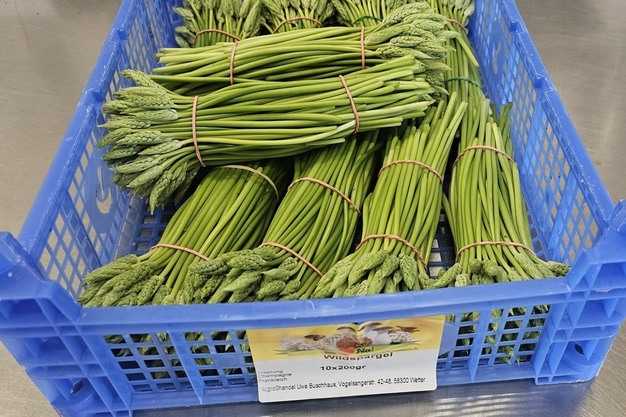 © Uwe Buschhaus
Prices are roughly at the same level as last year and, according to the wholesaler, have remained nearly stable for several years. Due in part to the high labor costs, French wild asparagus tends to be positioned in the higher price segment. Buschhaus: "Theoretically, we could start a few weeks earlier, but the prices would then be too high for the German market. For this reason, generally only a small portion of the total volume is exported, so that the bulk is sold on the French domestic market." He goes on to explain that prices are primarily due to the already high labor costs and less to current cost increases.
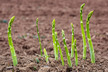
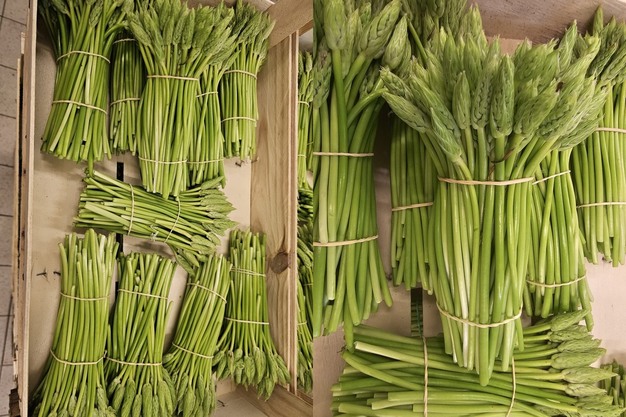 © Uwe BuschhausFresh wild asparagus (Asperges du bois) from Champagne in France
Given the short marketing window, wild asparagus is considered the quintessential seasonal product. "There are customers who buy only a few boxes from us, but there are also those who purchase up to 50 boxes. The majority of the total sales volume finds its way to top German kitchens via foodservice wholesalers and wholesale markets, including in Hanover. However, there are also some restaurateurs who pick up their required quantities themselves on-site in Meckenheim."
 © Uwe Buschhaus
Wild garlic season nearly over
While the wild asparagus season is gradually picking up steam, the wild garlic season is drawing to a close. "In France, the season is already over; we're now only receiving small quantities from the Eifel region. All in all, availability has declined somewhat this year; supply volumes from the Freiburg area, in particular, were below average. This ultimately had a corresponding impact on sales results."
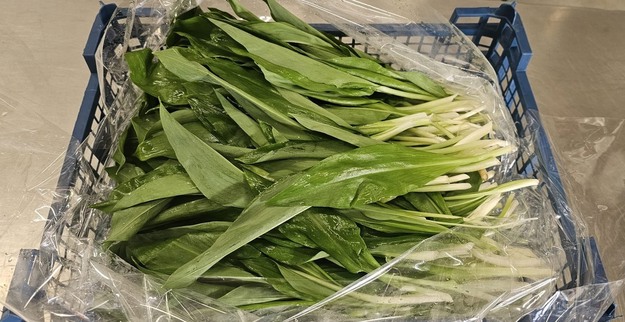 © Uwe Buschhaus
Fresh wild garlic
Wild mushroom season in the starting blocks
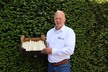
Uwe Buschhaus (pictured above) has been primarily dedicated to the procurement and marketing of wild and cultivated mushrooms for over three decades. Prices and demand for button mushrooms and other cultivated mushrooms traditionally trend downward during the asparagus season. Meanwhile, the new wild mushroom season is now in the starting blocks. "Around May 10, we expect the first chanterelles from Kosovo, followed by shipments from other Balkan countries. As the season progresses, sourcing tends to shift northward until, starting in late June, we can offer the highest-quality produce from the Baltic region." Compared to cultivated mushrooms, margins on wild mushrooms are significantly higher, Buschhaus emphasizes. "We rely primarily on wild mushrooms. Those six months are our livelihood these days."
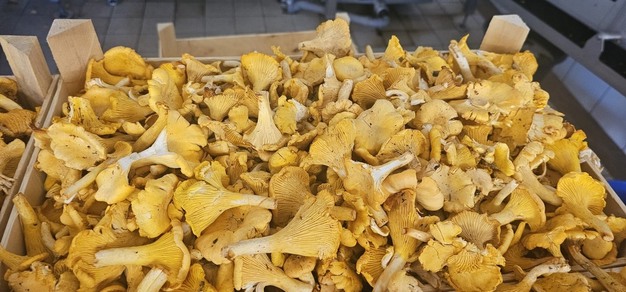 © Uwe Buschhaus
Chanterelles
Nevertheless, interesting trends are emerging within the wild mushroom category. "A few years ago, we invested in a modern washing facility for chanterelles. Today, ready-to-cook chanterelles account for about one-third of total sales volume, and the trend continues to rise. This is primarily due to high demand from the restaurant industry," he concludes.
For more information:
Uwe Buschhaus
Pilzgroßhandel Uwe Buschhaus
Receiving department: Wiesenpfad 9
53340 Meckenheim
Tel: +49 172 2805129
[email protected]
www.speisepilze.eu