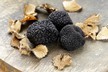
Black truffles are not native to Australia, but since host trees were planted in the 1990s, the industry has developed into the largest producer outside Europe. The first host trees were planted in Tasmania in 1995, with initial harvests in 1999 and exports beginning in 2007.
Australia is now the fourth-largest producer of black truffles globally, after Spain, France, and Italy. More than 400 orchards and around 500,000 host trees, mainly oaks and hazelnuts, are established across all states except the Northern Territory, according to the Australian Truffle Growers Association.
Researchers from Michigan State University analysed truffles and soils from 24 orchards across France, Spain, Italy, and Australia to examine environmental factors influencing production. The study, published in Applied and Environmental Microbiology, included soil sampling and analysis of fungi, bacteria, and truffle microbiomes.
Associate Prof Gregory Bonito said studying truffles is complex due to underground development. "You grow a tree like an apple, you can see the flower and then the fruits, but below ground it's a different story, because it's harder to follow," he said.
The results indicate that lower competition from similar fungi in Australian soils may support truffle production. DNA sequencing identified 4,415 genetically distinct fungi in Australian soils compared with 6,575 in European soils. Australian orchards recorded 75% fewer species of mycorrhizal fungi.
Growers are reviewing these findings. Stuart Dunbar of Yarra Valley Truffles planted orchards in 2006, with the first harvests after four years. He said harvest timing typically runs from mid-winter into spring.
Production depends on multiple factors, including temperature, soil structure, and water management. "A truffle's goal in life is pretty much like a fruit," he said. "A truffle wants to be eaten, primarily by a pig, dug up and eaten when its spores are perfectly ripe and it gets spread through the forest."
Dunbar also highlighted harvest timing challenges. "It was a 124-gram truffle. It formed alongside the root of an oak, with a bit of a groove where it was wrapped around the root. And I got to smell it – wonderful – took it up to the kitchen, went to cut it and it shattered."
Soil structure is also a factor, with lighter soils supporting development. Truffles interact with soil conditions, including calcium and lime distribution.
Dr Gian Benucci said truffles contribute to tree function. "While truffles are celebrated at the table, in the forest they are the true architects of tree health."
The study also found that truffle microbiomes remain similar across Australia and Europe despite differences in soil conditions. Researchers note that production outcomes are influenced by multiple factors, including climate, planting material, and management practices.
Source: The Guardian