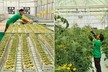
Watermelon production has traditionally posed challenges for greenhouse and vertical farming systems due to extensive vine growth and large fruit size. A newly developed ultra-small watermelon line from the United States may offer a viable alternative for controlled environment agriculture, where space efficiency and crop manageability are critical.
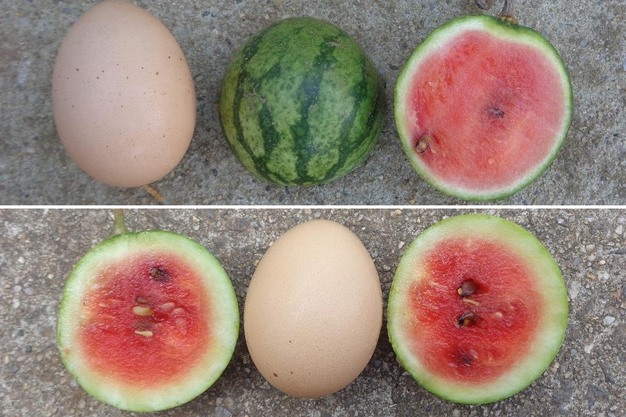
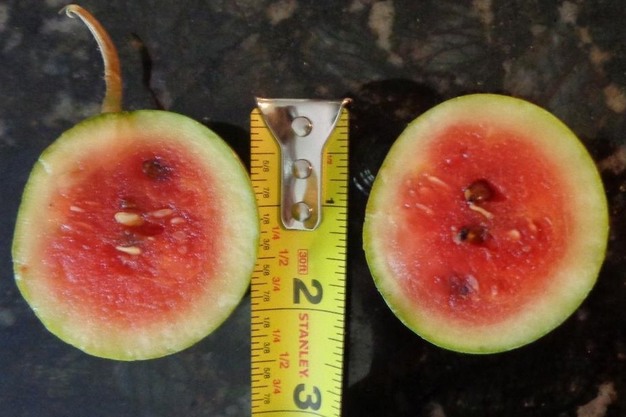
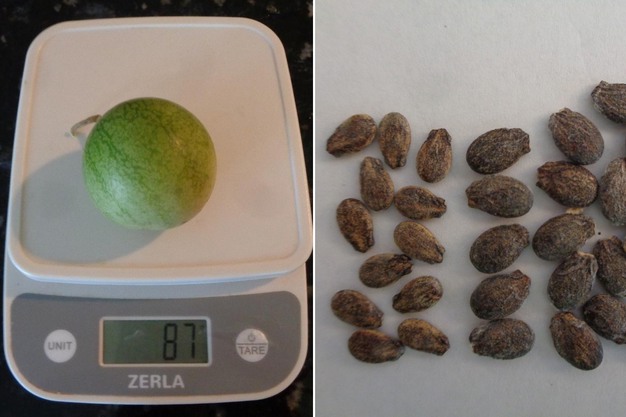
The material was developed through a family-led breeding effort in Northern Virginia, led by high school researcher Delaney Raptis in collaboration with her mother. The lines produce fruits ranging from approximately 80 to 200 grams, with some as small as a chicken egg, significantly reducing spatial requirements compared to conventional varieties.
 © Delaney Raptis
Maintaining fruit quality at reduced size
Despite the size reduction, early observations indicate that key commercial traits have been preserved. "In preliminary observations, the fruits retain sweet flavor, red and orange flesh types, and sufficient firmness for handling," Delaney shares. "The objective was to minimize fruit size while maintaining the characteristics expected by consumers and supply chains."
The rind has also demonstrated adequate durability for handling and short-distance transport under initial evaluations, suggesting potential compatibility with existing postharvest processes.
 © Delaney Raptis
Breeding approach and trait stability
The breeding program began in 2021 using a non-GMO chemical mutation approach. Multiple generations have since been grown to assess the stability of the ultra-small fruit trait. "We have observed consistent expression of the reduced fruit size across successive generations. Trait stability remains a key focus as the material is further developed."
Such consistency is essential for both commercial production and integration into formal breeding pipelines.
Implications for high-density and vertical farming
One of the primary areas of interest is the application of these lines in high-density greenhouse systems and vertical farms. Large-fruited cucurbits are generally unsuitable for these environments due to their space requirements and management complexity.
"The reduced fruit size may enable higher planting densities and improved system compatibility," she says. "It could make watermelon a more feasible crop within vertical farming models, where maximizing output per square meter is a priority."
 © Delaney Raptis
Potential benefits for consumers and urban growers
Beyond production systems, the small fruit size may align with changing consumption patterns. Single-portion fruit could reduce food waste while offering convenience for urban consumers and smaller households. The lines may also be suitable for home or urban growers, where limited space often restricts crop selection.
"Smaller fruit formats may support both reduced waste and increased accessibility for growers working in constrained environments."
Applications in hybrid breeding programs
The ultra-small fruit trait may also have value in hybrid development. In cucurbits, maintaining reduced fruit size across generations can be difficult, as offspring frequently exhibit variability and a tendency toward larger fruit.
"We see potential for these lines to be used as a pollenizer to help reduce fruit size in hybrid combinations," Delaney explains. "This could provide breeders with an additional tool to target specific size segments."
Observations on seed development and next steps
Preliminary observations also indicate that seeds from the smallest fruits are reduced in size compared to those from larger watermelons, suggesting a possible relationship between fruit size and seed development. "This is an area that may warrant further investigation as the work progresses," she adds.
 © Delaney Raptis
Current efforts are focused on increasing seed stock in preparation for formal trials. Future work will include evaluating performance across different growing systems and engaging with industry stakeholders.
"We are interested in testing these lines under commercial CEA conditions. Collaboration with growers and partners will be important to determine their practical applications at scale."
For more information:
Delaney Raptis
[email protected]
Falls Church, Virginia