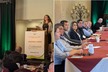
For its second edition, the Blue Whale Conference brought together more than 250 participants around a central question. "Productivity, which are the winning models? After a first edition devoted to climate change, Blue Whale chose this year to take a straightforward look at technical and economic performance, against a backdrop of lower yields, rising competitiveness, and increased regulatory pressure. Bruno Bertheloz, the Group's managing director, is convinced that this is a strategic issue.
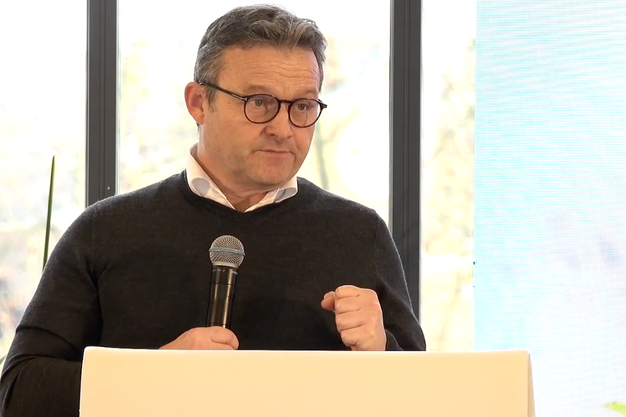 © Blue Whale
Bruno Bertheloz
"We are at the end of a downward adaptation model"
Right from the start, Bruno Bertheloz set the scene: "Can we still talk about winning arboriculture?" For the managing director, productivity is "a concept inherent to the history of mankind." He points out that French agriculture was built on performance, culminating in the country becoming the world's second-largest exporter. But today, the situation of French agriculture is stark. "We have gone from 1,200,000 producers in 1980 to 416,000 producers in 2025, and we have lost more than 20% of our yields in fifteen years. 2025 is the first year in which France's agricultural trade balance will be in deficit. Our societies have failed to see that defending agricultural production and competitiveness is a priority for sovereignty."
With climate change, the pressure of bio-aggressors, and the reduction in protective solutions, "we are at the end of a downward adaptation model. It is time to resist in order to obtain the fair and coherent policies needed to support agricultural productivity."
"Resist" to obtain coherent policies
The message is therefore clear. "It is time, indeed urgent, to resist." Ambitious water management, an end to regulatory over-transposition, easier access for seasonal workers, administrative simplification, an end to the abolition of means of protection without an equivalent solution, easier access for foreign seasonal workers, and the maintenance of European support policies for production organized into sectors... These are all conditions deemed essential to defend "a positive production model that has an impact on society, is productive, organized, and therefore competitive."
Physical protection and biocontrol: Towards the orchard of tomorrow
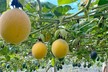
Against this backdrop, Blue Whale is exploring alternative solutions to reduce dependence on plant protection products. These include the 'Fruit (Re)Generation' project, supported by France 2030, which aims to test and combine a range of innovative technologies. These include work by the start-up Micropep on micro-peptides capable of stimulating apples' natural defences. In addition, Bruno Bertheloz points out that "in the future, good production will require greater physical protection for orchards. Nets, greenhouses, technological innovations, and biocontrol solutions are being tested on a prototype scale in trial orchards.
But the question remains: "How far can we go with physical protection without exploding production costs?"
Genetics, robotics, data, and AI: New levers to control productivity
Among the levers mentioned, although they cannot meet the challenge on their own, varietal innovation occupies a central place. "Producing well to feed the world better will necessarily require renewed and increasingly robust genetics, even if global warming, new bio-aggressors, and the loss of effectiveness of protective molecules will remain barriers to be overcome."
Another key focus was technology. "Robotics, new technology, and artificial intelligence are all tools that can help us to control our productivity and optimize technical operations in a context of rising costs."
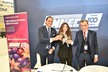
The event also provided an opportunity for key clients in the French market to take part in these discussions. "It is essential that our clients understand the challenges facing producers," explains Anouck Morin.
"The world is hungry for apples"
While European consumption is declining, "5.6 billion potential consumers" are growing on other continents such as Asia and Africa. "The world is hungry for apples (...) We are convinced that there is a real opportunity in France and around the world for French apples. But French producers desperately need consumers the world over. French quality remains a recognized value, but it may not be enough on its own. While it is our duty to touch the hearts of our French consumers, to offer them increasingly tasty fruit, we are also aiming to satisfy a growing global demand. If we are to produce better food for humanity, we need to integrate the fundamentals of regenerative agriculture."
Between genetics, biocontrol, robotics, and regenerative agriculture, Blue Whale is projecting itself into a future that is by definition unpredictable, but confidently guided by strong convictions.
For more information:
Anouck Morin
Blue Whale
Phone: +33 (0) 5 63 21 56 56