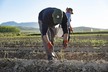
The Centro Sur cooperative has carried out an initial technical assessment of the impact of the recent storm on the asparagus plantations in the region of Poniente Granadino, in Andalusia, Spain. Losses for the 2026 season are estimated at around 35-40% in the most affected areas.
"Obviously, there are plots that are completely flooded and where it's going to be very difficult for plantations to recover. In others, it will be a little easier," says Antonio Zamora, the cooperative's General Commercial Director. "In fact, farms where the impact has been less severe are already supplying their first asparagus." In this sense, Zamora says that this rain will help the majority of plantations that have not suffered from the floods to have a better harvest.

"The overall impact on the total volume could preliminarily be estimated at between 5% and 10%, lower than initially expected, although it is still too early for a definitive assessment of the damage, as access to many plots remains difficult and a lot will depend on the agronomic development in the coming weeks," says Zamora.
Centro Sur estimates that between 300 and 350 hectares have been affected by the floods, out of a total of 1,526 hectares cultivated by the cooperative.
The most affected areas are those on the banks of the river Genil and around the Arroyo Milano, especially in the municipality of Huétor Tájar, where some plantations have been flooded for between ten and twelve days. There has been a gradual decline in the water table and river level in some of the plots, although there are still areas where access remains difficult, and this is making it hard to make a more accurate assessment.
The 2026 asparagus season has just begun, and growers are hoping that temperatures won't be too high, so that excess water can drain correctly and the plant can start to transpire under optimum conditions. "It is a perennial crop, and the length of time the water remains in the soil is decisive in evaluating both the immediate loss of production and the possible structural impact in future seasons," says Zamora.
Recovery plan for a strategic sector for the economy of the Poniente Granadino
The Centro Sur cooperative stresses that asparagus is a strategic crop for the Poniente Granadino and for municipalities such as Huétor Tájar, where it generates direct employment both in the fields and in handling and processing centers. It also has an indirect impact on the economic activity of the whole region. For this reason, they insist on the importance of analyzing the situation responsibly, avoiding scaremongering, but properly assessing the impact of this weather event on the sector, the growers, and their families.
"At this time, the Centro Sur cooperative wholeheartedly stands with the growers who are suffering the consequences of the recent floods. We want to offer them all our support and solidarity, and reiterate our willingness to be on their side during this very difficult situation," says Antonio Zamora.
In fact, from day one, the organization has activated a recovery plan aimed at minimizing the impact and directly supporting the growers. Work is being carried out to clean rural roads and make farms accessible again. Also, pumps are being installed to drain the water accumulated in plots where that won't happen naturally, despite the drop in the river level.
Treatments with beneficial soil fungi are also being applied; a strategy adopted after consultation with experts from different countries. The goal is to improve transpiration and oxygenation of the plant roots and facilitate the development of the root system. The cooperative stresses that these measures do not offer any guarantees, but they are confident about their capacity to mitigate some of the negative impacts. "Our company's mission is to generate wealth in the rural world," says Antonio Zamora.
An appeal to the institutions
"However, the aid shouldn't be provided only by the sector," says Antonio Zamora, who calls for institutional sensitivity in a situation that could affect direct and indirect jobs.
"We are asking the Administrations to maintain their support to the sector, to improve infrastructures, and to study measures to help mitigate the impact on the production, especially in the case of organizations recognized as Fruit and Vegetable Producer Organizations. It will be essential to set up aid mechanisms for those growers who have lost their plantations or whose livelihoods have been severely impacted, as well as for the workers affected," he says.
Lastly, the Centro Sur cooperative would like to thank the Government of Spain, the Andalusian Regional Government, and the Granada Provincial Council for their interest and involvement, and especially the Mayor of Huétor Tájar, Fernando Delgado, and the council's entire team, for their daily work. It is also grateful for the collaboration of the Military Emergency Unit, the Guardia Civil, andthe Local Police, and for the solidarity of all volunteers who have helped during the most challenging days.
"We would also like to thank the entire Centro Sur team for their involvement in these moments of uncertainty and their commitment to supporting our growers, as well as the understanding and support of our customers, who have stood behind us and shown their support from the very start," says Antonio Zamora.
 For more information:
Antonio Francisco Zamora
Centro Sur, S.C.A
Tel.: +34 958332020
[email protected]
centro-sur.es