StePacPPC has developed a packaging solution designed to preserve the freshness and visual appearance of pitaya (dragon fruit) during extended ocean transport from Ecuador to the U.S. and Europe. The company adapted its Xtend® Modified Atmosphere/Modified Humidity (MA/MH) bulk packaging films to address the specific postharvest requirements of pitaya during long shipping periods.
Pitaya is native to Central and South America and is characterized by its bright colors and sweet flavor profile. During sea transport, which can extend to three weeks or more, the fruit faces challenges including high respiration rates, moisture loss, and susceptibility to microbial decay, which can begin to affect quality shortly after harvest.
 © Stepacppc
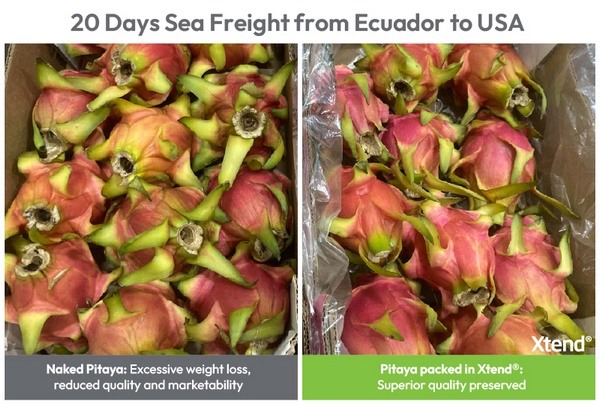
"South American pitaya growers often struggle to reach distant markets with this high-demand delicacy," said Gary Ward, Ph.D., CTO at StePacPPC. "Even under optimal cold chain conditions, the long sea freight from Ecuador to North America and Europe takes its toll on the delicate fruit, resulting in weight loss, shriveling of the skin and the bracts, a dulling of the characteristic brightly colored peel, accompanied on occasion by microbial decay. These factors reduce the fruit's appeal and marketability by the time it arrives at its destination. Most importantly, they negatively impact quality and freshness."
The packaging solution balances oxygen and carbon dioxide concentrations while providing moisture control during storage and shipment. According to the company, this helps reduce dehydration, slow respiration rates, and inhibit microbial decay, thereby slowing fruit deterioration. The packaging is designed to help maintain peel color and preserve the firmness of the protruding bracts, which are commonly used as indicators of pitaya quality and freshness.
Development of the pitaya-specific film took more than three years and involved cooperation between StePacPPC's global R&D team and pitaya exporters to adjust postharvest handling practices, packaging design, and overall system performance.
The Science of Freshness
StePacPPC's packaging technology is based on modified atmosphere principles intended to slow respiration, inhibit ethylene production and action, and suppress microbial growth. A distinguishing feature of the company's materials is the availability of multiple film structures incorporating antifog properties and different water vapor transmission rates. This allows moisture management to be tailored to produce requirements while limiting decay risk, preventing excessive weight loss, and maintaining product visibility.
In combination with optimized gas composition, these features extend the shelf life of tropical fruits compared with conventional packaging approaches.
"This breakthrough has created new opportunities for exporters, enabling them to reach more distant markets with fruit arriving in prime condition," Ward said. "This applies not only to Ecuador and South America but to other key producing regions, including Southeast Asia."
 © Stepacppc
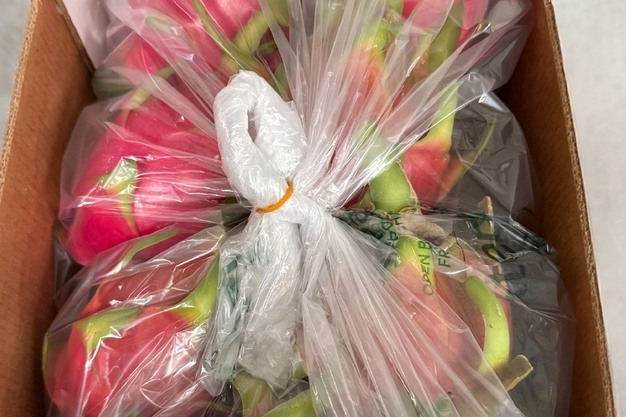
MAP packaging keeps tropical fruit vibrant and fresh
The pitaya-specific packaging film is the latest addition to StePacPPC's portfolio of solutions used for other tropical fruits such as bananas, passion fruit, lychee, longan, rambutan, mango, and papaya. Xtend® bulk and Xgo™ flow-pack retail packaging for passion fruit is used for shipments from Colombia to the U.S. and Europe, supporting extended cold-chain transport by slowing ripening and limiting peel defects such as wrinkles and mold.
Preformed bulk and retail bags are also used in South Africa for shipping green bananas, which are ripened within the sealed packaging. The modified atmosphere slows the ripening process, extending distribution and consumption windows.
According to Ward, the company focuses on designing packaging systems intended to support longer storage periods, logistics planning, quality maintenance, and market access for tropical fruits during extended supply chains.
StePacPPC will be at Fruit Logistica 2026, Berlin, February 4-6, hall 5.2a, booth #C-30.
 © StepacppcFor more information:
Ms. Hila Nagel
StePacPPC
Tel: +972 4 612 3500
Email: [email protected]
www.StePacppc.com