While the market is awash with a wide variety of summer fruits, the apricot is not among them yet. The prolonged winter in Afghanistan has delayed the harvest in cooler parts of Afghanistan. The cool dry start to the season will allow extra time for fresh fruit exporters to export the last of the cherry harvest and prepare for apricot harvest starting mid-July.
In Afghanistan, there are pockets of production scattered throughout the country, and a wide range of local varieties are cultivated often within clearly defined regional areas.
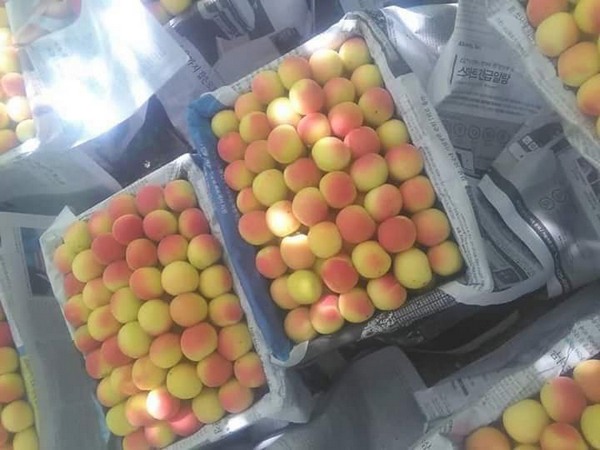
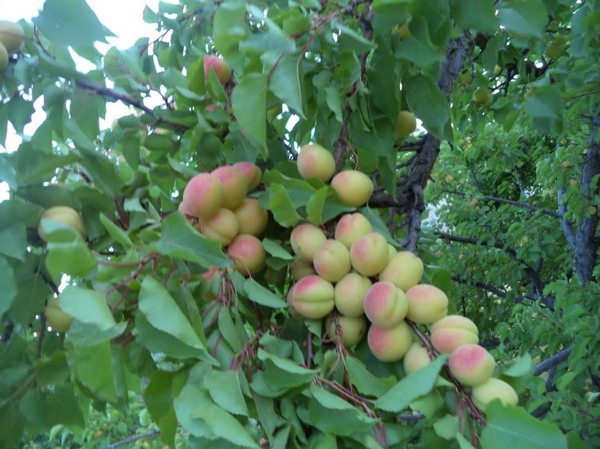
Apricot is the fourth most important perennial crop after grapes (raisins), pistachio and almonds, and is a priority crop in the master plan of the Ministry of Agriculture, Irrigation, and Livestock (MAIL). One of the most sought-after apricots is Amiri Apricot, and it ranks among the best in the world due to its distinctive sweetness. It mainly grows in some districts of Parwan and Wardak provinces of Afghanistan.
As apricots have a narrow availability window, Boustan-e-Sabz (an aspiring Afghan company) works closely with its contracted with farmers to achieve sustainable and timely supply of apricots. Contracted farmers send the crop to the facility of Boustan-e-Sabz, and the fruits are being processed, graded, and packed by line of workers that can process ten tonnes of apricot in 24 hours.
Boustan-e-Sabz exports Amiri Apricot, Pomegranate, Apple, Arkani melon from fresh fruits. This year’s apricot harvest is expected to be high in volume and quality because of the dry conditions, which prepares the exporters for gearing up for the harvest. “Our contracted farmers are happy with the status of their apricot orchards, and they are forecasting that this year’s apricot will be available in high quality and quantity,” Quraishi said. Amiri Apricot harvest season starts mid-July and continues till mid-September.
“The apricot export demand varies; with Boustan-e-Sabz grading to customer requirements,” he said, “we sort the apricot based on the demand of buyers for sizes, level of ripeness, and packages.”
The Amiri apricot has a long shelf life and may keep its firmness and flavor for up to one week without refrigeration and longer with the correct and increasingly used cold chain. The distinctive flavor and ability to handle shipping and transportation make this apricot variety a top exporter crop.
In Afghanistan, apricot export held steady in 2019 but decreased in 2020 as the air corridors and borders closed. Most of the exporters were not familiar with pandemic restrictions, and they didn’t risk investing in fresh fruit export, but it is not the case this year. “The line of fresh fruit export is being repaired, and our office in Dubai and India is ready to distribute the Amiri apricot of the season,” says Mohammad Lemar Quraishi, export director of Boustan-e-Sabz, a leading agricultural company in Afghanistan with 14 years’ experience in fresh and dry fruit process and export.
For more information:
Mohammad Lemar Quraishi
Bosutan-e-Sabz (BS)
Tel: +93 78 8707166
Email: [email protected]
https://boustan.af