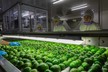
The Colombian company Novacampo, founded in 2003 and which focuses on the international trade of exotic fruits, currently sells more than 2,000 tons of cape gooseberries a year to Europe and the United States.
"Our main fruit export is cape gooseberry, which is called Physalis in the European market, and Golden Berry in the United States," said Sandra Riaño, the general manager of the company. “In Germany, it is part of the family basket, and it is already found in all supermarkets in general throughout Europe; in England, it is the main exotic fruit.”
Riaño said that Novacampo was also working with gulupa, the passion fruit, in Europe and that it was having a very good acceptance. "We also export Tahiti limes and the other exotic products of smaller volume such as tamarind, pitahaya, pomegranates, pineapple guava, and fig cactus."
"The company currently exports about 3,000 tons of product, 70% of which are cape gooseberries, followed by gulupa, Tahiti lime, and exotic fruits. Currently, we are exporting about 7 million dollars a year."
After having consolidated its activity in Europe and the United States, Russia positions itself as a potential market, and the Asian market is a long term possibility.
“Exporting is a job that requires perseverance, good communication, and that requires conducting good quality practices so that the fruit is accepted in the market. The quality of the packaging must also be high so that it complies with the techniques of the foreign market.”
Regarding environmental sustainability and packaging, Riaño emphasized that the new baskets in which the cape gooseberries are sold are made from a material derived from sugarcane.
“We work with more than 190 small producers in the area of Boyaca and Cundinamarca and our team of agronomists gives them support from the start. We also help them with all certifications and give them training on all the techniques so that the product is exportable. In addition, we work with commercial agreements throughout the year so that they have the assurance that they are selling their product,” said Riaño. “We also have cape gooseberry certified crops in Nariño, and in Bucaramanga. In the area of Santander, we have developed projects of Tahiti lime. In Antioquia, there is a strong production of gulupa.”
Source: portafolio.co