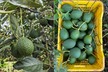
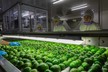
Italy is a world leading kiwifruit producer. Lazio, Piemonte, Emilia Romagna, Calabria, and Veneto are the main kiwi-producing areas, accounting for approximately 31, 18, 15, 11 and 10 percent of national production, respectively. The Hayward is the chief green cultivar, followed by increasing yellow varieties (G3, Jintao, Soreli, and Dori’).
According to the latest figures from the Italian Fresh Produce Service Centre (CSO), Italy’s marketing year (MY) 2017/18 kiwifruit production is estimated at approximately 370,000 metric tons (MT), 22 percent lower than the previous abundant campaign, mostly due to severe frosts in April that affected yields.
Reductions are estimated in Veneto (-46 percent), Lazio (-38 percent), Piemonte (- 29 percent), and Emilia-Romagna (-12 percent). Quality is expected to be excellent.
In MY 2017/18, Italy’s kiwifruit area (26,576 hectares) is expected to grow by 3.3 percent from MY 2016/17 thanks to new investments in the sector, especially for yellow varieties. The area decrease in Piemonte (-4 percent) due to root asphyxia is expected to be offset by increases in Calabria (+5 percent) and Campania (+5 percent). Kiwifruit area is expected to remain flat in Emilia Romagna and Veneto.
Approximately 73 percent of national kiwifruit production is exported, 20 percent is consumed domestically, and 7 percent goes to the industry. The commercial calendar extends from November to May. In MY 2016/17, Italy exported 334,906 MT of kiwifruit, 20 percent less than MY 2015/16, mostly due to reduced quantities to Germany (-16 percent), Spain (-24 percent), and the United States (-39 percent), the leading destinations accounting for 16, 11, and 7 percent of total exports, respectively.
In MY 2016/17, Italy imported 64,439 MT of kiwifruit, 23 percent more than the previous year, mainly due to increased volumes from Greece (+82 percent) and Belgium (+61 percent), leading suppliers accounting for 36 and 11 percent of total imports, respectively.