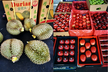
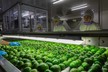
The zero per cent tariff, under the ASEAN-China Free Trade Agreement (ACFTA), will bring more goods from ASEAN and China to Vietnam, especially Chinese fruits.
This will create more competition for local products, according to experts. The Government has issued a decree on special preferential tariffs for ASEAN and Chinese products for the 2016-18 period, according to commitments under the ACFTA. Under the decree, hundreds of goods from ASEAN and China will enjoy zero per cent import tax to Vietnam. The goods include vegetables, fruits, processed or preserved fish and other kinds of seafood, as well as cacao and cacao products, cereal, flour and meat.
According to the commitments at ACFTA, Vietnam will abolish tax or reduce it to zero per cent, for 90 per cent of existing tariff lines by the end of 2018, while the remaining 10 per cent of tariff lines will see it reduced by 2020. A representative from the Vietnam Chamber of Commerce and Industry’s WTO Support Centre said, the reduction of import tariffs for ASEAN and Chinese goods would create strict competition between ASEAN, Chinese goods and local products.
General Statistics Office (GSO) statistics showed that in the first nine months of this year, Vietnam had the highest import of goods from China, with a total import value at $36 billion. Its trade deficit with China reached $21.3 billion, Người Lao Động newspaper reported. Local enterprises imported from China vegetables and fruit at $146.9 million.
Nguyễn Thế Bảo, director of Suối Lớn Agricultural, Service, Trade and Tourism Co-operative in southern Đồng Nai Province, said mango growers studied supply at home and also in neighbouring countries to make plans accordingly on production, trading and competition. Depending on the prevailing situation, Vietnamese mangoes were exported to Thailand, Cambodia and vice versa. Meanwhile, after many years of exporting mangoes from Vietnam to China, the neighbouring country had begun exporting its mangoes to Vietnam to compete with local products.
Nguyễn Công Thừa, chairman and general director of Anh Đào Agricultural Service Co-operative in Lâm Đồng Province, said demand for fruit in the home market had increased, therefore there were times the market lacked supply of fruits and their import surged. As a result, in the future, local farmers would face strict competition from imported fruit products because of their small and medium production scales with high production cost, while China’s producers had large production scale with lower production cost, he said.
The office reported that in the first 10 months of this year, the nation’s export value from vegetable and fruit products reached $2 billion. China was the largest export market for local vegetables and fruit, accounting for 70 per cent of the value. It was followed by South Korea, the United States and Japan. Exporters said Vietnam’s frozen fruit exports to Europe and North America suddenly increased during the 10 months, due to attractive prices and a boost in communication for Vietnamese fruits in those markets.
Read more at vietnamnews.vn