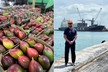
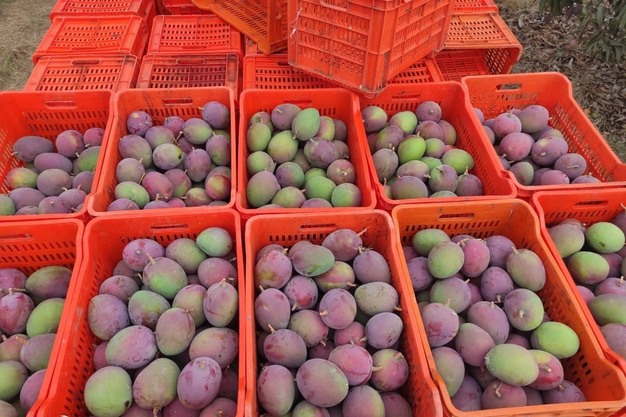
The upcoming Ecuadorian mango season, set for late 2026, is being affected by uncertain weather conditions. Bernardo Malo, president of the Mango del Ecuador Foundation, explains that unusually high temperatures are affecting flowering. Additionally, a lack of rain during typically wet months is worsening the situation. "What we are experiencing is a climatic anomaly; conditions are not favorable for mango cultivation," he stated.
 © Fundación Mango del Ecuador
Mangoes require cooler temperatures to achieve optimal flowering. If the current extreme heat persists, production could face difficulties. It's still too early to project volumes, but the sector is concerned that 2026 will not be the 'normal year' it expected after the fluctuations of the last three seasons.
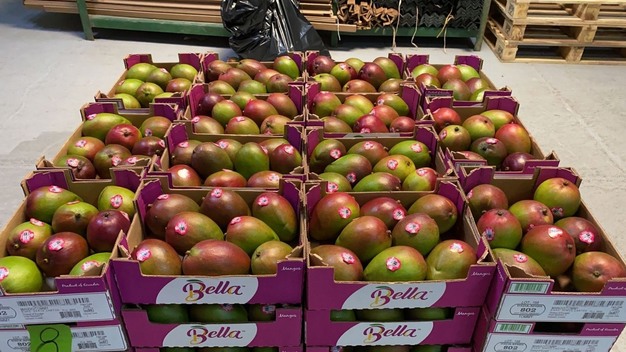
In 2025, the domestic supply declined. "Exports decreased by at least 15 to 18%, although official data shows only a 7-8% drop. This discrepancy is due to a large volume of mangoes intended for Colombia being redirected to the U.S. market, which offset the overall production reduction," Bernardo stated.
 © Fundación Mango del Ecuador
The United States still imports over 90% of Ecuadorian mangoes. Bernardo explains, "There is no overlap in production windows between Ecuador and Mexico," which enables Ecuador to fill the gap when Mexico, the primary U.S. supplier, is out of season. Nonetheless, Ecuador faces indirect competition from Brazil and Peru, whose harvest periods overlap at the start and end of the season, respectively.
Brazil's withdrawal from the U.S. market in 2025 due to tariffs had a mixed effect. Although it decreased supply in the U.S., Bernardo notes that the impact was moderate. "At the end of the day, the market is the market, and it is going to be driven by supply and demand."
Price behavior in 2025 was favorable. Lower saturation and orderly transitions among Brazil, Ecuador, and Peru sustained "healthy" values in the United States. The category's strengthening in supermarkets also contributed, supported by the fact that "100% of Ecuadorian production is GlobalGAP certified".
 © Fundación Mango del Ecuador
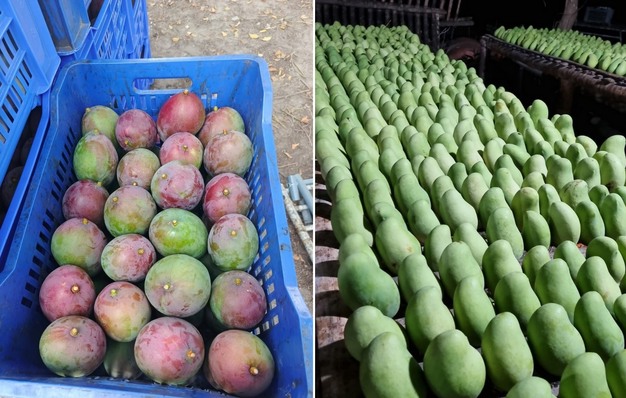
Ecuador is still working to diversify its markets, but faces constraints. Europe mainly requires non-fiber varieties like Kent, but "climatic conditions do not allow for optimal Kent production." The local supply relies on Tommy Atkins, a fiber variety, which limits options for European markets. Some fruit is exported to Canada, Chile, and Central America, but these destinations do not match the consumption levels of the United States and Europe.
According to Bernardo, a key lesson from the 2025 campaign is the importance of an organized supply chain that ensures quality, proper sizing, and traceability, primarily for the supermarket sector. He notes that the industry is well developed after thirty years of professional export. "The focus and the path forward are clear," he says, though he admits that market development will depend on climate factors and Ecuador's capacity to reliably supply its primary market, the United States.
 For more information:
Bernardo Malo and Johnny Jara
Fundación Mango del Ecuador
Tel: +593 9 9925 2808
Email: [email protected]
https://mangoecuador.org