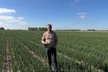
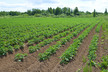
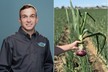
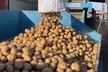
At Guy Cudmore's seed potato farm, the grading line reflects the impact of last season's drought. Workers are sorting defects and moving usable product, but volumes are lower after a reported 30 per cent drop in yield. One variety, Caribou Russet, is slowing throughput due to rot that the grower links to dry conditions.
"It's certainly going to hurt the bottom line," Cudmore said.
Statistics Canada reports that Prince Edward Island's potato production declined by 15.9 per cent in 2025 to 21.8 million hundredweight, marking the largest provincial drop in the country. As planting approaches, growers are managing the effects of reduced output and higher input costs.
"It's certainly a bad political climate right now," Cudmore said. "More uncertainty than at any other time."
Fuel costs for field operations have increased, and fertiliser prices are also rising. Some suppliers secured inputs before the conflict began, but growers expect higher costs going forward.
"Farmers are just going to have to suck it up," he said, adding he does not plan to scale back.
Cudmore confirmed that he will plant all 200 acres, equivalent to 80.94 hectares, to maintain supply commitments and retain customers.
Greg Donaldson, general manager of the P.E.I. Potato Board said that production losses were recorded across the Island following a hot, dry, and windy growing season. Despite reduced local supply, prices did not increase due to stable availability across North America.
"That put downward pressure on the market."
Water availability remains a focus, with growers continuing to improve soil structure and water retention through crop rotation and variety selection. Interest in irrigation systems is increasing.
"After last summer, there's been a lot more interest in looking at supplemental irrigation, so long as it can be done responsibly."
Growers are also reviewing fertilisation strategies and cost structures ahead of planting. Seasonal conditions remain a variable factor.
"For most, it's like a new chapter," he said. "Hopefully, Mother Nature will be more cooperative this summer."
Cudmore indicated that planting decisions will proceed despite current uncertainty.
"There's anxiety because of what's going on," he said. "But there is optimism about going and putting your seeds in the ground; we have to have hope."
Source: CTV News