As controlled environment agriculture projects continue to scale and diversify, developers are increasingly recognizing that successful greenhouse facilities are rarely the result of technology decisions made late in the process. Instead, the most resilient and productive operations are built through integrated planning, where specialists from multiple disciplines collaborate from the earliest design stages.
According to Joe Swartz, Senior Vice President at American Hydroponics (AmHydro), the industry is shifting away from a reactive, technology-first approach toward a more coordinated development strategy.
"The greenhouse structure, growing system, climate systems, automation, harvesting, packaging, cold storage, and distribution are not independent choices," he says. "They're one continuous flow."
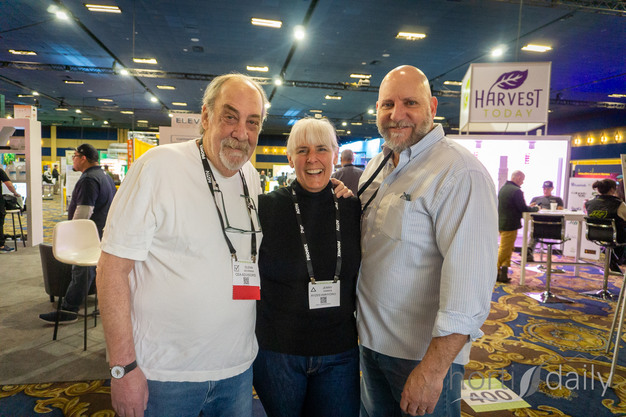 © Arlette Sijmonsma | FreshPlaza.com
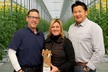
Glenn Behrmann, Jenny Harris, and Joe Swartz at the Indoor Ag-Con this year
Moving beyond technology-first design
Over the past few years, the CEA sector has experienced both rapid expansion and significant project setbacks. In many cases, Joe says, difficulties emerged when projects prioritized specific technologies before fully defining the business model or operational requirements.
"The industry has gone through significant challenges over the past two years, and a lot of that was caused by unrealistic expectations and technologies that didn't provide positive economics."
He emphasizes that, despite its technological advancements, CEA remains fundamentally an agricultural enterprise.
"Farming is farming; whether it's outdoors, in a greenhouse, or in an indoor facility," he says. "The economic rules, the horticultural rules and the market rules all apply equally."
For this reason, successful projects often begin by defining market demand, crop strategy, operational capacity and financial targets before finalizing technology selections.
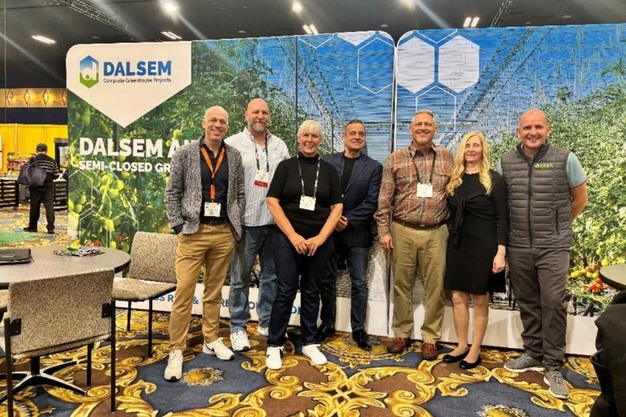 © Dalsem B.V.
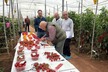
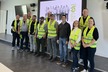
Some of the important role players in the Harvest Singularity project
Designing systems to work together
A key principle of integrated CEA development is synchronizing technologies across the entire production chain. Rather than selecting systems individually, project teams design the greenhouse structure, hydroponic system, automation, packaging, and logistics infrastructure as a single operational platform.
This collaborative approach was recently applied in the planning of a three-hectare leafy greens greenhouse in Newberry, Florida by Harvest Singularity.
Project CEO Charles Garza engaged multiple technology partners early in the design phase, including American Hydroponics for hydroponic systems and Dalsem Complete Greenhouse Projects for greenhouse design and construction. Additional partners such as JASA Packaging Solutions and TTA-ISO joined to address packaging, automation and post-harvest handling.
By involving these specialists from the outset, the facility's crop production, harvesting, packaging and distribution processes could be designed simultaneously rather than retrofitted later.
"We developed the plan, the design, and then laid out the technologies so they integrate together," Joe mentions. "All of the partners brought their experience and perspectives to the table from the beginning."
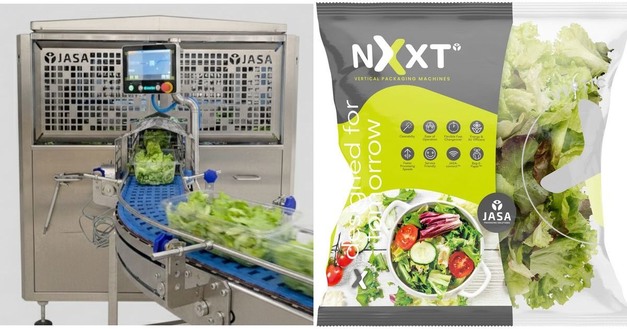 © JASA Packaging Solutions, Inc.
Collaboration requires flexibility
While integrated design offers clear advantages, it also requires close coordination and, at times, compromise among project partners. "There's always a certain amount of ego involved," Joe notes with a smile. "Sometimes it's difficult at first to hand over some control or adapt your approach."
During the Florida project, for example, AmHydro initially developed a growing channel that later required modification to better align with robotic transplanting systems provided by TTA-ISO.
"It meant going back to the drawing board. It created some extra work, but we ended up with a much better product because of that collaboration."
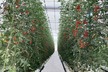
The redesign ultimately produced a new NFT growing channel optimized for "teen leaf" lettuce while integrating seamlessly with automated transplanting and harvesting equipment.
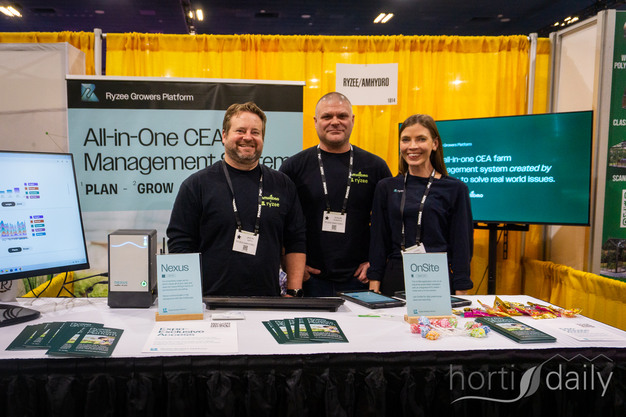 © Arlette Sijmonsma | FreshPlaza.com
Jason Smith, Shaun Roberts, and Lydia Ekeroth with Ryzee / AmHydro, and the Rhyzee Growers Platform at the Indoor Ag-Con this year
Building a foundation for long-term performance
As greenhouse technologies become more sophisticated, he believes the future of CEA development will depend on partnerships between experienced specialists who can design facilities as integrated systems rather than isolated components.
"In this day and age, it's actually better to take a collaborative approach," he says. "There are people who specialise in certain technologies and do it far better than anyone else."
By bringing these experts together early, projects can avoid costly redesigns, improve system compatibility and ensure operational efficiency once production begins.
"The greatest technologies in the world don't mean anything if they don't provide results in terms of crop productivity and positive economics."
Ultimately, the lesson applies to greenhouse developments of any scale.
"Regardless of size, scope or crop," he adds, "proper planning and integrated design are what lay the foundation for success in CEA."
A video about the Harvest Singularity projects shared end of last year
For more information: AmHydro
Joe Swartz, Vice President
[email protected]
amhydro.com