Sustainability is not just a buzzword for farmers, who are relied on to produce quality fruit and vegetables year on year and deliver them to consumers in a form that is both attractive and affordable. That's not a simple job, and it's no surprise that they see sustainability as important to the industry.
But as Belinda Wilson, managing director of the International Fresh Produce Association A-NZ, points out, the commercial imperative is also important to them. She says, "Our members are navigating growing expectations from consumers, retailers, regulators, and supply chain partners, while trying to understand which sustainability initiatives genuinely deliver commercial value."
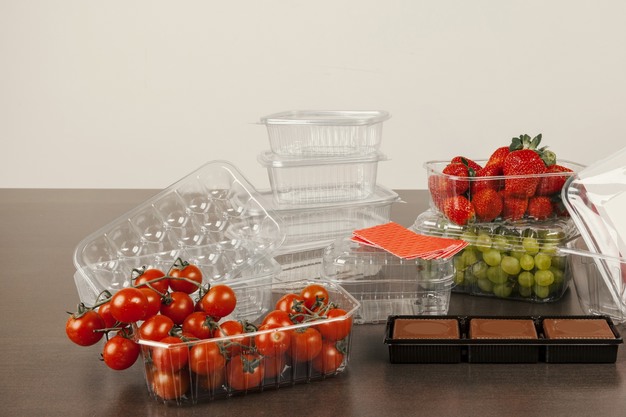
While it's easy to see where the value lies in practices such as regenerative agriculture, where preserving soil quality can lead to sturdier crops that prove more attractive to the consumer, it's harder to balance consumer desires in other areas — particularly packaging.
 © Srki66 | Dreamstime.com | Dreamstime
Wilson says, "71% of Australian consumers say they want no packaging at all, and 1 in 3 consumers feel guilty when buying overly packaged produce. But while consumers are expecting less packaging and more recyclable or compostable options, there is business tension: only about half of consumers are willing to pay more for sustainable options.
"Instead, consumers expect sustainable packaging to be standard, not a special feature. This means businesses must balance environmental expectations with commercial realities."
The figures are striking, but they also raise practical questions. While many consumers say they dislike packaging, their purchasing behaviour may not always reflect that sentiment. Convenience, product integrity, and habit still play a role at the retail end. The tension between stated preference and actual practice makes it harder for producers and packers to judge how far, and how quickly, they should adjust their systems.
On top of this, nearly half of the people surveyed said food safety is more important.
"Although we found a strong customer preference to reduce packaging and use recyclable or compostable options, packaging cannot be cost-prohibitive, and food safety still comes first," Wilson says.
How can these two desires both be satisfied at the same time? Although people often react emotionally to packaging, and "no packaging" seems like the obvious answer, data suggests consumers still value packaging for safety, quality, integrity, and convenience. The issue may be less about the presence of packaging and more about the materials used and the ease of recycling or composting them. For some businesses, that could mean exploring shifts from plastic- to paper-based or other recyclable formats where commercially viable.
However, translating survey data into operational change is not straightforward. Snapshot insights do not automatically provide clear direction on investment decisions. Growers and packers must weigh whether consumer signals are strong and consistent enough to justify switching materials, redesigning lines, or absorbing additional costs. Also, changes must be interchangeable between states with national uniformity.
"Clearer labelling could reduce consumer confusion," says Wilson. It's a story often told: communication between the industry and the consumer is key. Yet the responsibility for that communication does not sit evenly across the supply chain. While consumers may call for clearer sustainability information on packaging, the task of explaining origin, materials, and environmental claims may fall more naturally to retailers. For producers and packers, responding to evolving expectations without overcomplicating operations can be onerous.
So the recommendation for the industry is not necessarily to eliminate packaging, but to ensure that where it is already recyclable or compostable, that fact is clearly communicated. Where costs do not create a barrier, incremental shifts towards more sustainable materials may offer a competitive edge. As Wilson notes, "Switching to recyclable or compostable packaging can provide a competitive advantage."
For more information:
Jo Crawford-Wynd
International Fresh Produce Association
Tel: +61 427 430 796
Email: [email protected]
www.freshproduce.com