India's fresh produce trade with Europe relies on trust building through systems and transparency rather than chasing short-term price deals, says A.R. Chiranjeevi of Scion Agricos, an Indian fresh produce importer and exporter. "Europe showed me that long-term relationships beat quick margins every time."
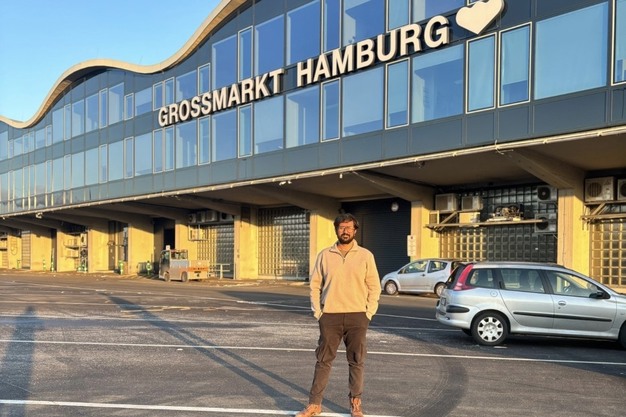
Chiranjeevi grew up helping at his father's small grocery store, with no family trading background. A Master's in Agricultural Economics at Germany's University of Hohenheim in Stuttgart changed his outlook, as a person and a professional. "I went there to study, but internships revealed how global markets actually work. Europe requires strict quality, compliance, traceability, and consistent supply. Business runs on systems, trust, and relationships, not one-off profits," he explains. This turned him from trader to supply-chain builder, while always intending to return to India.
 © Scion Agricos
"India's domestic trade relies on speed and personal connections. Germany taught me steady supply matters most. Buyers need good shelf life, uniform sizes, and low pesticide levels every week," Chiranjeevi shares. Now he plans ahead, anticipating what the market needs six months forward. "Scion controls quality at every stage with clear standards, grading, and independent checks. For negotiations, honesty works better than low prices, as European buyers want partners who solve problems," he notes.
Returning to India fit Chiranjeevi's plans well. "Europe's lens exposed root issues: Issues begin at the farm level with the selection of wrong varieties, incorrect harvest timing, and weak post-harvest handling. We are working directly with farmers and producer groups to fix these gaps, handling grapes, apples, figs, custard apples, strawberries, pomegranates, onions, and processed items across India, Germany, the Netherlands, Poland, Russia, the UK, the Middle East, and Southeast Asia."
 © Scion Agricos
Chiranjeevi points out that understanding cultural nuances makes multi-country operations more adaptive and successful. "Europe expects direct communication and firm timelines, while India builds on relationships and flexibility. Learning local languages and sharing updates early creates trust. High-cost markets like Germany need premium quality and certifications, while a price-sensitive market like India requires scale," he observes, sorting produce by grade, variety, and pack type for each market while standard procedures, technology-enabled tracking, and team problem-solving keep multi-country chains running smoothly.
Looking ahead, Chiranjeevi predicts specialty fruits like figs, custard apples, berries, and GI-tagged produce offering India's biggest growth chances. "We have natural advantages, but low global sales so far. Success will show from steady quality, compliance, and branding, not just volume." To new traders, he advises, "Skip fast deals and instead build systems, learn markets deeply, improve farm quality, and be patient. India's fresh produce sector has strong potential, but with plenty of room for improvements in quality and farmer partnerships," he concludes.
Scion Agricos will be at Fruit Logistica in Hall 7.2, Booth A30-03.
Chiranjeevi A R
Scion Agricos
Tel: +91-81 97 696 234
Email: [email protected]
www.scionagricos.com