In horticulture, growth is usually the result of long-term planning rather than reactive change driven by volume, labour constraints, or market pressure.
This approach is evident at Russo Produce, where investments are being made ahead of current production requirements. The business currently processes around 30–40 tons of cherries per year, a scale at which many growers typically continue using manual or semi-manual grading. Instead of waiting until volumes approach higher thresholds, owner Simon has opted to install automated grading infrastructure early, aligning the packhouse with projected future needs rather than present limitations.
 © GP Graders
The decision to invest was strongly influenced by operational practicality. Simon has indicated that simplicity, reliability, and access to technical support were key considerations, given limited familiarity with complex software systems. The grading system was selected to integrate into existing workflows without adding operational complexity, allowing day-to-day focus to remain on fruit handling rather than system management.
Since installation, the grader has also prompted wider operational review. Packing workflows are being adjusted incrementally, with attention given to both system layout and manual tasks. Changes such as improving access to empty cartons are being considered alongside larger process adaptations, reflecting an emphasis on gradual efficiency gains rather than rapid restructuring.
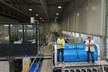
The grader configuration reflects this same forward planning. A two-lane cherry grader has been installed on a four-lane frame, allowing operation at current volumes while retaining capacity for future expansion. While the system is not yet operating at full capacity, it can be scaled as throughput increases. The ten exit lanes offer flexibility in pack-out options and help maintain consistency across different runs.
On high-throughput days, the configuration allows cherries to be packed with reduced labour input, which can be an advantage during periods of limited workforce availability. The ability to adjust exit lane use also helps reduce bottlenecks and adapt pack out strategies to daily requirements.
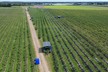
Beyond cherries, Russo Produce also grows cucumbers and pumpkins. This crop mix supports risk distribution across seasons and markets and aligns with the decision to invest in adaptable infrastructure rather than single crop systems.
Improved grading consistency has also widened potential market options. With greater control over sizing and quality segregation, Simon now considers export programmes that were previously difficult to support without reliable grading accuracy.
Rather than focusing solely on immediate volume gains, the investment reflects a broader operational strategy aimed at flexibility, gradual scaling, and process control. By aligning infrastructure development with long-term business direction, Russo Produce has reduced the risk of future constraints and created scope to respond to changing market requirements without urgent system overhauls.
 © GP GradersFor more information:
GP Graders
Tel: +61 3 9585 9444
www.gpgraders.com