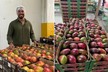
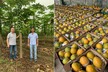
The mango season in Brazil ends with steady prices, good quality, and unusual market behavior, stated Willian Aislan Lima, commercial director of Mango Man Trade, who became an independent exporter in 2025 after more than 14 years in the sector.
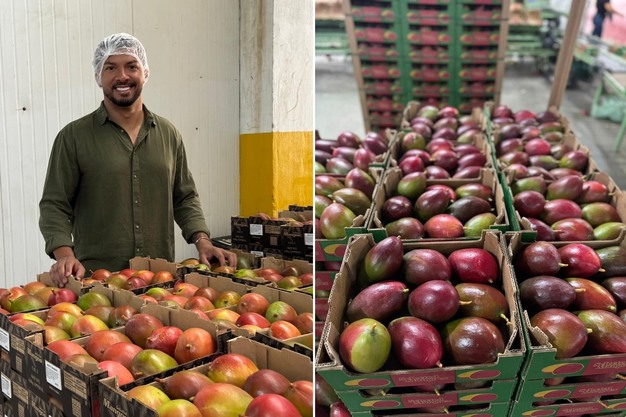 © Mango Man Trade Company
Brazil was essentially on its own in the international market for most of the year, which helped push prices into positive territory, he said. "This year was very different from the others; prices were good because there was no competition from other countries. Additionally, the 50% tariff on fruit imports in Brazil did not affect the sector's performance, which operated with regular volumes and quality throughout the season," Lima noted.
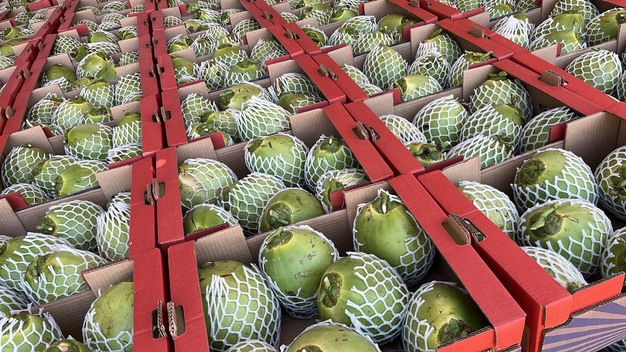
Following this season's shipments to the U.S., Brazil kept exporting mangoes to Europe, where prices stayed steady. "In Europe, prices are now stable, neither high nor low, but manageable until Brazil's production cycle ends," he said. Peru's delayed arrival, with peak volumes in weeks 51 and 52, has extended the Brazilian market window without adding immediate external supply pressure.
 © Mango Man Trade Company
Lima started exporting in June, and by week 52, he will have shipped 15 containers to Spain, the Netherlands, Poland, Russia, and Armenia. He plans to expand to the Canadian market by the end of December. His target is to reach 20 containers by year's end, which he sees as "a good start."
 © Mango Man Trade Company
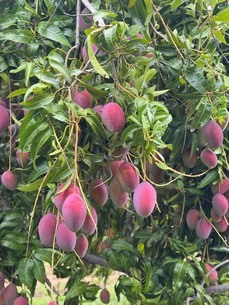
Brazil expects more rain next year, which will require the sector to pay more attention to quality. "If we get a lot of rain, we must work carefully to avoid fungus and ripening issues," Lima stressed.
Despite a good performance this season, the sector agrees that positive results should be viewed in context. "The tariff increase initially raised concerns, but external factors, such as delays in fruit arrivals from key competitors like Peru and, at times, Mexico, mainly drove the underlying price stability. This supply shortage enabled Brazilian mangoes to achieve profitable prices in Europe and North America. Nonetheless, this is a cyclical advantage, not a long-term strategy, as the sector still operates near capacity limits. As volumes from other origins reemerge, the Brazilian industry must improve planning and preparation to maintain stability in future campaigns. We must also understand when other countries start to find new market opportunities," he concluded.
For more information:
Willian Aislan Lima
Mango Man Trade Company
Brazil
Tel: +55 74 8133-4117
Email: [email protected]