Trials conducted in Argentina have evaluated an MCPBag® system that releases 1-MCP inside each package to slow ripening in William's pears (Pyrus communis L.). The approach is being positioned as a potential method to reduce softening and waste in long supply chains where pears often lose firmness within days after packing.
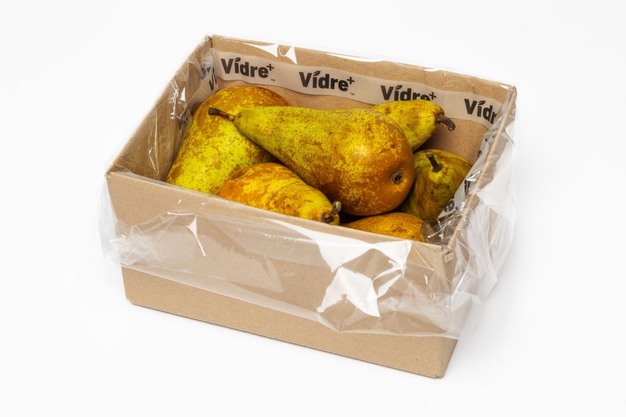
Researchers reported that pears packed in MCPBag powered by Vidre+™ technology ripened more slowly than those packed in standard bags. University testing indicated that using MCPBag at packing, followed by either short-term storage of 4 days or long-term storage of up to 120 days in regular atmosphere conditions and then 8 days at room temperature, reduced ethylene production from 218 units in standard bags to about 80 units in MCPBag packs.
 © FreshInset
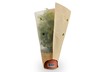
According to information provided, the system introduces a coated surface inside the package that releases 1-MCP gradually over a 24-hour period, inhibiting ethylene response and moderating ripening and softening. Vidre+ technology applies the same principle through a low-cost sticker or label placed in cartons, clamshells, or bags, making it possible to introduce 1-MCP without sealed treatment rooms or additional capital investment. Company projections cited in the release suggest potential waste reductions of up to 9.46 million tonnes annually if adopted broadly.
Research outcomes
The trials were conducted by IDC Patagonia in Argentina. Pears were stored for either 4 days or 120 days under cold storage and then held at room temperature for shelf-life evaluation. Pears in standard bags began ripening rapidly, producing higher ethylene levels associated with softening and yellowing. Pears held in MCPBag powered by Vidre+ produced 60 per cent less ethylene after 8 days, remained firmer, and retained green coloration for a longer period.
Shelf-life extension was reported at 8 days for short-term storage and 4 to 5 days for long-term storage when compared with standard packaging. Researchers concluded that packaging pears in MCPBag powered by Vidre+ reduced ethylene production and slowed the ripening process relative to standard bags.
Study details
The research was carried out by L. Vita, N. Gonzalez, and P. Rebolledo from IDC Patagonia (Las Acacias 1062, Cipolletti, RN, Argentina), with collaboration from C. Franco of Wassington Agro SACIFEI (Gualeguaychú 2068, Ciudadela, Buenos Aires, Argentina). The team acknowledged support from the fruit farm "El Chiche" and Agr. Eng. Raquel Brevi.
The authors noted that the findings are based on a single study and are considered preliminary, with additional research needed to validate and expand on the results.
 © FreshInsetFor more information:
Fresh Inset
Tel: +48 56 623 86 86
Email: [email protected]
www.freshinset.com