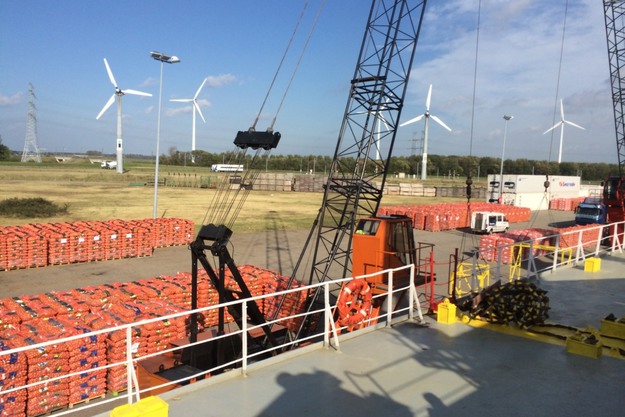
Vlissingen is more than just a port in the Netherlands. It has become Western Europe's premier onion port. In 12 years, the North Sea Port has grown into a logistics hub for the international onion trade. Jean Ruinard, who has been working at that port for over 12 years, has seen it expand from virtually nothing to one of the region's biggest onion trade players. It now accounts for 60+ % of Dutch onio n exports.
 © North Sea Port
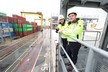
The first step toward this prominent role, more than a decade ago, entailed assessing cargo flows in and around the port. Focusing on onions was an easy choice, as those are found practically in Vlissingen's backyard. The strategy? Choose niches, avoid congestion, and offer logistical efficiency compared to Antwerp in Belgium. "Antwerp has plenty of congestion, and truck drivers could often only make a trip or two per day. The goal was to make logistics more efficient for customers and to strengthen the port," says Jean.
 © North Sea Port
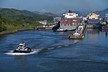
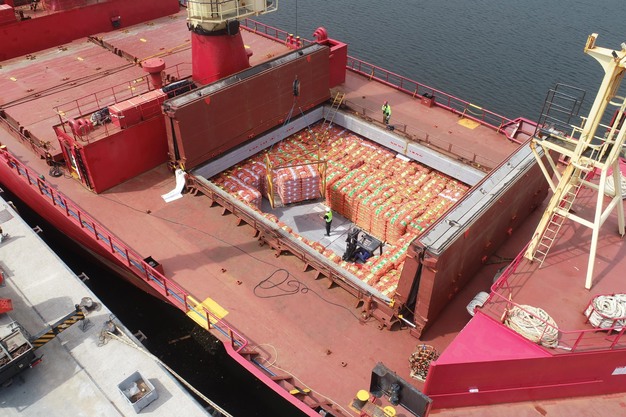
These days, Vlissingen harbor handles over 60% of Dutch onion exports annually. North Sea Port has now overtaken surrounding harbors as an onion port, and the Dutch port keeps growing steadily. "Our port is no longer just a logistical alternative – we're a fully-fledged port that deliberately chooses niches."
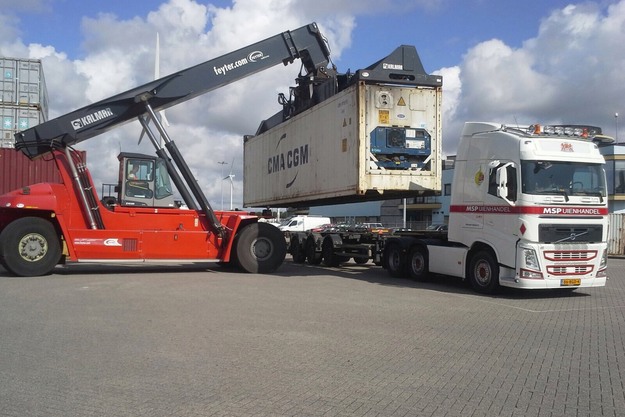
"When it comes to containers, we don't want to be a second Rotterdam or Antwerp, but rather show that containerization can also be powerful and successful in niches. Not only within the Benelux, but throughout Western Europe. There's also interest from new players who've not worked with Vlissingen before," Jean explains.
 © North Sea Port
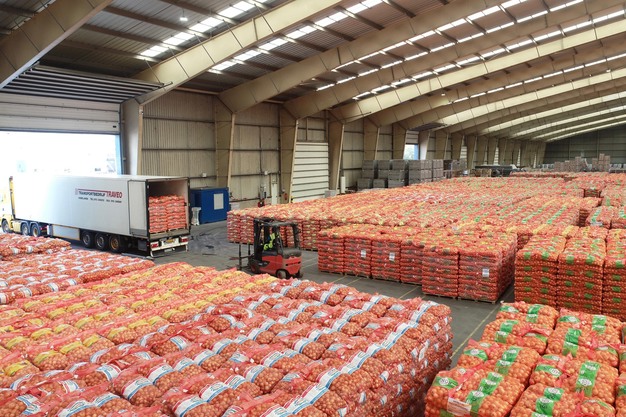
Success, though, demands precise planning: from cultivation and harvesting to sorting, packaging, and shipping (per container or conventional ship) with temporary high-quality storage. West Africa remains its most important market due to high consumption; other markets are smaller. Capacity expansion and new customers lead to growth, regardless of the seasonal volumes. The onion spin-off strengthens other goods flows, too, and confirms the province of Zeeland as a logistics hub with strong connections to the hinterland.
Ruinard also still sees plenty of room for expansion. "There's growth among existing clients, with the possibility of even doubling capacity. Other parties haven't yet fully discovered Vlissingen and are currently opting for different routes. But once the port is on their radar, it will become an obvious choice," he says.
 © North Sea Port
Everything, of course, depends on the onion supply. A bad season due to too dry or too wet conditions can directly affect the volumes exported via the port of Vlissingen. But in the long term, Jean sees nothing but growth: "As production increases, so does our role in the chain. Everything indicates that Vlissingen will continue to expand as an onion port and an important port for other fresh produce," he concludes.
Voor meer informatie: North Sea Port
Jean Ruinard
Schelpenpad 2
4531 PD Terneuzen
Tel: +31 (0) 115 647400
[email protected]
www.northseaport.com