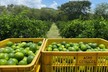
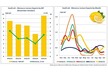
With the development of the South African citrus season, the volume of South African oranges arriving on the market increased significantly this week. According to traders, among the South African orange varieties currently available, sour oranges are performing relatively well due to higher market demand and stable quality. They are currently sold at about ¥270-¥300 ($37–$41) per box, which is close to previous levels. Sales of South African sweet oranges are not as strong. Traders noted that the high quality of Australian oranges arriving this year has created strong competition for South African sweet oranges. Current prices vary significantly depending on quality. Additionally, a small quantity of South African Cambria oranges arrived about two weeks earlier than in previous years, and their current selling price is lower than at the start of past seasons. The price of South African mandarins has slightly declined compared to last week. Some traders mentioned that both South African oranges and mandarins have arrived earlier than usual this year. So far, the total volume of South African oranges in the Chinese market remains lower than in previous years.

Left: South African sour oranges; Right: South African Cambria oranges
As China's lemon production has decreased this season and nears its end, market supply has dwindled, pushing up the price of South African lemons. They are currently sold at about ¥290-¥300 ($40–$41) per box, which is close to the price of Chinese lemons. Traders indicated that more dealers have recently opted for South African lemons due to the reduced domestic supply. Lemon sales are generally favorable.

Left: South African lemons; Right: Australian oranges
The quality of Australian oranges is stable, with prices around ¥300 ($41) per box, and sales remain strong. Traders stated that the volume of Australian oranges arriving this year is greater than before, with good quality and selling prices close to previous years. However, they also mentioned that despite the high supply cost, the current consumption environment keeps selling prices conservative, limiting potential price increases. As for Australian mandarins, some traders noted that their taste this year is not as favorable, so sales and prices are not as strong as in past seasons.

Left: Egyptian oranges; Right: South African mandarins
The market for Egyptian oranges remains strong, with prices around ¥170-¥190 ($23–$26) per box. Traders mentioned that the overall volume of imported oranges this year is not large, and fewer traders are handling Egyptian oranges, helping to maintain market stability.
This week, the number of Peruvian blueberry brands has increased, with prices close to previous years. However, the arrival volume is small and unable to meet demand. Prices of Yunnan blueberries remain roughly the same as last week.

Left: Philippine pineapples; Right: Chinese flat nectarines
Recently, rising temperatures across many parts of China have increased market demand for imported coconuts, accelerating sales and raising prices by about 20% compared to two weeks ago. Traders reported that the coconut supply remains stable.
Philippine pineapples have also benefited from the warmer weather. Compared with the past, prices for imported pineapples have gradually increased. Traders said the current selling price is close to the same period in previous years. With the domestic pineapple season nearing its end, prices for imported pineapples are expected to rise further.