Following last week's announcement that South African products imported into the U.S. would now be subject to a 30 percent tariff, growers and shippers are saying they're disappointed, but not surprised. "I'm hoping that South Africa and the U.S. will come to some negotiated solution that will eliminate the tariff or at least bring it down to 10 percent, in line with the current industry standard," says Mark Greenberg of Capespan North America.
The feeling is that there remain a number of trade issues between the U.S. and South Africa that are driving the issue, and fresh fruit is caught in the crossfire. Those outstanding issues include other goods such as automobile parts, poultry, and more. The U.S. government is also displeased with various policies of the South African government that the administration perceives as running counter to American interests.
 © Capespan North America
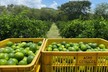
South African citrus season starting
Meanwhile, the South African citrus season in the U.S. is only now, following the 4th of July, gaining momentum with retailers making the switch to imported citrus. However, Greenberg says it's likely that South African citrus loadings to the U.S. will drop at the end of July, but will not stop entirely. "Retailers, by and large, understand the issue and understand that the tariffs will, of necessity, raise prices. There will simply be less citrus available in the U.S. market, and the law of supply and demand will prevail."
The 30 percent tariff will be felt by all links in the supply chain, including growers, importers, retailers, and consumers.
Greenberg says he expects that South African shippers will divert fruit that would otherwise have gone to the U.S. to other strong markets for South African citrus, such as Europe and the United Kingdom. "South Africans have strong and well-established trading relationships in Europe and the UK, which will be able to absorb the fruit that is pulled from the U.S. program. That fruit will need to go somewhere, and it's not going to be sold domestically in South Africa," he says, although he notes that the price offered for oranges to be used for juicing remains an attractive option.
 © Capespan North America
Implications for other fruit
Other citrus products will be impacted as well. Late mandarins will be diverted as the 30 percent tariff on this widely produced item will make the U.S. a less attractive market solution than Europe and the U.K. There's a widely held expectation that navel oranges will be in short supply, but not mandarins. "With heavy late mandarin production in both Peru and Chile, the market should be adequately supplied even in the absence of product from South Africa," says Greenberg. Lemons will not be affected as the U.S. does not take a significant volume of lemons from South Africa because the cold sterilization protocol that the fruit requires makes shipping there a risky venture.
Looking further ahead, as matters now stand, the South African table grape season, which begins shipping in November, will also be subject to the 30 percent tariff. "South Africa does not rely on the U.S. market to any great extent and ships far more to Canada. The U.S., rather, gets most of its Southern Hemisphere table grapes from Chile and Peru," Greenberg says. Those countries will still be subject to the 10 percent tariff rates on product being shipped into the U.S.
In recent years, South African plums have seen some success in the U.S. market, and Greenberg says a 30 percent tariff will be a serious setback.
 For more information:
Mark Greenberg
Capespan North America
Tel: +1 (514) 739 9181 Extension 102
[email protected]
https://capespan-na.com/