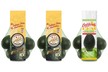
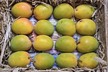
India's mango exports encountered the May rain issues. The Konkan belt faced crop losses during the peak season, slashing Alphonso yields. Ekram Hussain, owner of Essar Exports, said, "It was a good season, but unfortunately, rain in May meant mangoes were not available, and the quantity decreased."
"Alphonso output fell 20-30%, worsened by a post-ripening spongy tissue disorder that led to customer rejections, severely impacting export sales. While Maharashtra's Alphonso struggled, Karnataka's Badami, a regional Alphonso, outperformed in exports, benefiting from stable yields." Internal competition posed another challenge. "Prices rose due to short supply, but internal competition among Indian exporters cut margins. The margin is gone because of unhealthy competition," Hussain notes.
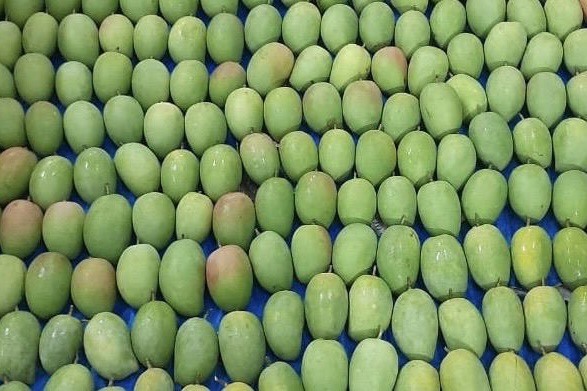 © Essar Exports
According to Hussain, "Rising freight costs and Pakistan's ongoing mango season and lower rates are adding further pressure. High freight costs strained exports, especially to Europe, where pricey Alphonso and Kesar varieties limited shipments." With such constraints, Ekram hopes for support from the Government. "India's 18% GST on air freight, which is refunded after three months, ties up capital. In contrast, the US equivalent tax of USD 900-100 per 1,200 kg shipment eases cash flows for exporters there," he explains.
Ekram pointed to a trend that helped to offset Alphonso's decline. "Alphonso's struggles made way for Banganapalle, Malda, Himayat, Payari, and Chausa. New Zealand took 9–10 varieties, while Europe and a recent Chausa shipment to Japan show promise," he highlights. "I expect that Chausa will receive good acceptance in Japan," Hussain said while adding that other varieties are attracting better rates than Alphonso and Kesar.
With the season ending, Essar Exports plans to supply export markets with Uttar Pradesh varieties available until mid-August. For next season, Hussain seeks government support on freight costs to ease financial strain. "We expect government support in the form of lower GST on air freight, to match the 5% GST on sea freight," he concludes.
For more information:
Ekram Hussain
Essar Exports
Tel: +91-9876543210
Email: [email protected]
www.essarexports.com