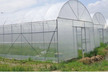
Researchers of Chemosphere Journal published a study this week which reveals that crops grown in greenhouses and poly-tunnels had higher levels of pesticides, twice as much as those of open field crops.
Data on pesticide content were analysed in foods taken from various points in the food chain, and the products were "paired"; for example, strawberries, which are normally grown in greenhouses, were paired with berries like gooseberries, usually grown in the open field .
Pesticides appeared to remain for longer in greenhouse crops.
The number and level of pesticides found in each sample were measured and the results were then compared.
Main findings
Crops under some form of protection presented a significantly higher number of pesticide residues than similar crops grown in the open field.
The average concentrations of pesticides that normally degrade in sunlight were higher in protected crops compared to open field crops.
Higher exceedances of Maximum Residue Levels (MRLs) were clear in lettuce (grown under cover) compared with cabbage (open field).
Dr Cris Halsall, of Lancaster University, lead author of the study, said: "Consumers are very interested in pesticide levels in their food so growers also take a very keen interest in keeping levels to a minimum, even when this is well below acceptable levels.
At the same time we are developing techniques which are increasingly sensitive and good at detecting small changes in pesticide levels. This new research will help build up a clearer picture of how pesticides behave under glass and in poly-tunnels. Pesticide-use regimes in closed-cropping systems should be reviewed to help reduce post-harvest residues on salad and soft fruit."
Source: FoodNewsLATAM