The latest data presented by the World Apple and Pear Association (WAPA) report that the political crisis between the EU and Russia could seriously affect the development of the next fruit season for the southern hemisphere.
According to the latest report from the WAPA, presented at the Congress of Prognosfruit in Istanbul, Turkey on 8 August, the European Union's apple harvest this season is expected to reach 11.893 million tonnes.
This volume represents a 9% increase over the previous year. In absolute terms, one can say that there will be about one million additional tonnes in a market that will make it difficult for surpluses to be redistributed because of the impact of the Russian ban.
Last year, the Russian Federation imported more than 1.3 million tonnes and Argentina accounted for 1.4% of this volume, according to official statistics of the Department of trade in that country. 60% of that figure came from countries of the European Union which are now affected by Vladimir Putin's veto. Poland is certainly the most affected in this context, since it exported more than 700,000 tonnes of apples to the Russian market in 2013.
Considering last year's data, early forecasts indicate that there was a total of about 810,000 tonnes of apples which were going to be shipped from the European Union and the United States to Russia.
The WAPA's studies anticipate that the affected volume could be even greater considering the expected growth in harvest volumes.
European apple shipment programmes to Russia anticipated more than 900,000 tonnes of exports. The trade blockade will prevent this volume from being shipped, which could lead to a complex structural oversupply in the international market.
The lack of this significant volume of apples in Russian stores in turn generates prospects in countries that are not affected by the blockade, as price increases for the product are not discarded, allowing for higher returns for exporters.
Meanwhile, Poland continues to increase its supply volumes. The expected harvest this year will reach 3.54 million tonnes. This volume represents an increase of 12% compared to last year, and of 24% when compared to the average of the last three seasons.
The main destination for Polish apple producers was the Russian market. Last year, 22% of the country's harvest and more than 50% of the fruit sold in the fresh market was directed to this destination.
With an extended forecast about the conflict, the whole European market is actually in trouble for potential oversupply of pome fruits. The current scenario may also indirectly affect southern hemisphere suppliers, which export during the off-season.
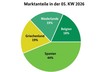
The countries in northern Europe expect a greater apple harvest. Belgium, the Netherlands and Germany are leading this trend, with annual growth of up to 37% (see chart attached).
A large part of the Southern Hemisphere's apples reach these markets from March, so given the potential low demand for imported fruit at these destinations, changes in this direction cannot be ruled out.
In this context, the off-season volumes could be redirected toward Russia or the Asian markets, but without a clear reference in terms of price.
In short: the market changes caused by Russia's ban on products from the European Union and the United States are generating much uncertainty among producing countries in the southern hemisphere, including the producers in Rio Negro and Neuquén, Argentina.
Chart. EU: Apple production by countries (per 1,000 tonnes)
Pears, slightly better
Argentinian pears have rarely had trouble finding overseas destinations, as they are highly demanded by various world markets, especially those which pay high prices for quality, as in the case of European retailers.
But the closure of Russia's borders to fruit exports from the United States and the European Union will not leave the pear market unscathed.
According to data supplied by WAPA, the European Union's pear harvest will reach 2,272 million tonnes this season. This volume reflects a 2% drop compared to last year and of 1% when compared to the average of the last three seasons.
France and Italy show significant declines, while Belgium and the Netherlands recorded increases in harvest prospects.
Russia's pear imports throughout 2013 totalled 380,000 tonnes, of which about 30% corresponded to Argentina's exports. Pears account for only 6% of Russia's total fruit purchases.
About 50% of the imported supply in the Russian market today comes from Europe and the United States. This figure corresponds to about 187,000 tonnes of fruit that would no longer be allowed to enter.
While this is a considerable figure, it is much lower than that of apples, although redirecting about 200,000 tonnes of pears, with a receding market demand, will not be easy for European operators. In this context, the Rio Negro Valley and Neuquén are more likely to increase their export volumes and generate high returns.
Returning to WAPA's harvest prospects for the entire European Union, it is worth noting that while volumes are expected to drop this season, some of the main varieties that compete with the supply from the southern hemisphere have recorded slight increases.
With regard to the Conference, WAPA statistics predict harvest volumes to reach 889,000 tonnes, similar to last season's, but 6% greater than the average for the 2011-2013 period.
As for the Rocha variety, which has already been shipped to the Brazilian market through Portugal for several seasons, a volume of 176,000 tonnes, up 9% over the previous year, is estimated. Refrigerated stocks of this variety in the European Union show the same trend as apples. Data corresponding to July reflect a growth of over 400% and a volume in storage close to 3,700 tonnes.
Source: rionegro.com.ar