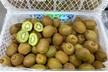
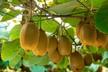
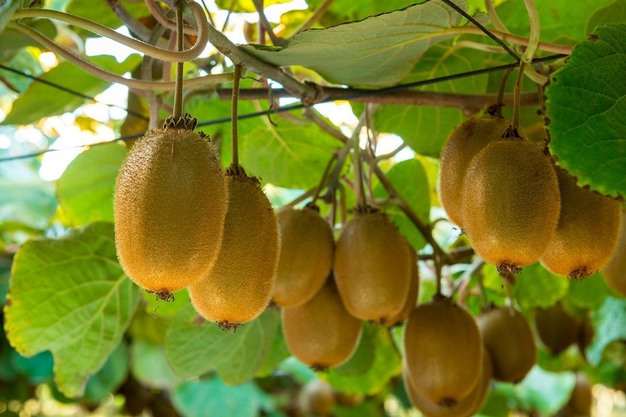
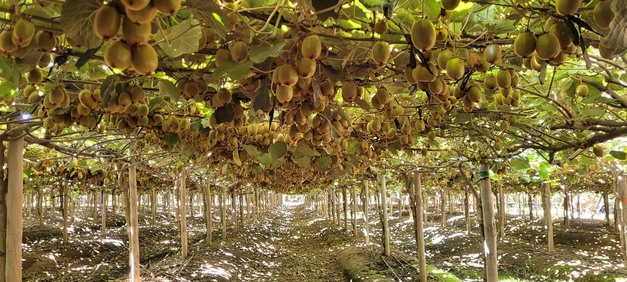
The 2026 Chilean kiwifruit season is underway with significant growth prospects. According to Carlos Cruzat, president of the Chilean Kiwi Committee, the country expects between 175,000 and 180,000 tons thanks to the start of production in new plantations and good fruit setting. "We believe that we are going to grow by 20% this year compared to the previous one," he says, highlighting that production in 2025 stood at 147,000 tons.
 © Frutas de Chile
 © Frutas de Chile The growth in production volumes doesn't seem to be a cause for concern for the sector. Cruzat says that "the global kiwifruit market is very buoyant," with demand "easily outstripping supply" for several seasons. Even demanding markets such as the United States or Europe have been absorbing a lot of fruit. "New Zealand shipped almost 15% more fruit to Europe, and it was nicely absorbed with very good prices," he says.
"Factors such as the exchange rate or logistical costs are seen as more important than the increase in production, as these can have a greater impact on prices," he says.
India remains an emerging market for Chilean kiwifruit. In the last decade, shipments have increased from 800 to 18,000 tons. The lack of Iranian fruit because of the war has resulted in "an emptier market," which will allow a greater trade flow. The country presents logistical challenges, with the retail accounting for only 8% of sales, but also a relative advantage for Chile: open retail channels prefer firmer fruit, and New Zealand's supply is more suited for the ready-to-eat category.
 © Frutas de Chile
Despite competing in certain markets, Cruzat says that they keep a rather complementary relationship with New Zealand, especially as global demand continues to grow. Chile is well-positioned in green kiwifruit, while New Zealand leads in Gold. "If we get to the point when supply starts exceeding demand, we'll face significant competition, but for now we complement each other and consumption is on the rise," he says.
In terms of varietal innovation, the global sector is making progress in Gold and red kiwifruit, although the latter still only represents 1% of the global supply. Chile is working on the development of Gold and red, but faces technical challenges that need to be resolved. Today, the global market is still dominated by green kiwifruit (70%), followed by Gold (29%).
 © Frutas de Chile
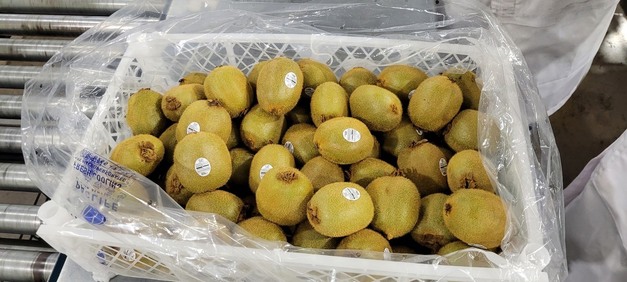
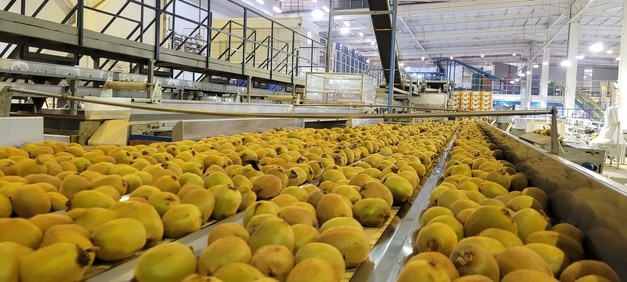
The Committee maintains a strict focus on harvesting standards through the Maturity Assurance Program (MAP), which requires a minimum of 6.2° Brix and 16% dry matter, but encourages even higher parameters. This has helped improve the product's consistency and post-harvest performance. "There's growing awareness and appreciation of what it means to take a little more time during the harvest for the benefit of the fruit," says Cruzat.
 © Frutas de Chile
For the President of the Committee, the main challenge is "to satisfy consumers with excellent quality and to ensure that logistics run smoothly with fruit that is free of defects." The Chilean sector, he says, must ensure a pleasant consumption experience for a product with a complex ripening process that depends on the flawlessness of the product and logistics.
For more information: Carlos Cruzat
Frutas de Chile
Tel.: +56 9 9825 4204
[email protected]
www.frutasdechile.cl