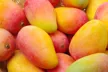
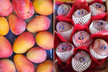
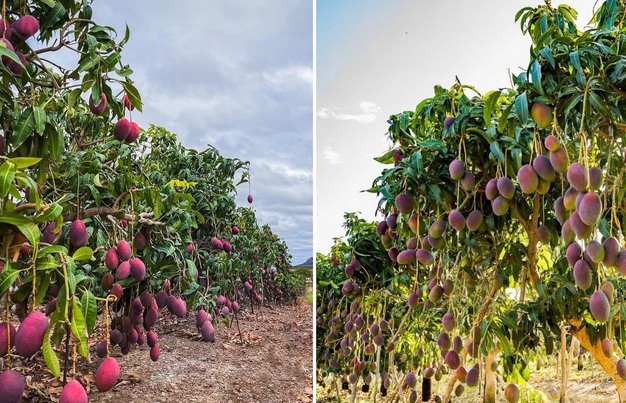
The Brazilian mango season is gradually picking up after the rains recorded at the beginning of the year, with prospects of greater supply in the second semester. "We were affected by the rains, but now the quality is better and the volumes, although low, remain stable," says Aléxia Souza, foreign trade representative of the company Grand Valle.
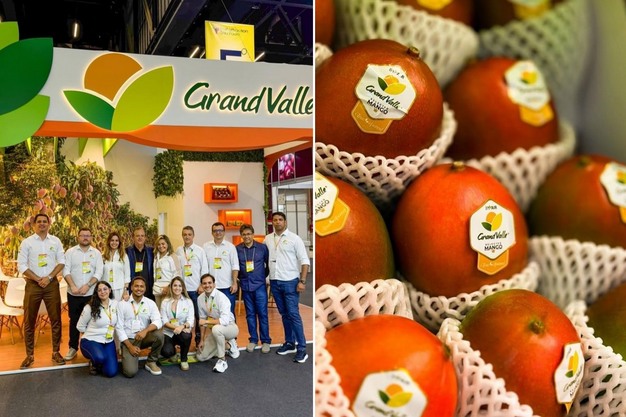 © Grand Valle
During the first half of the year, there have been fluctuations in production and a limited supply. This has given prices a boost. "Volumes have fallen a bit short, so prices are rising a little. However, considering local costs and current prices at the source in Brazil, we would need a minimum return of around 4.00-4.20 EXW euros per box to be able to cover these costs," she says.
Regarding projections, Aléxia says that peak production is expected "around early August," when the volume of all varieties will increase. Grand Valle works mainly with the Palmer in this first part of the year, but from August onwards, it will also start with the Keitt, and in September, with the Kent, so the available supply will increase.
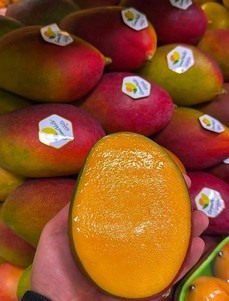 © Grand Valle As far as markets are concerned, Brazil has kept exports steady, despite the lower volumes. "Europe remains its main destination, as it provides a longer marketing period and more opportunities throughout the year. At the same time, the United States functions more as a seasonal market, conditioned by the presence of Mexico and Peru, which limits our export opportunities in certain periods," says Aléxia. This limits the possibility of redirecting more fruit to the U.S. market, even though prospects are better this year due to lower Mexican production.
Still, there have already been some exports to the United States due to the higher demand. "Some companies in Brazil have already started exporting to the United States," she says. In 2025, Grand Valle shipped 130 containers to the U.S. and 900 to Europe, and this year we could see similar or slightly higher figures.
With Ivory Coast production currently on the market, Brazil is getting ready for its export window in a few weeks, albeit with smaller volumes than those intended for the European market. At the same time, logistical costs remain a challenge: "Both air and sea freight have become more expensive," she says. The shipment of mangoes by air is especially affected.
 © Grand Valle
"Another opportunity for 2026 is the possible entry into the Japanese market, a process currently in the stage of procedures and certifications. Those shipments would be exclusively made by air due to the compulsory hydrothermal treatment and the fruit's sensitivity. We also see potential to expand our presence in other Asian markets, such as South Korea, where we are already present, but with plans to continue growing and consolidating our participation," says Aléxia.
For the rest of the year, Grand Valle foresees a campaign similar to the previous one, stable, with a gradual improvement in volumes and without any major surprises as long as there are no extreme weather events. "I think it's going to be a stable campaign, like last year," says Aléxia.
For more information:
Aléxia Souza  Grand Valle
Brazil
Tel.: +55 74 7400-6380
[email protected]
www.grandvalle.com.br