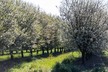
Climate change and dry summers are prompting structural shifts in German fruit production. In Rheinhessen, grower Peter Schwalbach has replaced sour cherries, plums, and mirabelle plums with walnuts and, more recently, almonds, which are performing under current conditions in Wolfsheim.
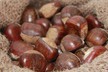
In the southern Palatinate, Willi Kuhn entered nut cultivation through a family inheritance. His wife's great-grandfather had a plantation with large nuts and thin shells. "I've wanted to grow trees like that myself since the 1960s," he says. "But I couldn't do it with nuts I collected myself." A tip led him to a walnut tree nursery in Kaiserstuhl. Due to the presence of the American fruit fly and waterlogging, he opted for hazelnuts instead of walnuts, later adding chestnuts. He now cultivates around 17 hectares, including 3 hectares of chestnuts, 6.5 hectares of hazelnuts, 4.5 hectares of almonds, and 2 hectares of pecans.
Warmer conditions are also influencing production in the United Kingdom. Growers Tom and David Tame cultivate around a dozen walnut varieties, some of which are processed into oil. The crop performs at temperatures of around 25°C, and, according to Tom, Britain is "finally getting into that territory".
In Wolfsheim, Schwalbach continues to expand nut production and promote local consumption. "We have just harvested a significant amount for the first time." He has planted around 50,000 trees, including 30,000 almond and 20,000 walnut trees. Compared to stone fruit, nuts require less water during summer but more in spring. "We have enough of that in Rheinhessen," says his partner, Shari Huwer.
Walnuts and almonds remain a niche in Rhineland-Palatinate. Around 44 farms grow walnuts on approximately 90 hectares, compared to a total fruit area of around 3,500 hectares. More than 99 per cent of nuts and almonds consumed in Germany are imported. "We want to create a brand whose unique selling point is that the nuts and almonds come from Germany," says Huwer. "We don't have to irrigate."
According to Peter Hilsendegen of the Rural Service Centre Rheinhessen-Nahe-Hunsrück, there is potential for expansion beyond niche status. Almonds and nuts are suited to drought and heat conditions and support biodiversity, but site selection remains limited. "The location requirements for almonds are particularly high," he says. "Regular yields require good locations that are at least suitable for wine growing, or better still, for apricot cultivation."
Processing capacity remains a constraint. Cleaning, drying, storing, cracking, sorting, and packaging infrastructure is still being developed. Drying after harvest is required for quality, says Huwer. Plant protection also remains a challenge. Kuhn is testing pecans resistant to the fruit fly and is involved in a pilot project with the DLR that includes almonds. The first almond trees were planted in 2023 following cooperation with a Spanish institute. He notes that climate change enables cultivation but also requires further development in processing and marketing. "We should give the fruit a chance here."
Source: The Star