Norman Nieder-Heitmann, business development manager of Gossamer, believes that investment decisions in packhouses ultimately come down to where the greatest return can be achieved. "For many growers, this often means weighing up improvements in the orchard, such as increasing export yield, with investments at the end of the packing process which would unlock throughput and consistency."
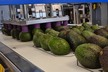
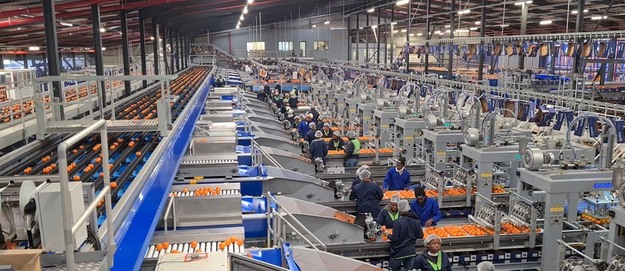 © GossamerGossamer autopackers in action at Twypack packhouse (Indigo Fruit Farming), Nelspruit, Mpumalanga
Gossamer provides complete end-of-line solutions, from the sizer onwards through to pallet loading, with a focus on enabling revenue through improved flow, quality and scalability, he says. The company is active in South Africa's citrus, apple, tomato and avocado sectors; its recent distribution agreement with Tomra APAC to introduce Gossamer Autopackers into Australia and beyond marks a significant step forward for the company.
"We've established a strong position in auto packing in South Africa, and the Tomra APAC partnership allows us to extend that capability into new markets."
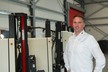
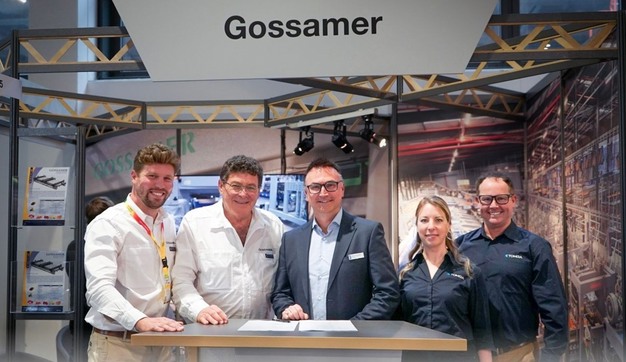 © GossamerNorman Nieder-Heitmann with Charl Nieder-Heitmann, Gossamer director and founder, Paul Slupecki, CEO: Tomra Food APAC, Kim Sumner and Guy Wilson, both from Tomra Food APAC
Automation not always the first lever to pull
Automation is not always the first lever to pull, Nieder-Heitmann points out. "Investment should be directed where it unlocks the most value, whether that's increasing yield in the orchard or improving flow and consistency in the packhouse. When automation is implemented at the right point in the process, it becomes a strong revenue driver. We help customers identify when and where that investment makes sense, rather than pushing equipment where it won't yet deliver returns."
He makes the case that the objective is not to automate everything, but rather to solve the right bottlenecks at the right time. "The constraint in most packhouses isn't people, it's flow," he remarks. "The focus is on increasing throughput and consistency within the same footprint."
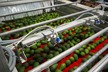
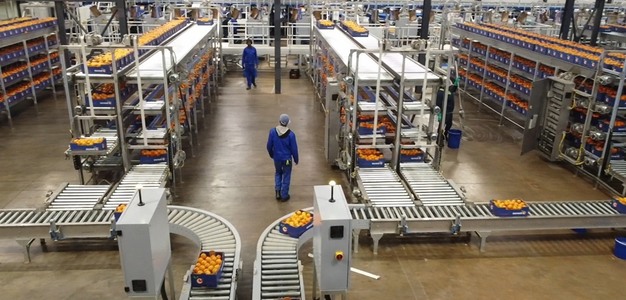 © GossamerGossamer carton accumulation at Twypack packhouse (Indigo Fruit Farming) in Nelspruit, Mpumalanga
"The goal is to avoid regret"
He suggests approaching automation in phases, allowing packhouses to adopt modular solutions aligned with their operational needs and budget.
"Typically, when the next generation becomes involved, there's a renewed drive for process improvement, especially when it improves throughput or consistency. Whether that includes packing, weighing, palletizing, or automated pallet movement, it should be implemented at the right time for the operation."
Gossamer aims to be involved early in the process, and they place much emphasis on long-term decision-making, he says. "We're not there just to sell equipment; we focus on the broader solution. Ideally, we engage before a packhouse is even designed to understand long-term goals. We also take farmers and packhouse managers to existing installations so they can see how the systems integrate in practice. The modular approach allows for future expansion as needs evolve. The goal," he notes, "is to avoid regret. The best outcomes come when operators have had time to evaluate automation over a season or two before committing."
Some of their clients share their plans for future packhouses years in advance. The citrus industry is expected to require significant additional packhouse capacity by around 2030.
Leader in autopacking & rail-guided vehicles
Gossamer's entry into agriculture began with the TZ-1 high-speed telescopic carton sealer, named after its inventor, Terry Zondagh. The machine is now in its seventh iteration, and his widow still receives royalties on each unit sold.
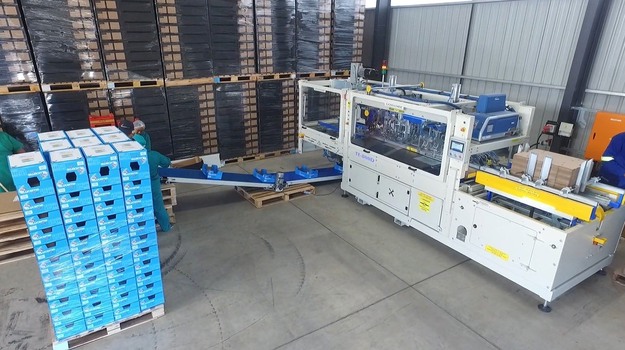 © Gossamer
Gossamer tray erector at CAPAC packhouse, Robertson, Western Cape
Gossamer collaborates with corrugated carton manufacturers in South Africa to test new carton designs before commercial release.
In Gossamer's early years, founder Charl Nieder-Heitmann drew on his experience as a mechanical engineer working on military technology. As the company later pivoted into packaging machinery, these same engineering principles and processes were carried over into its agricultural equipment. This foundation of rigorous design and testing continues to underpin Gossamer's machines today. Some clients still operate equipment that is over 30 years old, which can be refurbished and supported with newly manufactured parts.
"In many cases, the longevity comes down to disciplined design and testing standards," he observes.
Gossamer has since established itself as a leader in autopacking systems in Southern Africa. The PP-300 high-speed pattern packer can process between 200 and 1200 cartons per hour, depending on configuration, significantly reducing manual labour requirements depending on the application.
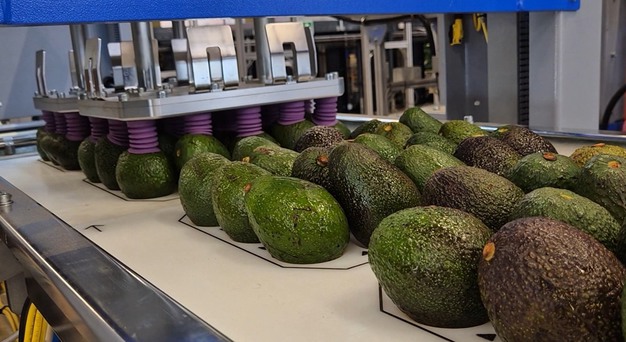 © GossamerGossamer autopacker at the UCL Packhouse, Dalton, KwaZulu-Natal
Packing graded fruit into bin fillers, rather than directly into cartons, offers flexibility when handling varying counts and classes.
"You don't always know the size distribution in advance, which can lead to bottlenecks at packing tables. Bin fillers allow the sizer to continue running at full capacity, while buffering variation."
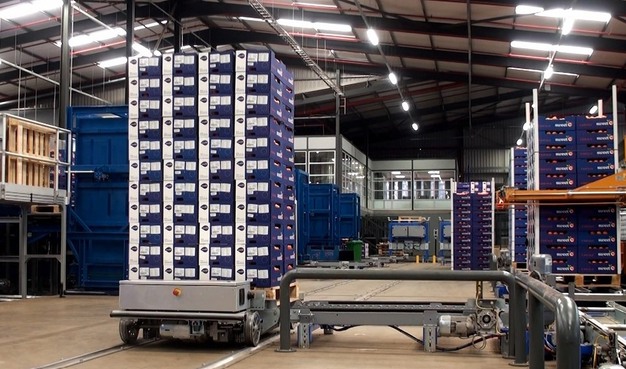 © GossamerGossamer rail-guided shuttle cart at Twypack (Indigo Fruit Farming), Nelspruit
In the palletizing area, Gossamer focuses on improving both pallet quality and operator ergonomics through lift stations, or fully automated palletizing processes. These systems ensure consistent, well-formed pallets while reducing physical strain on operators.
By integrating automated pallet handling, using shuttle carts, also known as rail-guided vehicles, both full and empty pallet movement can be managed without forklifts in the palletizing zone. This reduces unnecessary traffic, improves safety and minimizes the risk of product damage or structural impact within the packhouse.
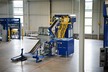
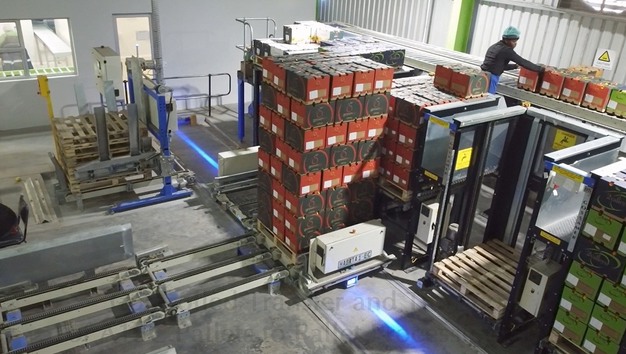 © GossamerGossamer palletizing system at Habata Badlands, Kirkwood, Eastern Cape
"Removing forklifts from high-density working areas significantly improves safety and consistency. It also creates a more controlled environment for pallet handling, which directly impacts final pallet quality."
He continues: "As volumes increase, we expect more packhouses to adopt these systems to maintain efficiency and control operational risk."
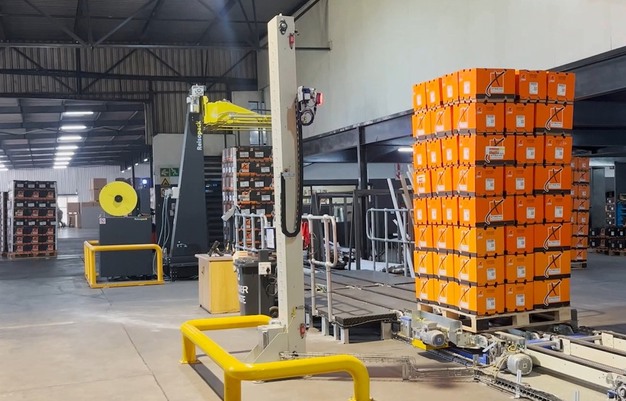 © GossamerGossamer pallet processing at Xact Packers, Tzaneen, Limpopo
For more information:
Norman Nieder-Heitmann
Gossamer
Tel: +27 21 851 2464
Email: [email protected]
https://www.gossamer.co.za/