At the Paris International Agricultural Show (SIA), ENGIE and the producers' association Cerafel, via its Prince de Bretagne brand, announced a partnership with the intention of creating a local value chain for biogenic CO₂ from agricultural methanization. This project will enable Prince de Bretagne to reduce the carbon footprint of crops grown under cover, secure supplies, and stabilize costs while strengthening the competitiveness and resilience of the sector," according to the press release.
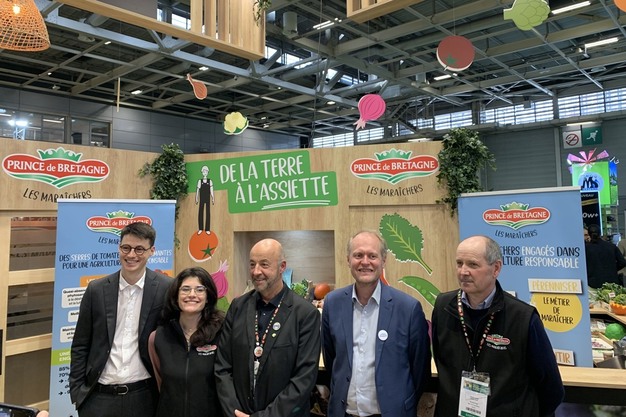 © Prince de Bretagne
From 2026, under the terms of this partnership, two methanization units operated by ENGIE and located in Pontivy and Saint-Brieuc will supply Prince de Bretagne producers with biogenic CO₂. This "bio" CO₂, derived from the degradation of organic matter, is part of the natural carbon cycle. Reused in greenhouses, it stimulates plant photosynthesis, replaces fossil CO₂, and contributes to the decarbonization of agricultural production.
This partnership will enable Prince de Bretagne to accelerate its energy transition by reducing its carbon footprint while securing and stabilizing its CO₂ supply. For ENGIE, the recovery of this co-product from the production of biomethane improves the performance of its methanization units while offering producers a local and circular solution to decarbonization.
A long-term commitment
Based on a long-term contract, this partnership now guarantees an annual contribution of
several thousand tons of biogenic CO₂ to around 10 greenhouse growers. The liquefied CO₂ meets the quality standards for greenhouse use, with a purity of over 99%. It will be enhanced by new partnerships, as ENGIE aims to develop this technology at all its sites.
Innovation serving the energy transition
This partnership is based on an innovative technology that enables direct recovery of the
CO₂ directly from the methanization units operated by ENGIE, using specific capture and purification equipment. This technology makes it possible to extract the CO₂ from the biomethane production process, purify it to industrial quality, and then package it for agricultural use.
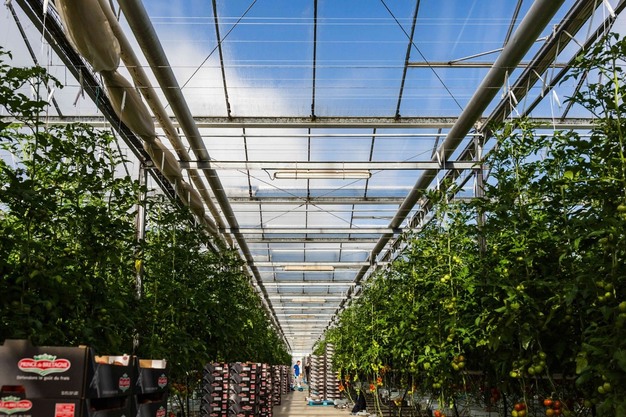 © Prince de Bretagne
A dedicated organization to transport bioCO2: SAS CERAFEL DYNAMIC AVENIR
To manage this collective scheme, the growers and Cerafel have set up a dedicated entity: SAS CERAFEL DYNAMIC AVENIR. This company handles the contracts (production, transport), centralizes logistics (delivery planning, tank installation, telemetry, security), and distributes costs transparently between operations. The model combines mutualization, shared governance, and local roots, with a ramp-up planned for 2027.
"CO₂ is important for the development of greenhouse crops, but it is facing scarcity and the instability of its price. Through this partnership, Cerafel is helping to develop the use of bio-CO2 from methanization within the cooperative in order to improve the atmosphere of greenhouses. Anchored locally, it fully meets the challenges of transition facing Prince de Bretagne producers and the ambitions they have set themselves in terms of CSR. In addition to securing the supply and stabilizing supply costs over several years, this partnership with ENGIE will reduce the sector's carbon footprint with a local supplier," explains Marc Kerangueven, chairman of SAS Cerafel.
DYNAMIC AVENIR, Cerafel - Prince de Bretagne and SICA Saint-Pol-de-Léon.
For more information:
Prince de Bretagne
www.cerafel.com
www.princedebretagne.com