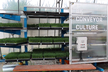
LogisAll and Farmers Lab, both based in South Korea, recently signed a memorandum of understanding to develop a rental-based smart farming platform built around Farmers Lab's BK Conveyor Culture (BKCC) system.
According to Seungwan Lee, founder of Farmers Lab Ltd, the agreement is not structured around a single facility or pilot project, but around the creation of a standardized platform intended to be deployed repeatedly. "This partnership is not about building isolated farms," Lee says. "We are building agricultural infrastructure."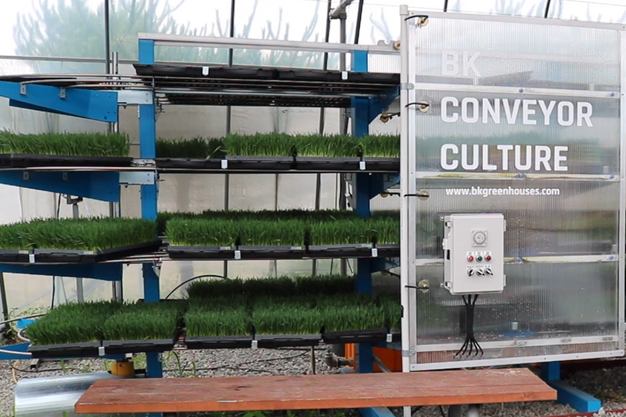 © Farmers Lab Ltd
From projects to platforms
Lee says the objective of the collaboration is to move away from project-based vertical farming models toward systems that can be replicated without structural redesign. "If every new site requires redesign, it is not a platform," he says. "A platform must behave like infrastructure, not like a prototype."
For Lee, platform readiness is defined by repeatability across three dimensions. "A system becomes platform-ready when it is structurally standardized, operationally predictable, and financially repeatable," he says.
Reframing capital through rental infrastructure
The collaboration combines LogisAll's rental and asset lifecycle management model with Farmers Lab's BKCC production system, with the aim of changing how capital is deployed in vertical farming.
"Traditional vertical farms are heavy in upfront CAPEX and long payback cycles," Lee says. "By combining a rental model with BKCC, equipment ownership shifts to a managed asset layer, CAPEX converts into structured OPEX, and asset lifecycle is professionally maintained."
According to Lee, the result is not simply a change in ownership, but a change in risk exposure. "This combination lowers the initial capital burden, reduces labor volatility, and reduces asset management risk," he says. "It changes the financial structure, not only the growing technology."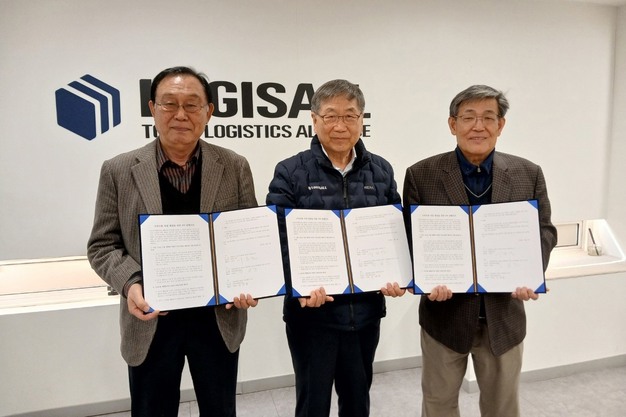 © Farmers Lab Ltd
What "asset-light" means in practice
Lee describes the model as an intentionally separated ecosystem, rather than a vertically integrated operation. "In this ecosystem, structural hardware sits in the rental layer, technology design and system standards sit with Farmers Lab, daily operation sits with the local operator, and financial structuring sits with the investor layer," he says. "Ownership and operation are intentionally separated, while system logic remains unified."
LogisAll's experience in logistics rental informs how the platform is structured and maintained, Lee says. "From logistics, we apply lifecycle management, utilization rate discipline, preventive maintenance, and redeployment capability," he says. At the same time, he stresses that agriculture introduces variability that logistics does not. "Biology is variable," Lee says. "That is why structural standardization becomes even more important. The platform must absorb biological variability without redesigning infrastructure."
How BKCC restructures daily operations
At the operational level, Lee says BKCC is designed to reduce workflow complexity rather than eliminate human judgment. Each tray in the system measures 30 by 60 centimeters and can be handled with one hand. Inside the grow room, operators load and unload trays onto the BKCC unit, while other processes are separated into dedicated workstations. "Seeding, transplanting, harvesting, and washing are separated from the grow room," Lee says. "These processes can be partially or fully automated."
According to Lee, separating production flow from workstations improves hygiene control and stabilizes daily operations. "Technology reduces friction," he says. "Agricultural judgment still requires experienced human oversight."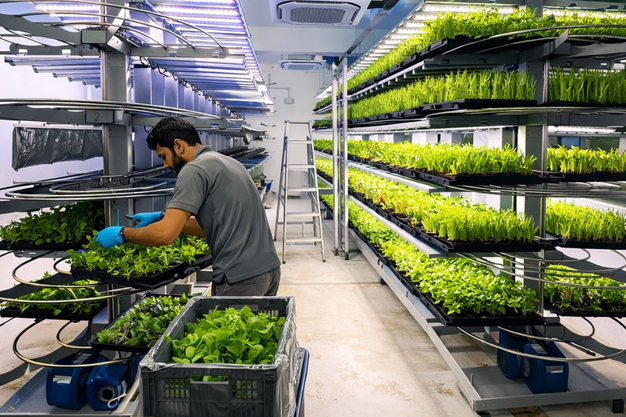 © Farmers Lab Ltd
A structural shift from fixed-rack systems
Lee contrasts BKCC with fixed-rack vertical farming systems, where multiple tasks take place inside the grow space. "In fixed-rack systems, workers move vertically. They climb or stretch, and seeding and harvest happen inside the grow room," he says.
"In BKCC, the tray moves to the worker. Work posture is stable, and workflow becomes linear." As a result, the grow room functions as a production flow space rather than a multi-purpose work area. "This improves ergonomics, timing consistency, tray turnover, and labor predictability," Lee says. "It is a structural workflow shift, not simply a labor percentage reduction."
Standardization first, localization second
To enable replication across markets, Farmers Lab standardizes core infrastructure elements. "We standardize tray size, rack geometry, movement systems, and workflow logic," Lee says. Localization is limited to biological and commercial variables. "We localize crop type, nutrient recipe, climate calibration, and market strategy," he says. "The infrastructure remains constant. Biology adapts within that structure."
BKCC supports multiple crop categories, including leafy greens, microgreens, fodder, and nursery plants, without changing the structural system. "This is possible because we can switch between root-zone feeding and overhead spray irrigation," Lee says. However, he emphasizes that flexibility is constrained by design. "Flexibility must stay within operational boundaries," he says. "Diversification should reduce risk, not create complexity."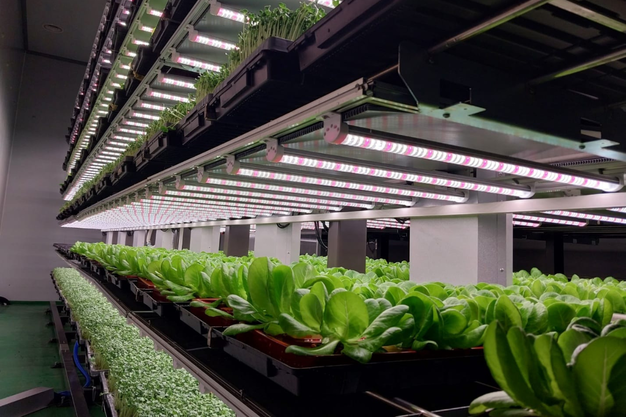 © Farmers Lab Ltd
Preventing customization creep and distributing risk
Lee says long-term scalability depends on preventing site-specific modifications that undermine standardization. "Customization creep happens when each site modifies rack spacing, irrigation layout, or workflow structure," he says. In the BKCC model, crop strategy can change through scheduling and irrigation mode, but the structural unit remains fixed. "This protects long-term scalability," Lee says.
In early deployments, Lee says risk is intentionally distributed across the platform. "Technology risk sits with Farmers Lab, asset depreciation risk with the rental platform, market risk with the operator, and financial structuring risk with the investor," he says. "Risk should not sit entirely on the grower."
Measuring success as infrastructure
Treating smart agriculture as infrastructure also changes how performance is evaluated. "If agriculture is treated as infrastructure, success should be measured by utilization rate, uptime stability, lifecycle performance, and EBITDA consistency," Lee says, "not only yield per kilogram."
For Lee, the signal that the model is working at a platform level is clear. "When multiple sites operate under identical system logic, ROI becomes predictable across locations, training is standardized, assets can be redeployed, and expansion no longer requires reinvention," he says. "When growth does not require redesign, it becomes a platform."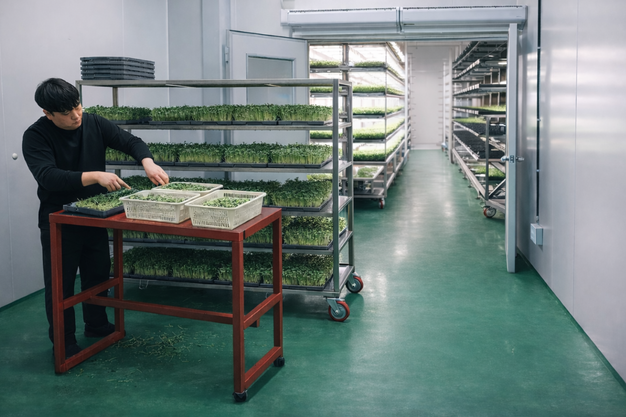 © Farmers Lab Ltd
For more information:
Farmers Lab Ltd. Seungwan Lee, Founder
[email protected]
www.bkgreenhouses.com