JCLM Farming is undertaking its largest infrastructure expansion since commencing plug plant production in 2023, responding to growing demand from Australia's commercial strawberry sector. The Tasmanian-based nursery is expanding its plug plant facilities to add capacity for an additional two million plants, alongside a significant investment in drip, drain and climate monitoring technology to support scalable production.
Construction is underway at JCLM Farming's Ouse site in Tasmania's Derwent Valley, with completion scheduled for autumn. Tasmanian contractors JDC Cartage and Excavations and Greenvale Ag Drainage have completed access road construction and prepared tunnel foundations, with Haygrove tunnels to be installed in the New Year.
"This is the biggest construction project we've undertaken since we started growing plug plants," says Jack Beattie, Managing Director of JCLM Farming. "The expansion is about ensuring we have the infrastructure in place to meet increasing demand while maintaining consistency and plant quality."
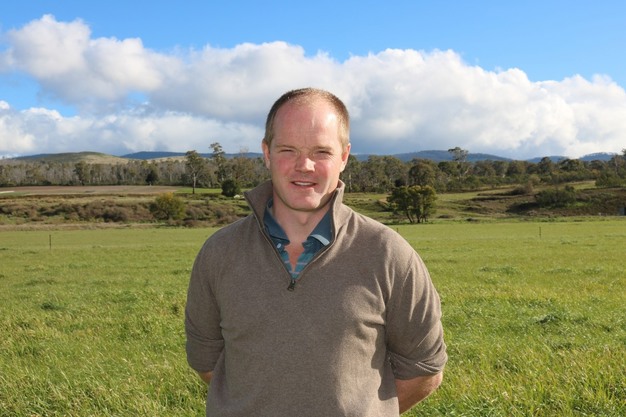 © JCLM Farming
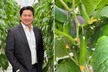
Jack Beattie, Managing Director of JCLM Farming
Strategic nursery location
Established in 2016, JCLM Farming is a family-owned and operated business farming over 280 hectares along the Derwent River in Tasmania's Central Highlands, approximately 95 kilometres north-west of Hobart. The site's geographic and climatic profile makes it well suited to strawberry propagation, particularly for high-chill runners and plug plants.
"Our location gives us a significant production advantage," he shares. "We benefit from high latitude, reliable chill hours, quality water, deep free-draining soils and strong isolation from other fruit production, which helps reduce disease pressure."
Average summer temperatures at the site range from highs of around 24°C to lows of 9°C, providing a mild environment well suited to nursery production. From its Tasmanian base, JCLM Farming supplies strawberry plants from international breeding programs to growers across Queensland, Western Australia, Victoria, South Australia, New South Wales and Tasmania.
Since its inception, the business has expanded rapidly in response to industry demand and now has the capacity to produce up to 10 million plants annually.
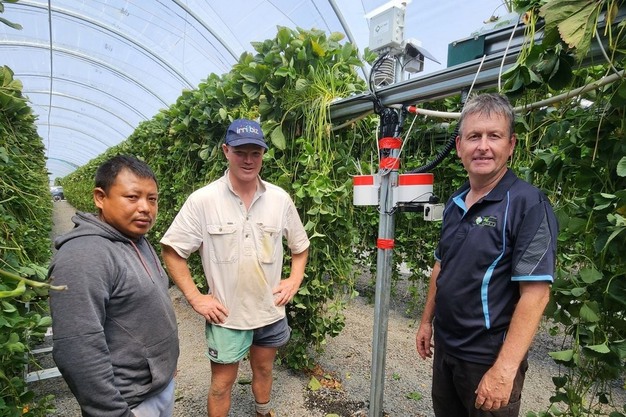 © JCLM Farming
Scaling up plug plant production
Plug plant production has become an increasingly important focus for the business, driving the current expansion in tunnel infrastructure.
"As plug plant volumes increase, the margin for error becomes smaller. Physical expansion needs to be matched with much tighter control over irrigation, nutrition and climate."
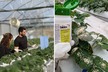
To support this scale-up, JCLM Farming has installed drip, drain and climate monitoring stations across its hanging curtain systems, enabling real-time measurement of bag moisture, electrical conductivity (EC) and environmental conditions.
Precision irrigation and nutrition management
Managing water and nutrient delivery in hanging curtain systems becomes more complex as plant biomass increases.
"As the curtain grows, water demand increases very quickly," Jack explains. "The monitoring stations allow us to track bag moisture so we can ensure we're keeping up with plant demand, while EC monitoring confirms we're hitting our optimum sum EC."
The system provides automated alerts when parameters move outside preset thresholds.
"For example, we receive an SMS alarm if bag moisture drops below a set level. Without that, the only alternative would be constant manual checking of each valve, which isn't practical at scale."
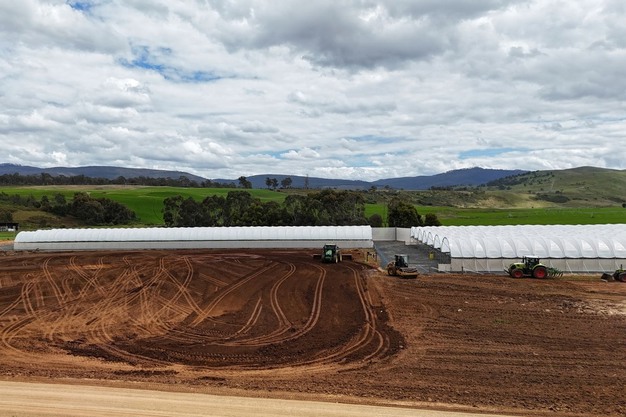 © JCLM Farming
Improving consistency and efficiency
JCLM Farming expects the technology to deliver improvements in productivity and uniformity across plug plant curtains.
"We're expecting an increase in curtain yield per linear metre. Those efficiency gains should help reduce costs, which we aim to pass on to our customers."
Integration with existing greenhouse operations has already delivered new insights.
"We now have the ability to irrigate based on control from the stations. One of the biggest surprises has been identifying irregularities in bag EC at different points within the bags that we weren't aware of previously."
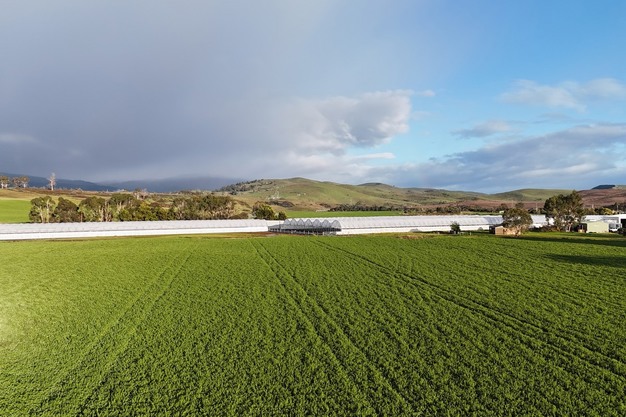 © JCLM Farming
Tailored system design
The monitoring system was developed and installed in collaboration with Agri-Tech Pacific, with director Stephen Welsh overseeing installation alongside JCLM Farming's management and field team.
"Agri-Tech Pacific built the system specifically around our gutters and tailored it to our crop type and crop demands," Jack adds. "That includes managing nutrition to promote vegetative growth rather than generative growth, which is critical in nursery production."
Jack believes data-driven growing systems will play an increasingly important role in strawberry nursery production.
"Our customers operate in a market where they are price takers, not price makers. Any efficiencies we can create through better data availability allow us to continually offer more cost-effective plants that create value in their businesses."
For more information:
JCLM Farming
294 Dawson Rd,
Ouse TAS 7140,
Australia
+61 429 497 223
jclmfarming.com.au