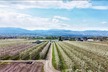
Horticulture remains a central pillar of the rural economy in Jammu and Kashmir, with apples supporting a large share of farm households and related activities across the Valley and parts of the Jammu region. Despite producing apples known for quality, the sector historically operated within a short harvest window, with limited grading, storage, and organised marketing. This often led to rapid market saturation at harvest and reduced price flexibility for growers.
Under the Holistic Agriculture Development Program (HADP), implemented by the Agriculture Production Department, the apple sector is being organised as an integrated value chain linking planting material, orchard design, post-harvest handling, and market access. HADP Project–21, which focuses on designer plants for high-density plantations and orchard rejuvenation, has received more than 10,000 applications, with 4,500 approvals and over 1,500 units established within two years.
Changes are also taking place at the nursery level. In parts of South Kashmir, traditional nursery operators have shifted towards integrated propagation systems, including rootstock banks, mother orchards, and modern nursery units. These now supply uniform, disease-free planting material to support orchard renewal and high-density systems, contributing to more consistent orchard structures and yield patterns.
Inside orchards, high-density plantations promoted under HADP are changing how productivity is assessed. In central Kashmir, growers report higher returns from smaller land areas managed under high-density layouts compared with larger traditional orchards. Uniform tree architecture and concentrated output are influencing labour use, input application, and yield consistency.
Post-harvest handling is also being adjusted. Small-scale grading units near production areas now process large volumes of apples each season, allowing differentiation by quality rather than pooled pricing. Investments in controlled-atmosphere storage and refrigerated transport have increased flexibility in marketing decisions. In 2025, the region also dispatched its first rail-based apple consignment from the Valley, expanding transport options beyond road networks.
Market access is being supported through the Kisan Khidmat Ghar digital system, which provides growers with live price data from major wholesale markets and price forecasting tools by variety and grade. The platform also integrates pest and disease forecasting linked to local weather data to support preventive orchard management.
Use of national trading platforms has increased alongside these changes. Transaction values on the electronic National Agriculture Market rose from ₹14 lakh in 2020–21 to more than ₹670 crore in the current financial year, equivalent to about US$17,000 to US$80 million.
HADP also includes measures to lower pesticide use through canopy management and targeted application practices demonstrated in model orchards. The focus remains on cost and risk reduction rather than certification schemes.
Taken together, the program aligns nurseries, orchards, post-harvest infrastructure, logistics, and market information. With annual apple production exceeding 2.1 million metric tons, incremental changes in grade distribution and sales timing are shaping how growers manage risk and plan market participation across Jammu and Kashmir.
Source: Kashmir Reader