As the Chinese New Year approaches, foot traffic in wholesale markets increased significantly this week, driving price increases for fruits such as cherries and durians and leading to an overall improvement in sales.
Cherry prices have rebounded, rising by approximately ¥20–60 per box compared with last week, an increase of about 15%–25%. In terms of packaging, some traders reported that 2.5kg small boxes are currently selling better, as they are more convenient for consumers to purchase as gifts.
Regina: 2.5 kg × 2 (two-in-one) 3J at approximately ¥310 per box (about US$2.07); 2.5 kg package 3J at around ¥155 per box (about US$1.03).
Kordia: 2.5 kg × 2 (two-in-one) 3J at approximately ¥260 per box (about US$1.73); 2.5 kg package 3J at around ¥170 per box (about US$1.13).
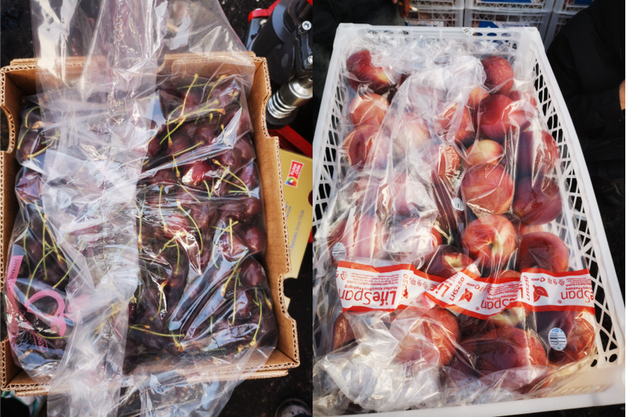
Left: Chilean cherries; Right: Chilean nectarines
According to feedback from multiple traders, although overall prices have increased, there are notable differences in price gains and sales volume between different batches. High-quality cherries are currently in short supply, with price increases of ¥50–60 per box and strong demand, while ordinary cherries have seen only limited price rises. Some traders also noted that consumer enthusiasm for cherries has weakened somewhat in recent years. After the Chilean and Australian cherry seasons end, Chinese cherries enter the market, followed by American cherries, extending year-round availability and reducing cherries' traditional sense of scarcity and premium appeal. This has contributed to a general softening in end-consumer demand.
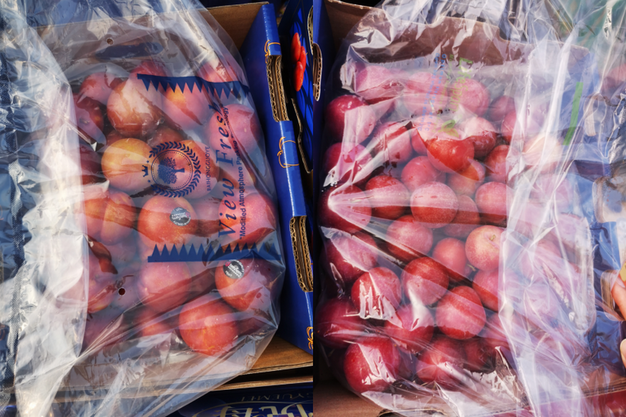
Left: Australian Candy Red plum; Right: Chilean Cherry plum
The variety and volume of imported stone fruit are gradually increasing. Arrivals of Chilean cherry plums have surged, and prices have dropped sharply compared with last week. Traders reported that current prices are about 35%–40% lower than in previous years. For example, a 2.5 kg × 2 (two-in-one) 4J package is now priced at around ¥260 per box (about US$1.73), compared with over ¥400 previously (more than US$2.67). A 2.5 kg 4J package is now selling for approximately ¥125–145 per box (about US$0.83–0.97), down from over ¥200 previously (more than US$1.33). Some traders attribute the price decline to higher arrival volumes and weak consumer demand, making cherry plums more cost-effective for consumers this year. Prices for Chilean nectarines also declined this week.
Australian stone fruits are arriving gradually. Australian Candy Red plums entered the market last week, and the current supply remains limited, with prices significantly lower than at the time of arrival. Some traders noted that consumer awareness of Candy Red plums is still limited and requires further market cultivation. Australian plums arrived earlier, but according to traders, many batches lacked sufficient firmness, resulting in limited effective supply.
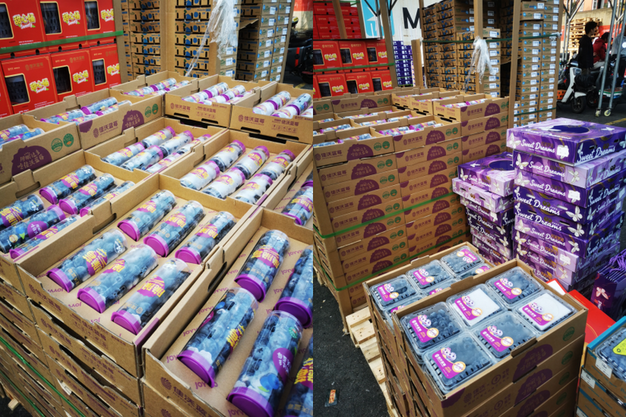
Chinese blueberries in different packaging formats
The blueberry market is currently dominated by Chinese blueberries, with prices remaining stable at around ¥130–140 per box. Some traders mentioned that imported blueberries are scarce, and certain batches of Chilean blueberries have quality issues, such as "red fruit," prompting traders to focus more on domestic blueberry sales.
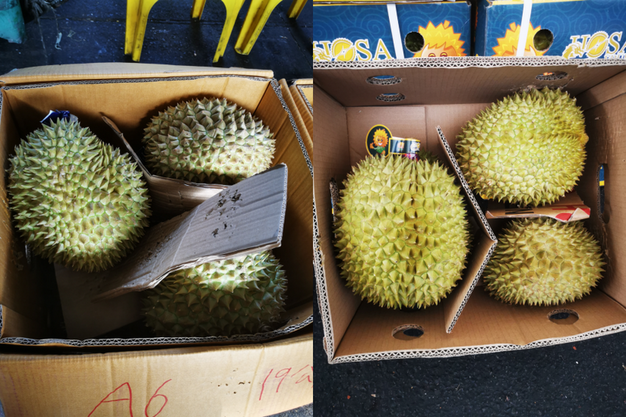
Left: Thai Monthong durians; Right: Vietnamese Monthong durians
Overall, durian arrivals remain limited, and prices are rising on a daily basis. Reference prices are approximately ¥830 per box (about US$5.53) for Thai Monthong A6 and around ¥330 per box (about US$2.20) for Vietnamese Monthong A3, with frequent fluctuations depending on batch quality and timing.