Good sales in the last stone fruit season are translating into an increase in plant orders compared to this same time last year, with a rise in peach sales and rapid growth for nectarine plants. At the moment, the main growing areas are accumulating more cold hours and recording more rainfall than in previous years, so there are good prospects for the coming season.
 © PSB Producción Vegetal
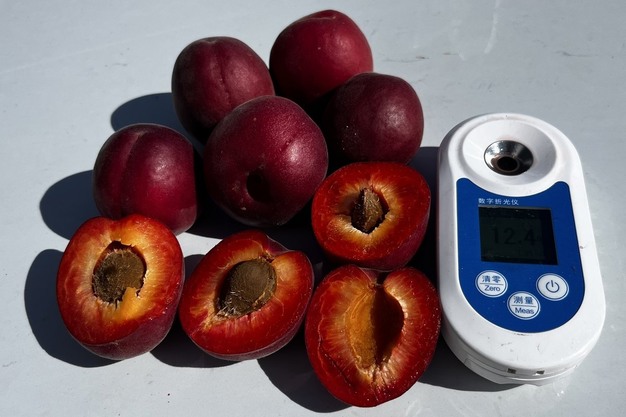
Marcelino BA87-11, red apricot with red flesh, harvested in Murcia in May 2025.
"So far, we've had the coldest and rainiest winter in recent years, with the highest number of hours of cold below 7ºC," says Thomas Chevaillier, technical and sales director of the plant breeding company PSB Producción Vegetal. On January 25th, the early areas of Molina de Segura in Murcia had accumulated more than 150 hours of cold, and Cieza had more than 500 hours, the same as in Don Benito, Badajoz, while Alcarràs, Lleida, had more than 800 hours.
 © PSB Producción Vegetal
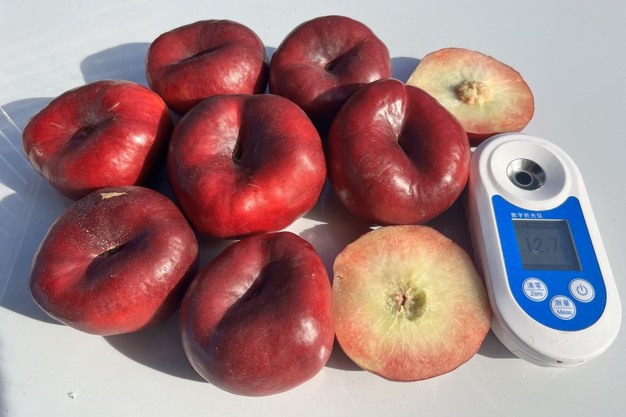
Ushuaya CN158-11 flat nectarine with white flesh, harvested in Murcia in June 2025
"We are above average in terms of cold hours, and we've also had more rain and cloudy conditions, which facilitate the assimilation of cold by the trees. We hope that this will result in more homogeneous and grouped flowering in apricots and cherries, the species that have suffered most from the lack of cold hours in recent seasons," says Thomas. "It looks like we are finally having a winter like those in the old times."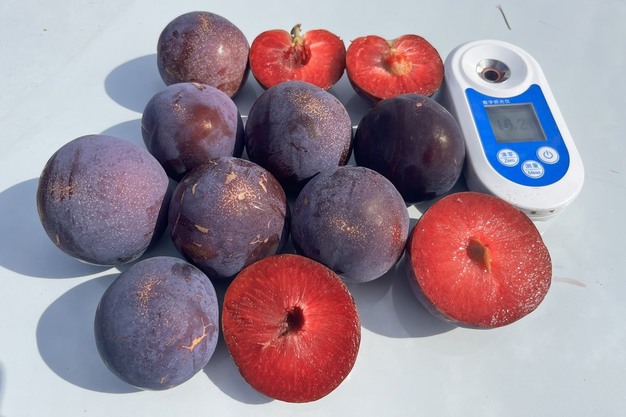 © PSB Producción Vegetal
Rossamor BA86-34, Japanese plum with red flesh, harvested in Murcia in June 2025.
The stone fruit tree planting period is currently underway in the main producing countries of the Mediterranean arc, and according to Thomas, "despite the delay in the delivery of plants by nurseries due to the abundant rains, the demand for plants is up this year due to the good commercial results of the previous season."
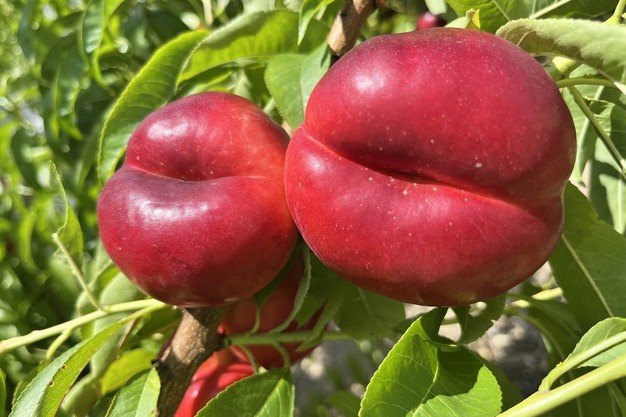 © PSB Producción VegetalMaryloo EP001-9 flat nectarine with white flesh harvested in Lleida in July 2025.
"There is a lot of interest in renewing and expanding stone fruit plantations after several years in which the acreage has been decreasing. Last season, we saw the highest prices in the last 20 years, at least up to August, and growers in Murcia, Aragon, and Catalonia benefited from it. In Extremadura, however, the impact of the spring storms was more severe, with poor fruit set and plenty of discards, so the high prices still didn't make up for the lower volumes.
 © PSB Producción Vegetal
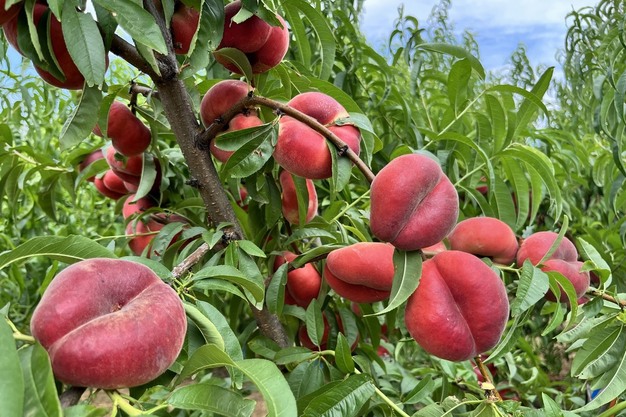
Karaibe (BN1-360), white-fleshed Paraguayo peach, harvested in France in July 2025.
Of the species sold by PSB Producción Vegetal in Spain, 40% are nectarine varieties, 30% are flat peaches, another 20% are peaches, and the remaining 10% are flat nectarines. "Peach sales are more dynamic compared to other years. Growers are betting more on this species to fill certain gaps, especially because it is less sensitive to cold and wind damage or the impact of pests such as thrips. We now have very tasty and attractive varieties," says Thomas.
 © PSB Producción Vegetal
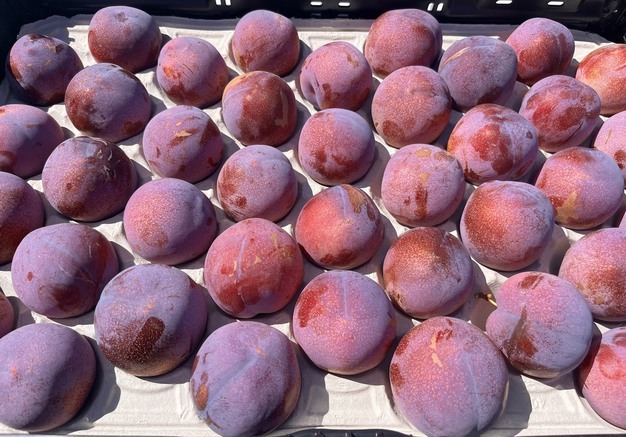
Pallatina (K321-75), Japanese red-fleshed plum harvested in France in July 2025.
"However, the biggest growth has been recorded by flat nectarine, which already accounts for 10% of our sales. No other species is growing as fast as this one thanks to its capacity for genetic improvement and the good work of breeders over the last 5 years to develop tasty and more profitable varieties for the grower," says Thomas.
 © PSB Producción Vegetal
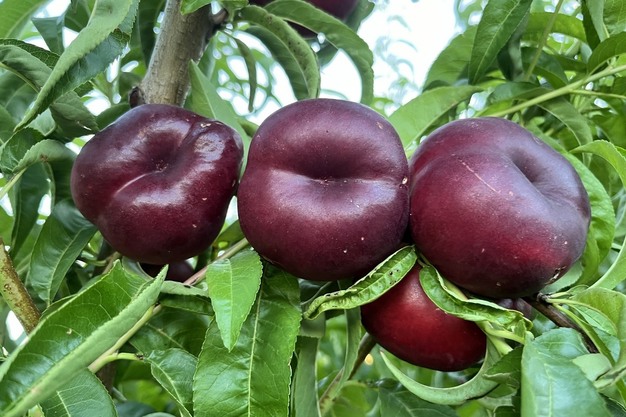
Solstys EP013-25 flat nectarine with white flesh harvested in Lleida in July 2025.
"I think that profitability is simply the most important aspect to take into account when breeding new varieties. Achieving productivity, with less waste, good sizes, and resistance to adverse weather conditions and pests, is just very important for growers to remain motivated to invest in these crops, especially bearing in mind that production costs have risen by 30% in the last 10 years," says the PSB technical director.
The PSB team is back at Fruit Logistica in Berlin, in hall 18, stand A-40, where it hopes to showcase the latest advances in flat nectarines and the first results with plums and cherries, the company's new species.
 © PSB Producción VegetalFor more information:
Thomas Chevaillier
PSB Producción Vegetal
Technical Sales Manager
Tel.: +34 620 810 125
[email protected]
www.psbproduccionvegetal.com