The U.S. produce industry is welcoming the new 2025-2030 Dietary Guidelines for Americans (DGAs), introduced this week by Robert F Kennedy Jr, the health and human services (HHS) secretary and Brooke Rollins, the U.S. administration's agriculture secretary.
The new DGA's upside down pyramid for eating prioritizes fruit and vegetable consumption by recommending two servings of fruit and three servings of vegetables daily, along with meat, dairy and healthy fats. It's a shift away from the classic food pyramid which at the top historically recommended sparing consumption of fats, oils and sweets, and then worked down from there with a breakdown of recommendations per food group.
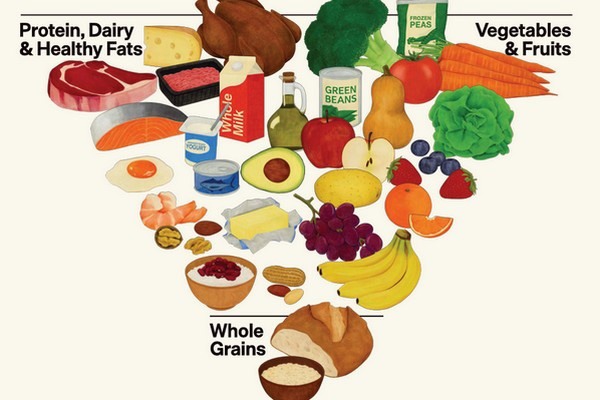 © USDA
"The North American Blueberry Council welcomes the newly released 2025 Dietary Guidelines for Americans, which emphasize eating whole foods, such as blueberries – fresh, frozen and dried," said NABC President Kasey Cronquist, in a statement. "The blueberry industry has invested millions of dollars over many years in robust health and nutrition research that demonstrates the unique and well-documented benefits of blueberry consumption. We have long advocated for the Dietary Guidelines to provide more specific and meaningful guidance that reflects differences among fruit types."
Mission Produce, Inc. also voiced its support of the inclusion of avocados in the guidelines. "We are encouraged to see the Dietary Guidelines reinforce food as the foundation of health and recognize the importance of whole foods, like avocados, in a balanced diet," said John Pawlowski, president and chief operating officer of Mission Produce, in a statement. "This is a meaningful moment for our growers and partners."
IFPA involvement
The International Fresh Produce Association, which was actively involved throughout the DGA development process in submitting multiple rounds of written comments, providing oral testimony and nominating members to serve on the Dietary Guidelines Advisory Committee, noted its public support for the announcement. "The Dietary Guidelines reinforce the critical role fruits and vegetables play in overall health," said Mollie Van Lieu, IFPA vice president of nutrition and health, in a statement. "Scientific evidence consistently shows that fruits and vegetables should make up the majority of what people eat. The Administration's focus on whole foods is an opportunity to increase fruit and vegetable intake, as they are the most nutrient-dense foods available. IFPA also welcomes the Guidelines' focus on reducing added sugars and highly processed foods that displace healthier options like fruits and vegetables.
 © North American Blueberry Council
"The Dietary Guidelines are a framework for a host of federal nutrition programs. We will continue working to ensure a wide variety of fruits and vegetables are available in these programs and that the 2025–2030 Guidelines drive meaningful increases in fruit and vegetable consumption for all consumers," Van Lieu said.
USApple also showed support for DGA's guidelines that emphasize eating fruits and vegetables throughout the day, noting they reaffirm a simple truth that Americans need to eat more fruits and vegetables.
Simplifying eating
The organization is particularly in favor of the simplification of the DGAs, a notion Secretary Kennedy had put forth ahead of their release. "The 2020-2025 Dietary Guidelines are 164 pages. The new version is just 10 pages — so they delivered on a simplified product," says Lynsee Gibbons of the U.S. Apple Association. "While it's too early to say what kind of behavioral changes we'll see, we in general are supportive of this pared down approach. It should make some of the guidance easier to understand and follow."
 © USApple
She notes as well that the terms used for consumption are also clearer. "In the last DGAs, they mentioned vegetables and fruits as part of healthy dietary patterns and frameworks, but it was more abstract. I think the new, more actionable guidance could be helpful, especially switching from things like cups and ounces to servings," says Gibbons. "That alone is more helpful for people to understand. We are hoping that this simplified approach results in people eating more fruits and vegetables."
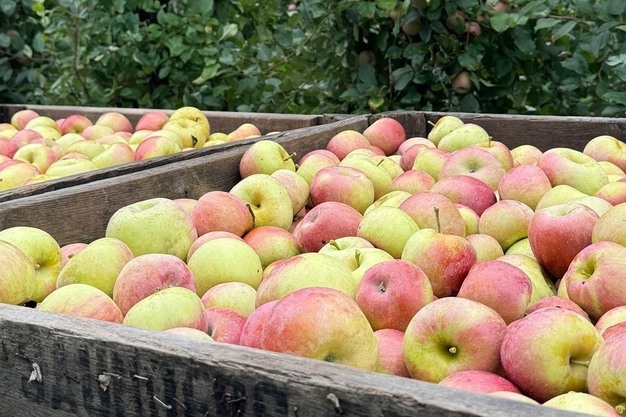
For apples at least, the new DGAs also support the industry's Eat More Apples campaign which of course is designed to increase the consumption of apples in the U.S. As the campaign notes, Europe's per capita consumption of apples per year is at 33 lbs. For residents of the U.S.? That number is sitting at 16 lbs.
For more information:
North American Blueberry Council
https://nabc.blueberry.org/
Mission Produce
http://www.missionproduce.com/
International Fresh Produce Association
https://www.freshproduce.com/
US Apple Association
www.usapple.org