The second major freeze of the season occurred this week across the cold-hardy citrus region in the southeastern United States. Temperatures dropped into the mid-20s Fahrenheit during the early morning hours on Monday and Tuesday. At this stage, the long-term impact on citrus trees remains unclear, particularly where freeze-protection measures were not fully implemented.
"Most folks are just now getting out to start scouting to see if they've had any damage," says Mary Sutton, University of Georgia assistant professor and citrus Extension specialist. "From what little I've heard, it sounds like everybody was using their freeze protection as they should, so I'm hoping we won't see too much freeze injury. But it's definitely too early to tell."
According to Sutton, consecutive days of freezing temperatures increase the risk of injury to citrus trees. The duration of exposure below critical thresholds plays a key role in determining damage levels.
"We're mainly looking at the total hours below the most critical temperature," she explains. "So, if we have five hours below 26 degrees, it's a lot more damaging than one hour below 26. There's more opportunity for injury."
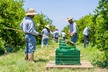
The recent freeze followed an earlier event that occurred during the second week of November. This week's freeze is considered a higher-risk event due to lower temperatures and extended exposure. Citrus producers in North Florida, South Georgia, and South Alabama are currently harvesting the 2025 crop, increasing sensitivity to cold conditions during this period.
Trees become vulnerable once temperatures fall below freezing, but the degree of risk varies depending on acclimation, crop load, and local conditions. Sutton notes that commonly referenced temperature thresholds provide guidance, but outcomes can differ between orchards.
"A lot of the literature for citrus says that around 28 degrees is critical. That's when you really start seeing a lot of damage," says Sutton. "But it's hard to put an exact number on it, because we don't know how the trees have acclimated and how the crop load will affect things. There are so many other factors, so we try to err on the side of caution with everything."
Growers are now monitoring orchards to assess any visible damage, with further evaluation expected over the coming weeks as symptoms develop.
Source: Citrus Industry