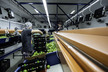
The University of Sargodha has opened its weeklong 2nd Annual Research Arena 2025, an academic and research event featuring exhibitions and research-focused activities. As part of the opening programme, Vice Chancellor Prof. Dr. Qaisar Abbas inaugurated a Citrus Exhibition alongside a Research Expo and an Industrial Expo. The events were jointly organised by the Office of Research, Innovation and Commercialization and the Institute of Food Science and Nutrition, according to Gwadar Pro.
Sargodha is recognised as Pakistan's main production area for Kinnow mandarins and functions as the country's primary wholesale hub for the variety, which dominates national citrus output and exports. While the event itself focused on research, innovation, and industry engagement, a separate study published in late 2025 places citrus production within a broader economic and trade context and examines the role of China-Pakistan cooperation in the sector.
The study, published in Issue 10 of the Policy Research Journal, was carried out by researchers from the University of Karachi with input from the Applied Economics Research Center. It analyses Pakistan's citrus production, market structure, and the potential impact of agricultural cooperation under the China-Pakistan Economic Corridor. According to the research, Pakistan is the world's 13th-largest citrus producer, with annual output exceeding 2.2 million tons.
Citrus accounts for more than 30 per cent of Pakistan's total fruit production, while Punjab contributes over 90 per cent of national citrus volumes. The sector supports livelihoods across rural areas. Despite this production base, the study notes that exports have declined in recent years due to climate-related pressures, aging orchards, and limitations in logistics infrastructure, which have reduced competitiveness in export markets.
The researchers identify infrastructure development under the China-Pakistan Economic Corridor as a potential factor in addressing these constraints. Investment in roads, rail, and port infrastructure, including links between citrus-growing regions and Gwadar Port, could reduce post-harvest losses and transport costs. The study also points to the role of cold-chain development and agro-processing capacity supported by Chinese technology.
Gwadar Port is highlighted as an emerging node for agricultural trade, with the potential to support new export routes for fresh fruit. The research further refers to ongoing cooperation in agricultural research and technology transfer, including irrigation systems, disease management, and post-harvest handling.
China is identified as a potential growth market for citrus exports, subject to improvements in quality standards, logistics, and compliance with phytosanitary requirements. The study concludes that coordinated development across infrastructure, research, and market access could support a recovery in Pakistan's citrus exports and strengthen trade links between the two countries.
Source: INP