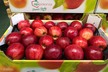
Washington apple harvest has completed and although the state is witnessing another large apple crop this season, production volume isn't as high as initially anticipated. "Growers were very mindful and in order not to over pick, some decided on just one round of picking instead of multiple rounds," says Chris Ford with Viva Tierra Organic. As a result, production volume on some of the earlier varieties is shorter. Taking a closer look at organic apples, the crop seems to be similar in size compared to two years ago. Generally, organics continue to represent about 15 percent of total production, resulting in about 20 million boxes of organic apples this season.
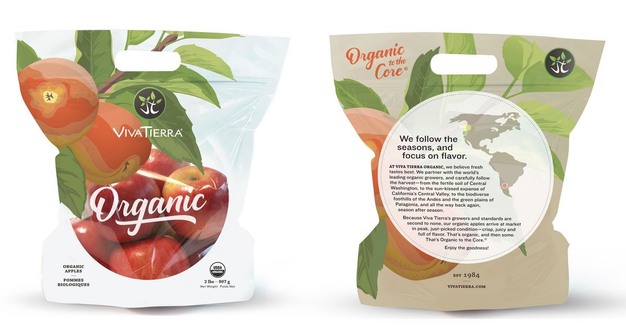
Movement is good on smaller sizes organic apples. "The demand and price for smaller apples are outpacing demand for large apples." Small apples are very suitable for bags and retailers prefer to carry organic apples in bags rather than bulk. "Bags help drive sales but also result in a proper ring up at the register," commented Ford. As a result, packers are trying to cover all the retail 2 lb. pouch bag business with smaller sizes.
 © Viva Tierra
Individual varieties
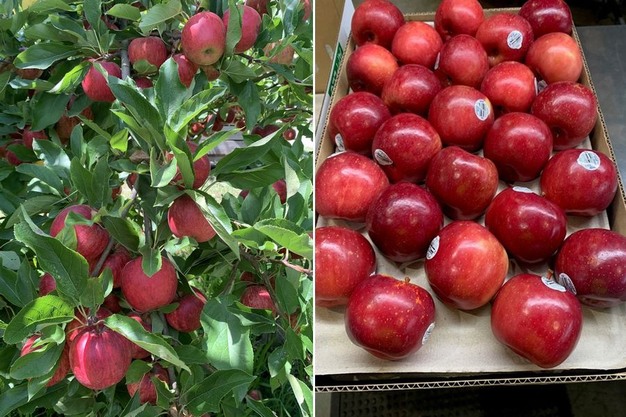
When looking at individual varieties, Honeycrisp, Gala, and Cosmic Crisp are moving well. Demand for Fuji apples, however, seems to be lagging compared to other varieties. In fact, demand for Fuji is declining, which is mainly caused by the relatively new Cosmic Crisp variety. "Competition for red apple varieties is quite high, and Fuji seems to be taking the hit," shared Ford. "The variety isn't getting the marketing attention some other red, sweet apple varieties are getting," he added. In addition to Cosmic Crisp, Honeycrisp is also a consumer favorite, and volume is up significantly from last season. Although it is a popular variety, growers need to receive a high price per pound as the variety is notoriously difficult to grow, resulting in a relatively low packout per bin. Production volume of Gala is lighter as a significant part of the second pick was left in the orchards and Granny Smith seems to have more condition issues compared to the past several years.
 © Viva Tierra
Competition for small import apples
Accelerated demand for smaller apples is expected to drive early North America demand for smaller import apples from the southern hemisphere. However, southern hemisphere growers typically witness good demand and favorable pricing for their smaller fruit from buyers in Europe. "To get that fruit diverted into our market, we need to pay a competitive price," said Ford. "In other words, we need to compete in a global market to get those apples up to North America."
Although early, the outlook for the southern hemisphere season is positive. Chile has had a great start to their growing season and so did New Zealand. Argentina on the other hand had to deal with several big hailstorms that did damage to some apple orchards. As early as April, new crop Gala and Granny Smith are expected to arrive in North America, followed by mid-season Cripps Pink and Fuji.
 For more information:
Chris Ford
Viva Tierra Organic
Tel: 831-917-7321
[email protected]
www.vivatierra.com