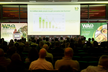
Bangladesh's mango sector has been identified as having export growth potential, but stakeholders say progress will depend on addressing certification, infrastructure, and coordination gaps. These findings were presented at the launch of the research report Advancing mango production & forward marketing in Bangladesh: From local garden to global markets, held in Dhaka on 10 December.
The event was jointly organised by Sustainable Agriculture Foundation Bangladesh and LightCastle Partners, with support from HSBC Bangladesh. Government officials, exporters, researchers, and private sector representatives attended the launch and panel discussion.
According to the report, Bangladesh produces over 2 million tons of mangoes annually and is ranked as the eighth-largest producer globally in 2022. Despite this production base, exports account for less than 0.05% of total output. Global annual mango demand is estimated at around 2.4 million tons, with Mexico, Thailand, and Brazil as leading suppliers.
Nasir-Ud-Doula, director general (additional secretary) of the Department of Agricultural Marketing, said, "We are placing strong emphasis on cultivating improved and high-quality mango varieties." He added that export growth requires coordination across institutions, noting that collaboration among the ministry, the National Board of Revenue, airlines, shipping lines, and the private sector is necessary to support market access.
The research identifies multiple constraints affecting export readiness. These include limited adoption of Global Good Agricultural Practices certification, gaps in quality control and post-harvest treatment, underdeveloped processing and cold-chain infrastructure, weak branding and market positioning, limited technology-based market intelligence, and the absence of mangoes as a priority crop within export policy.
Traditional export destinations for Bangladeshi mangoes have included Europe and the Middle East, while recent shipments to China indicate initial diversification. By May 2025, mango export earnings reached US$284,135, exceeding results from previous years, according to the report.
Experts at the event highlighted internationally traded varieties such as Alphonso, Kesar, Nam Dok Mai, Keitt, Kent, Palmar, and Tommy Atkins as reference points for market demand. They stated that diversification of varieties and alignment with international quality standards could support wider market access in the United States, the European Union, and the Middle East.
The panel discussion was moderated by Abdur Rouf, director of Programme Development at Sustainable Agriculture Foundation Bangladesh. Panelists included Ataus Sopan Malik of AR Malik, Kamruzzaman Kamal of PRAAN-RFL Group, Professor M A Rahim of Daffodil International University, and Mohammad Arifur Rahman from the Ministry of Agriculture's Exportable Mango Production Project.
The report concludes that without coordinated action across production, certification, logistics, and policy frameworks, Bangladesh's mango exports are likely to remain limited despite rising global demand.
Source 1: Bangladesh Post
Source 2: The Business Standard