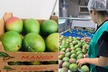
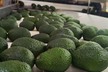
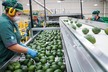
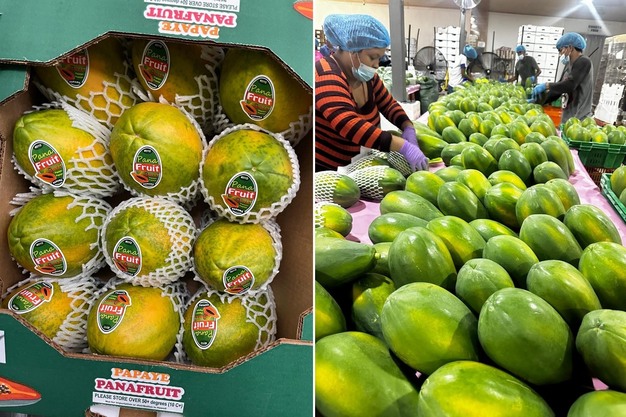
Panama's papaya season is underway in 2025, with some nuances. According to Maryan Safi de Aguilar, manager of Panafruit S.A.'s packing plant, the company had a transitional year as it adapted to a new farm and faced highly variable weather conditions. This has limited the planned increase in planted surface area. Instead of emphasizing volume growth, the strategy has focused on improving quality, especially since reopening the European market and acquiring new clients.
"The European market is currently experiencing a shortage, as winter limits local supply and boosts demand for external suppliers. Nonetheless, gaining entry into Europe remains a major challenge for Panama because of a key factor: the high cost of air freight," she stated.
 © Panafruit
All products shipped to Europe are transported by air, which significantly raises logistics costs. "The final price depends on the airline, and freight makes up a large part of the total cost. This setup makes it difficult to compete with Brazil, the main supplier to Europe. Brazil ships large volumes, allowing it to secure preferential airline rates, something Panama cannot match cost-wise. Therefore, Panama's strategy focuses on differentiating through fruit quality," Safi stated.
Despite this, Panafruit has already sent several trial shipments and expects to begin regular deliveries to Spain in January, once new production starts.
The Spanish market offers opportunities in winter, but the main challenge for the rest of the year is local production from the Canary Islands. "We can't compete with the Canary Islands' papaya when it's in season," she said. Logistics costs in Panama remain high, making it difficult to achieve comparable final prices in the Iberian market.
 © Panafruit
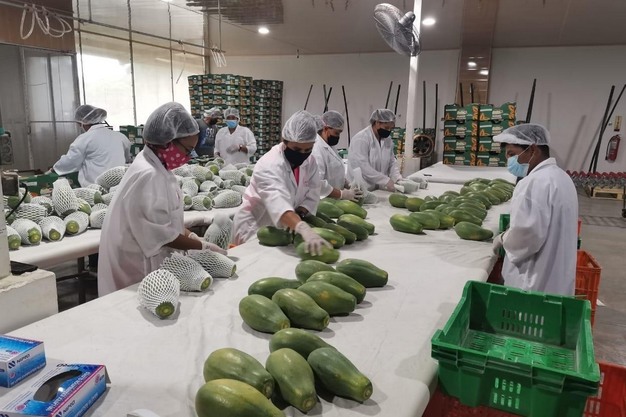
Europe is a market limited by seasonal and freight constraints. In contrast, the United States remains the most stable destination for Panamanian papaya. The company allocates nearly all its production to this market and continues shipments without interruption.
Safi pointed out that the US market "is never full and continues to grow, including the demand for green papaya, a growing segment among Asian consumers. This fruit, which is more resistant and easier to handle, enables an additional export channel with lower post-harvest risk." She also noted that the recent elimination of tariffs on Brazilian imports into the U.S., while restoring Brazilian competitiveness, has not dampened interest in Panamanian produce.
Although the weather hindered the expansion of 10 to 15 hectares, the 2025 season was positive and better than the previous one. "We expect next year to be much better, confident in our new farm and better weather conditions," she concluded.
 For more information:
Ing. Maryan Safi de Aguilar
Panafruit S.A.
Tel: +507 62938697
Email: [email protected]
www.panafruit.com.pa