In the Calitzdorp district, stonefruit orchards and grape vineyards are receiving their final irrigation portion from the Gamkaspoort and the Calitzdorp dams. Last year this time, these dams were both 89% full; their levels currently measure 9.9% and 35.8%.
The spectre of drought returning to the Western Cape is not a cheering thought.
"We're a month away from the grape harvest in this region," says André Fourie of the farm called Klokkies (which means 'little bells', referring, so the family tale goes, to the bell rung to call the midwife, his great-grandmother). "This season, we're still fine with regards to water. But if we're not getting rain soon – the weather forecasters are talking of thunderstorms in January, they fill the dams – then next season's grape crop could be jeopardized."
Ten years ago, the drought started in the Western Cape. Despite their pleas and politicians' visits to the drought-stricken area, Fourie says not a cent of financial assistance ever came their way.
Rising soil salinity became acute. Drip irrigation was unable to leach accumulating salts from soils. They found that orchards under old-fashioned flood irrigation fared better, but they nevertheless lost 80% of their orchard and vineyards.
During the six years of drought, Fourie tells of a plum block that, despite the odds, managed to carry a full crop to the end. "We gave it one last watering a few days before the harvest, and then we watched the leaves turning brown and all of the fruit dropping to the ground. It was the brackish nature of the water that had done it – but that's all you have during a drought. And in the end," he says, "we didn't pick a single fruit from that block. That was a really tough time."
"Extremely small" apricot crop
Their stonefruit and table grape divisions consequently shrank drastically, and he's not planning on resurrecting them. The table grape blocks that survived the drought will be harvested from January onwards and marketed locally.
"It makes no sense planting a tree, watering and feeding it for five years, and by the time it's of bearing age, you find yourself in another drought before the tree has ever reached its full potential."
Their apricot crop was "extremely small" this year, he says, with high sugars given hot conditions, and of a good size. Interestingly, he notes, just on the other side of the Swartberg mountain, Ladysmith apricot growers report a large crop, but in the absence of rain, fruit peaking on the small side.
The crop ripened quickly this year, and the sugar was high, and the fruit sold well on the municipal markets. "We sent apricots across the country, to the fresh markets and on private orders, plus a portion (mostly the Bulida cultivar) that goes to the canning factories for apricot puree."
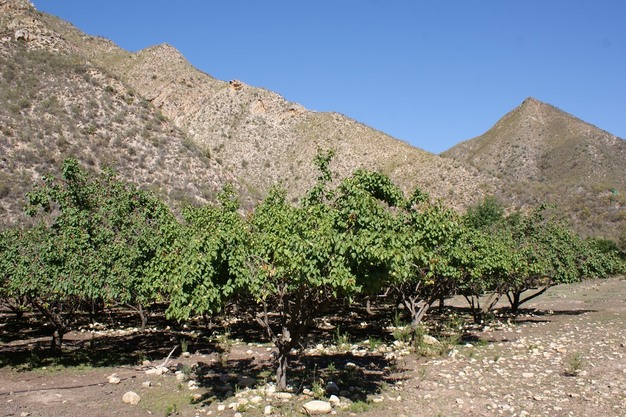 © Carolize Jansen | FreshPlaza.comApricots in the arid Klein-Karoo
Cash crops replace most long-term orchards
In view of their experience with drought and the looming spectre of another one, cash crops are the sensible path to follow, they've decided, but it's by no means less complicated. "The one year, timing is on your side, and you catch a good marketing window, and the next year is the complete opposite. The tomato market can be very volatile."
They'll be replanting tomatoes in January, out in the open, aiming for the winter market in the Western Cape and Johannesburg. "People comment that we have tasty tomatoes, with a lot of flesh, not watery. Tomatoes are a staple food, you could call it. There is always a demand for tomatoes. It's not like stonefruit, which only a handful of people buy in South Africa. With tomatoes, you move big volumes."
Most of their neighbours still grow stonefruit, table grapes, and wine grapes, and the closest other tomato fields are kilometres away. It helps to ease the pressure of Tuta absoluta, the tomato mine borer that's become enemy number one to Limpopo tomato growers.
For more information:
André Fourie
JLA Boerdery
Tel: +27 44 213 3164
Email: [email protected]