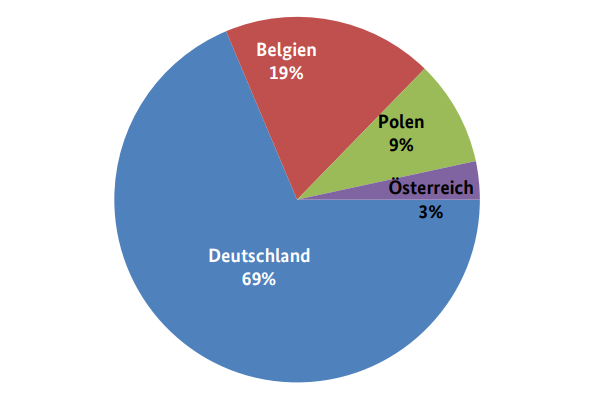
According to the German BLE, domestic cauliflower dominates the market across the board. It was flanked by Belgian, Polish, and Austrian loads. Overall availability had increased slightly. Storage options also improved in various ways.
 © BLE
© BLE
Demand was met without any major effort. Traders rarely had to adjust their prices, which generally remained at the previous week's level. Even inconsistent sizes among products from southern Germany did not have a significant impact on prices in Munich.
Only in Hamburg was the supply of domestic produce scarce at the turn of the week: a limited harvest and declining quality were the main causes. However, the resulting supply gap was largely filled by Belgian deliveries, although prices rose noticeably at the beginning of week 41.
Click here to go directly to the full market and price report.
Apples
Domestic offerings dominated, with Elstar, Jonagold, Boskoop, and Tenroy forming the basis of the supply. The sour-aromatic Topaz, the flavorful Rubinette, and Braeburn gained noticeably in importance. In Frankfurt, Fuji apples in size 70/80 appeared, supplied from the Altes Land region and costing €1.40 per kg. The quality of the European produce left nothing to be desired.
Pears
Italian produce dominated the scene: in addition to Santa Maria and Abate Fetel, Williams Christ and Carmen were also available. The Netherlands mainly supplied Xenia and Vereinsdechant pears. Domestic Xenia, Williams Christ, and Conference pears complemented the range.
Table grapes
Italian fruit clearly dominated: Italia, Red Globe, and Michele Palieri were the main varieties available. Sultana was the main variety from Turkey, but Crimson Seedless gained in importance. Deliveries from France, Greece, and Moldova rounded off the range with small quantities.
Plums
The plum season ended unspectacularly: a few offers from Germany in the form of Presenta, Hauszwetschge, and various top varieties, as well as Stanley from Moldova, played the leading role in a limited range. Availability had decreased immensely, and demand was also very limited.
Lemons
South African Eureka lemons dominated the market. Loads from Argentina, Uruguay, Chile, and Argentina rounded off the supply from the Southern Hemisphere. Deliveries from Spain gained a little momentum.
Bananas
Business was very quiet across the board. Availability was sufficient to meet demand. Traders were generally able to confirm the previous week's prices. Only Munich reported slight discounts as a result of extended deliveries.
Lettuce
Colorful lettuce came mainly from Germany, with only a few Italian deliveries available in Munich. Lettuce also came primarily from Germany, with Belgian supplies supplementing the market. Iceberg lettuce was mainly available from Dutch and domestic loads.
Cucumbers
The supply of cucumbers consisted primarily of Belgian, Dutch, and German products, with domestic products in particular losing market share. The domestic season is coming to an end, and the Dutch and Belgian campaigns are also entering the home stretch.
Tomatoes
Dutch and Belgian supplies dominated. Supplies from Poland, Turkey, and Italy supplemented the scene. In addition, small quantities of German, Moroccan, Croatian, and Spanish supplies were also available. Availability was sufficient to satisfy demand.
Bell peppers
Dutch deliveries still dominated, but the Central European season is coming to an end. The presence of Belgian loads declined, while Spanish supplies gained in intensity. Polish loads supplemented the market, as did domestic products.